The Power of Play: How Playtime Builds Baby's Skills
Play is one of the most powerful things your child can do for their development. It's how they build so many foundational skills and learn about the big wide world around them!
Baby can play at any age, even as a newborn, when lots of things count as play! Whether it's Tummy Time with your infant, pretend play with your toddler, or independent play for your school-aged child, it's important to make time for play every day.
⚑ How Play Develops
The 6 Stages of Play: How Kids Learn to Play
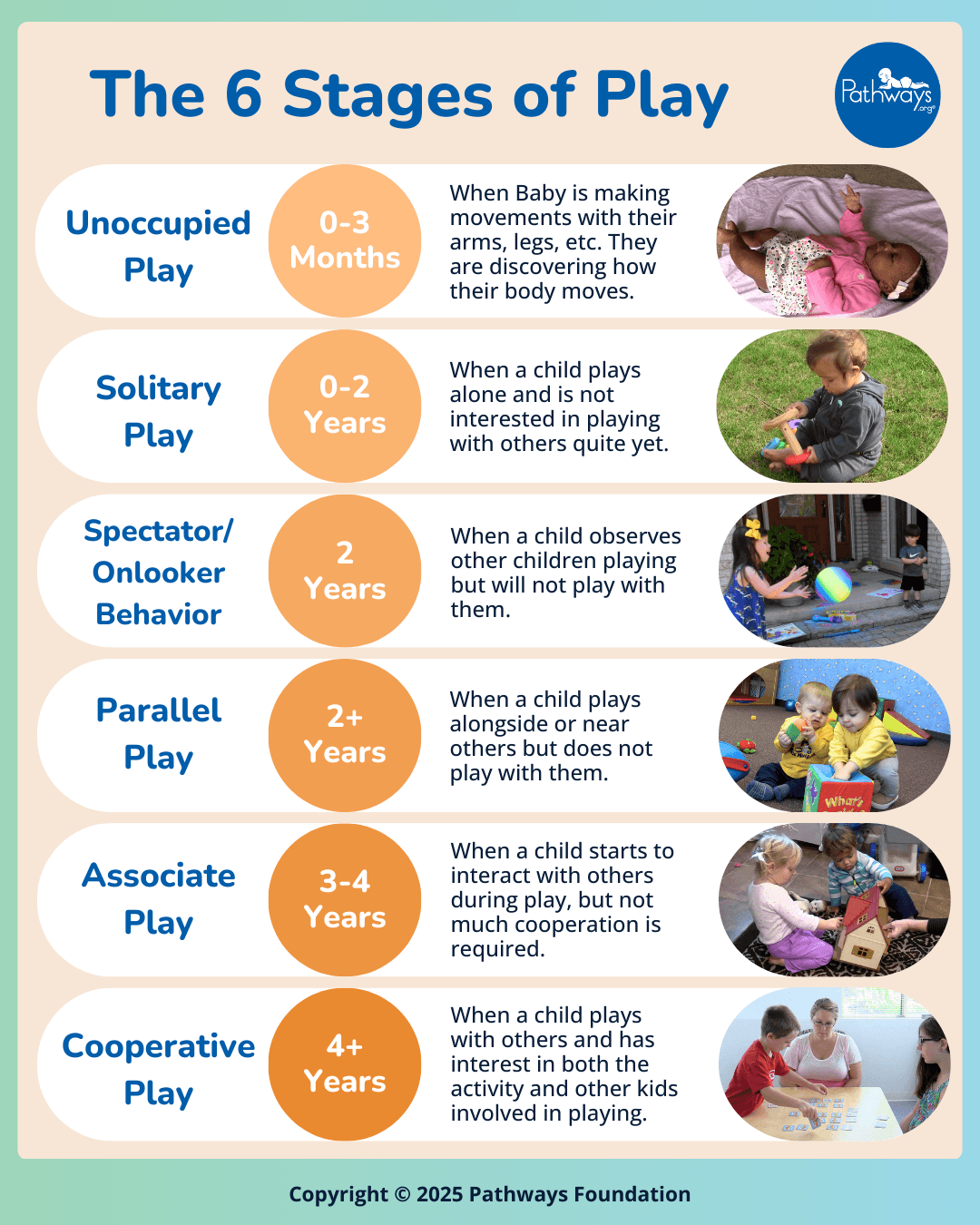
Play looks different at every age. There are six stages of play in early childhood, and each one plays an important role in your child's growth and development. Every stage involves exploring, being creative, and having fun in its own way.
Open each stage to learn more:
Stage 1: Unoccupied Play (0–3 months)
This is where it all begins! At this stage, Baby is moving their arms, legs, hands, and feet. In doing so, they're discovering what their body can do. It may not look like much, but this is their very first form of play!
What it looks like: Wiggling, stretching, and random movements
How to support it: Most of Baby's playtime should be spent in Tummy Time, which builds the muscles they'll need for bigger milestones ahead.
Stage 2: Solitary Play (0–2 years)
At this stage, Baby plays on their own (with close supervision from a caregiver). They're not interested in playing with others just yet, and that's developmentally normal. Solo play has many benefits, so it's important to encourage it, even as Baby gets older!
What it looks like: Baby exploring a toy independently, entertaining themselves
Why it matters: Independent play builds creativity, self-confidence, and problem-solving skills.
Stage 3: Spectator/Onlooker Behavior (around 2 years)
Your toddler is curious about other kids but isn't quite ready to jump in and play with them yet. Instead, they watch from the sidelines and take it all in.
What it looks like: Watching other children play, asking questions about what they see, or talking to playing kids without joining in
Why it matters: Observing is how toddlers learn social cues and get comfortable before they're ready to participate.
Stage 4: Parallel Play (2+ years)
Your child starts playing near other children, but still on their own terms. They're side by side and aware of one another, but not yet playing together.
What it looks like: Two kids playing with different toys in the same sandbox, or a group of children drawing at the same table but on their own papers
Why it matters: Even without direct interaction, children at this stage are very aware of each other and preparing for social play.
Stage 5: Associative Play (3–4 years)
Your child starts to interact with other kids during play, though it's still loosely organized. They may be doing similar activities, but aren't fully playing together yet.
What it looks like: A group of kids all playing on the same playground equipment (one climbing, one swinging, one sliding) without a shared goal
Why it matters: This is when friendships start to form and social skills really begin to blossom.
Stage 6: Cooperative Play (4+ years)
This is the stage most people picture when they think of kids playing together! Your child is interested in both the activity and other children playing with them. You'll see them sharing ideas, taking turns, and working toward a common goal.
What it looks like: Playing team games, building something together, or taking on roles in imaginative play
How to support it: As your child starts playing with siblings and friends, it's a great time to talk about sharing and winning and losing with grace.
The Two Types of Play
Children's playtime is made up of structured and unstructured play. They need time for both to build different types of skills!
Structured Play
Play that is guided by an adult with directions or rules.
Examples: board games, puzzles, dance class, team sports
Unstructured Play
Play that lets your child lead and explore freely.
Examples: playing on the playground, dress-up, exploring outdoors
Can Baby play independently?
Yes, and it's actually good for them! Independent play helps babies and toddlers build creativity, problem-solving skills, and confidence. Babies can start playing independently around 6 months, when they can hold their head up and reach for toys on their own. Just remember, independent play doesn’t mean unsupervised play!
Safety tips for solo play:
Always keep Baby in your line of sight
Play on a soft surface on the floor
Never leave animals in the room with Baby during independent play
Make sure toys are age-appropriate and at least 1.25 inches in diameter
Babyproof the area if they're on the move
Why Play Matters
Play isn't just keeping kids busy—it's how they develop! Play helps your child:
Learn about themselves and the world around them
Build motor, sensory, and communication skills
Develop social-emotional skills like sharing, taking turns, and connecting with others
Grow important life skills, including problem solving, flexibility, creativity, resilience, and confidence
Helping Play Skills Grow
Daily Playtime Goals
Babies should get up to 60 minutes of Tummy Time every day by 6 months old (it doesn't have to be on the floor—see what counts!). Toddlers need at least one hour of free, unstructured play, plus at least 30 minutes of active, adult-led structured play per day. Older children need even more!
How to Make the Most of Playtime
Play starts on day one. You don't need fancy toys or a lot of time. Many simple interactions with Baby count as play, like talking, singing, making eye contact, or offering a toy to explore. Every moment of play is a moment of growth!
Find age-matched games on our Play page. Make a Pathways.org account to get expert-designed play ideas for every week of Baby's first three years.
Want more? Read The Do's and Don'ts of Playtime for a few simple tips that can make a big difference.
When to Get Support with Play
Every child plays differently, but talk to your child's healthcare provider if you notice things like:
Little interest in playing or interacting with others
No pretend play by 18–24 months
Play that seems repetitive or rarely varies
Loss of play skills they previously had
Trust your instincts. You know your child best, so bring up any concerns at your next well-baby visit, or sooner if needed. Early support makes a real difference.