6 Tips to Get Kids to Brush Their Teeth Every Day
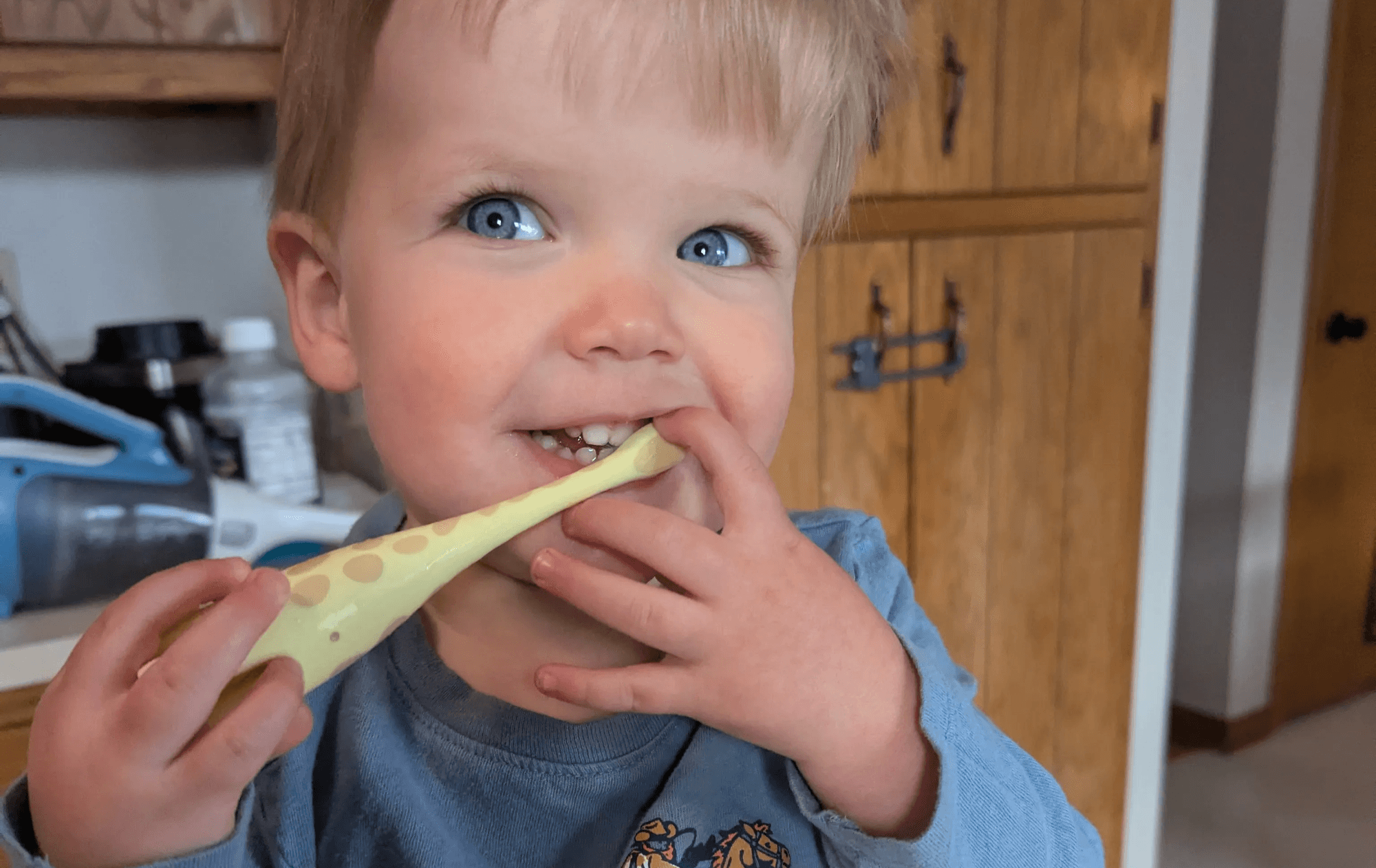
It's common for kids to resist brushing their teeth, but there are plenty of ways to make this important daily habit more enjoyable!
Little kids may be more likely to brush if you use music, play pretend, or let them go first before you get the spots they miss.
It can be helpful to adjust the water temperature, toothpaste flavor, or toothbrush type, especially for kids with sensory sensitivities.
Whether it’s the shock of cold water hitting their teeth, the smell or taste of the toothpaste, or the idea that brushing their teeth is something they “have to” do, we may never know why children try to avoid brushing their teeth. What we do know, however, is many children Just. Don’t. Like. Brushing. Their. Teeth. Brushing teeth is an important oral hygiene habit and the sooner kids get used to it, the easier it will be to keep their pearly whites healthy and clean.
Dentists? Brushing? Feeding? Here is what to expect when Baby’s teeth come in. Plus, 5 ways to make going to the dentist fun!
Tackle toothbrushing with kids using these 6 easy-to-follow tips:
1. Build a Toddler Toothbrushing Routine
As soon as Baby’s first teeth come in (usually around 6 months), toothbrushing should become part of their daily routine. Explain to your child that toothbrushing needs to happen every morning (before or after breakfast) and every night after their last meal to keep their teeth healthy and clean. When talking about toothbrushing, it can help to pair it with a favorite activity, like after eating a yummy breakfast or before their bedtime story. This will help your child associate toothbrushing with something they enjoy in their daily routine.
2. Make Toothbrushing Musical
Playing music while brushing teeth adds a calming and enjoyable sensory component to this task. Music can also be used as a timer so your child knows exactly how long they need to brush for (2 minutes is recommended). You can even try using a musical toothbrush! Your child can press play themselves, start brushing when the music starts, and finish when the tune ends. Otherwise, sing a song to keep them brushing and make it a little more fun!
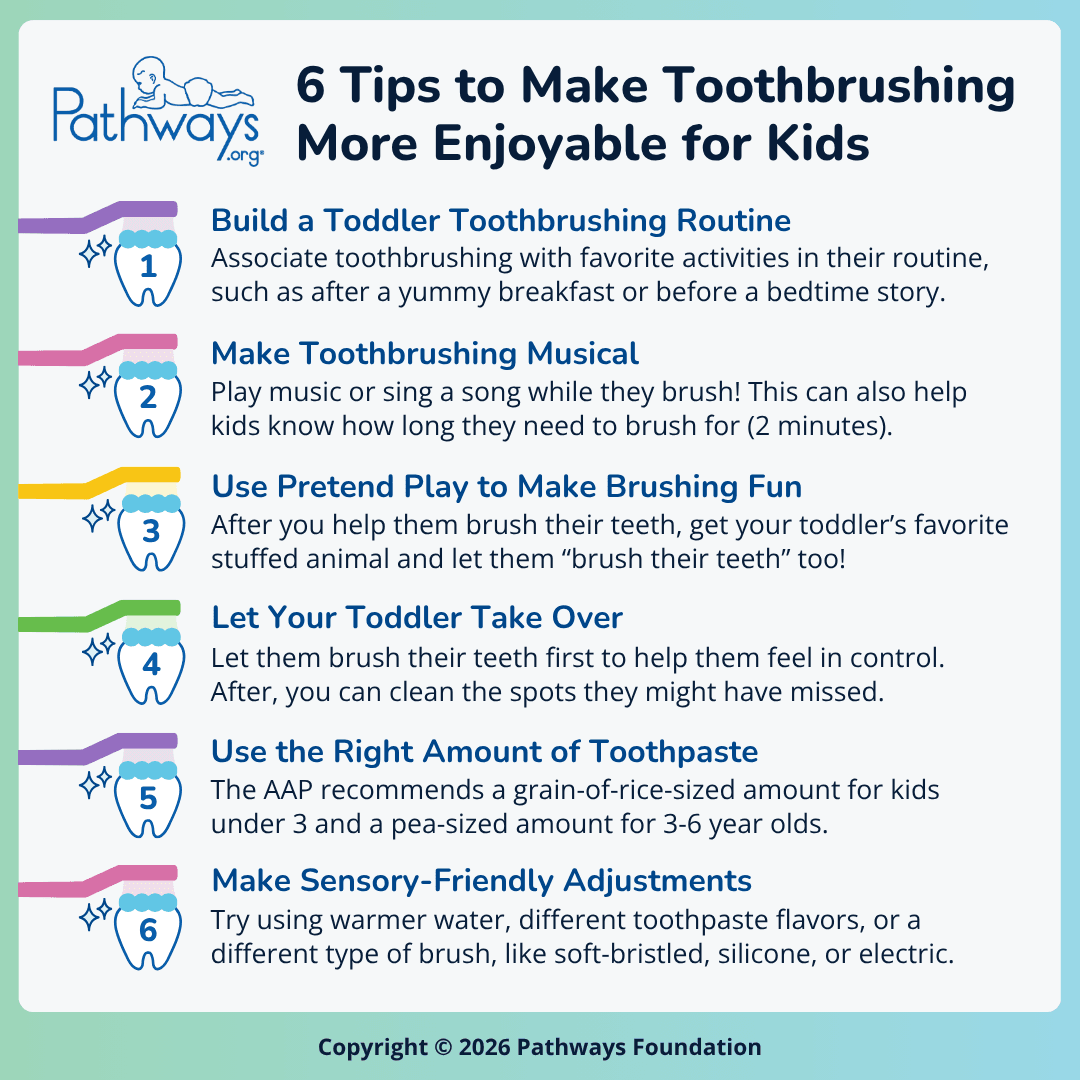
3. Use Pretend Play to Make Brushing Fun
After you’ve finished brushing your toddler’s teeth, use pretend play to teach them more about toothbrushing. Tell them it’s their turn to do the brushing. Grab their favorite doll or stuffed animal and have your child “brush their teeth” to keep dolly’s teeth healthy, too! But remember, toothpaste is required for your child, not the doll!
4. Let Your Toddler Take Over
Caregivers should do most (if not all) of their child's brushing for them until they can brush well enough on their own, usually around school age. But if you have a toddler in the stage of wanting to do everything themselves, let them try brushing first. This helps give them some control and independence. Be sure to watch them carefully so you can hit the spots they missed after they’re done. You can also watch to see how they move the brush—up and down, left and right, or in circles—then mimic that pattern to make the experience more comfortable for them once you take over.
Bonus tip: Have your toddler “help” with your toothbrushing. Model toothbrushing at the same time they need to brush, and take turns brushing each other’s teeth.
-1ULfUP.png&w=3840&q=75)
5. Use the Right Amount of Toothpaste
The American Academy of Pediatrics (AAP) recommends using a smear of toothpaste the size of a grain of rice for children under 3 and the size of a pea for children aged 3-6 years. The AAP also recommends toothpaste with fluoride. Make sure to supervise your child and help them spit after brushing since fluoride toothpaste is not meant to be swallowed.
6. Make Sensory-Friendly Adjustments
Brushing teeth can be especially difficult for children with sensory sensitivities. If your child struggles around toothbrushing time, a few small changes can make the experience more enjoyable.
Try using warm water: The shock of cold water can be a bit off-putting and a simple adjustment of temperature could make all the difference.
Change the toothpaste flavor: Try fruity, mint, and unflavored. Sometimes dentists will offer patients samples or you can get travel sized tubes of toothpaste while you’re testing out what your child likes best.
Experiment with different brushes: You can start by using a washcloth to help your little one get used to something touching and cleaning their teeth. Then, try a soft-bristled brush or silicone toothbrush. Electric toothbrushes can also be nice because the consistent motion is calming for some kids.
For young children, it always helps to turn daily tasks into fun games! Try out these tips and see what works for your child!
Sources
American Academy of Pediatrics. “Toothbrushing Tips for Young Children.” HealthyChildren.Org, 14 May 2025, https://www.healthychildren.org/English/healthy-living/oral-health/Pages/Toothbrushing-Tips-for-Young-Children.aspx. Accessed 23 June 2026.
American Dental Association. Toothbrushes. 7 Oct. 2022, https://www.ada.org/resources/ada-library/oral-health-topics/toothbrushes. Accessed 23 June 2026.
NHS. Looking After Your Baby’s Teeth. 1 Apr. 2025, https://www.nhs.uk/baby/babys-development/teething/looking-after-your-babys-teeth/. Accessed 23 June 2026.