Crawling
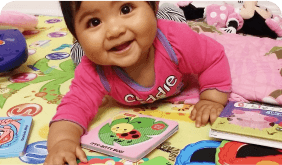
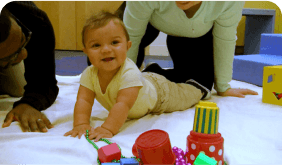
Baby spends their early months in Tummy Time developing the core, shoulder, and arm strength they'll need to crawl! Most babies start moving with alternate leg and arm movements between 6 and 9 months, and by 12 months most are crawling confidently as their main way to get around. Crawling is so much more than getting from point A to B—it builds whole-body strength, balance, and coordination; encourages both sides of Baby's brain to work together; and lets Baby explore, problem-solve, and gain confidence. Learn more about why crawling matters.
⚑ How Crawling Develops
Signs Baby is Ready to Crawl
Strong arms during Tummy Time
Is Baby pushing up with straight arms while lying on their tummy?
Pressing up on hands and toes
Do you see Baby lifting their hips, making an upside-down V-shape with their body?
Moving in other ways
Is Baby rolling or shifting their body to get to things they want?
Transitioning between positions
Can Baby move from sitting to all fours and back again?
See what the signs of crawling look like!
How crawling progresses
1. Pushing up on straight arms
During Tummy Time at 5 months, Baby starts propping themselves up on fully straightened arms, lifting their chest off the floor.
2. Pressing up on hands and toes
Baby pushes their hands and toes into the floor and lifts their hips up, making an upside-down V-shape.
3. Rocking and weight shifts
Around 6–8 months, Baby gets up on hands and knees and starts rocking back and forth.
4. Reaching on hands and knees
While on all fours, Baby begins lifting one hand off the floor to reach for a toy.
5. Army crawling
Baby may begin moving forward on their belly, pulling with their arms while their tummy stays low.
6. Hands-and-knees crawling
By 9 months, Baby coordinates opposite arms and legs and takes their first forward "steps" on all fours. By 12 months, this is their main mode of transportation.
Time to baby proof! Once Baby starts crawling, they can cover a lot of ground fast. Get down on your hands and knees to see the world from Baby's perspective, and make sure sharp corners, cords, and small objects are out of reach. Find a full baby proofing checklist here.
Different Types of Crawling
Not every Baby crawls the same way at first! You might see:
Army crawling (belly crawl)
Baby pulls forward with their forearms while their tummy stays low to the floor.
Bear crawl
Baby moves on hands and feet with straight legs, like a little bear.
Creeping (classic crawling)
Hands and knees with alternate leg and arm movements—the pattern Baby should work toward!
Watch to see what each type of crawling looks like!
Some babies like to scoot, or move while seated and shuffling on the bottom. This is a perfectly normal way to move around occasionally, but it should not replace hands-and-knees crawling. If Baby prefers scooting, encourage more floor time and hands-and-knees practice.
Helping Baby Crawl
You don't need fancy equipment to support Baby's crawling skills, just simple activities and lots of encouragement!
Keep up with Tummy Time. Daily Tummy Time from birth onward builds the core and shoulder strength Baby needs to get up off the floor.
Motivate with toys. Place a favorite toy just out of reach to give Baby a reason to move forward on hands and knees.
Model crawling. Get down on the floor and crawl with Baby. Showing them the movement can help them figure it out!
Try crawling up stairs. Supervised stair crawling encourages Baby to lift their belly off the floor and use alternating arm and leg movements.
Limit time in containers. Walkers, jumpers, and seats limit the floor time Baby needs to build crawling skills.
Crawling Activities to Try
Want more hands-on ways to practice crawling? Explore these:
When to Get Support with Crawling
Every Baby develops differently, but reach out to your Baby's healthcare provider if:
Baby hasn't started crawling by 9 months
Baby shows little interest in reaching, rolling, or shifting their body to explore
Baby strongly favors one side of their body when moving
Baby is not using hands-and-knees crawling as their main form of mobility by 12 months
If you need help talking about your concerns, find more information here: Early Intervention Resources to Support Baby's Development
KEEP EXPLORING