Motor Skills: How Baby Learns to Move
Motor skills are Baby’s ability to move and use their body. Every time they hold their head up, grab your finger or kick their legs, it helps strengthen Baby's muscles and core. This builds the skills needed for motor milestones like rolling, sitting, crawling, walking, reaching, and grabbing. Every little movement helps!
⚑ How Motor Skills Develop
Motor skills are categorized into two groups: gross motor skills and fine motor skills. Both are needed to reach Baby's motor milestones and to support overall baby motor development.
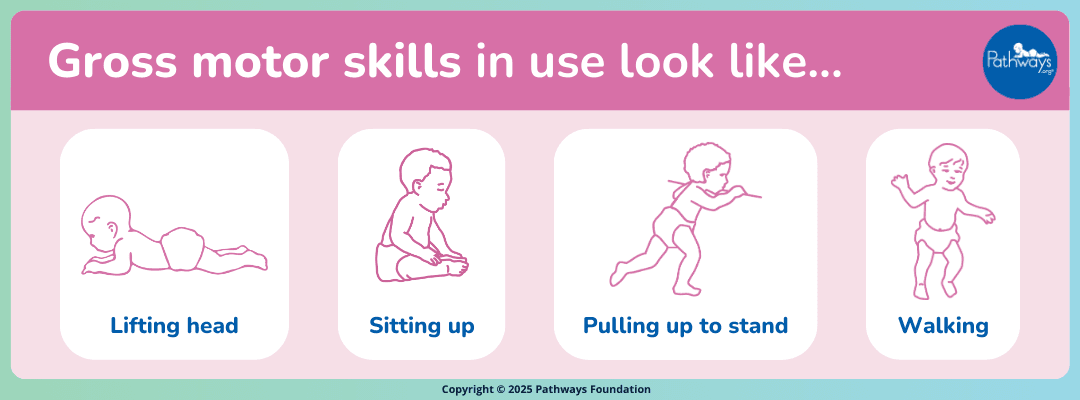
Gross Motor Skills - Big Body Movements
These involve the large muscles in Baby's arms, legs, and core. They're what allow Baby to hold their head steady, roll over, sit up, crawl, and move independently.
You'll see this when Baby...
Lifts their head during Tummy Time
Pushes up on their arms
Kicks and squirms with excitement
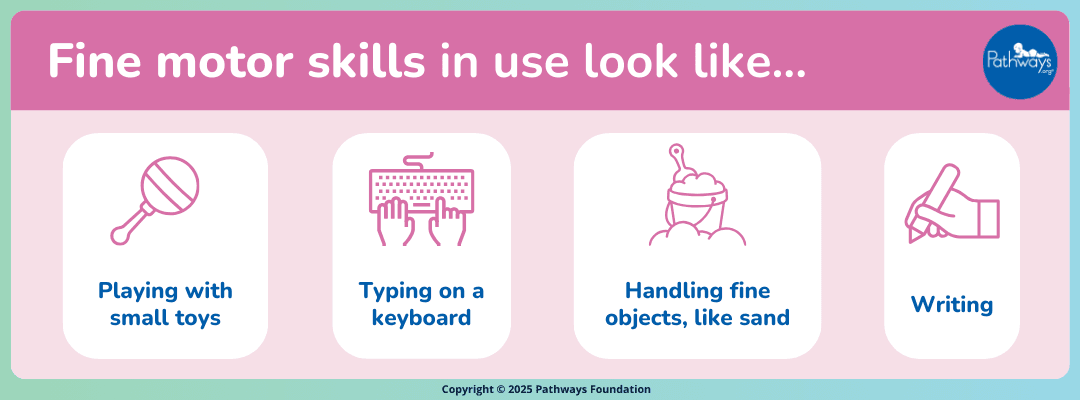
Fine Motor Skills - Small, Precise Movements
These involve the smaller muscles in Baby's hands, fingers, and wrists. They're what allow Baby to grasp objects, explore with their fingers, and eventually feed themselves and hold a crayon.
You'll see this when Baby...
Wraps their fingers around yours
Reaches for and grabs a toy
Picks up finger foods
These two skills always work together. When Baby reaches for a rattle (fine motor) and then shakes it with a big arm movement (gross motor), they're using both at once. That's why supporting all kinds of movement, big and small, matters so much in those early months.
Why Motor Skills Matter
Baby is born with muscles, but they need to strengthen them and learn how to use them! Every time Baby learns a new movement, something bigger is happening. Developing motor skills helps Baby:
Hit those big milestones. Each small movement is a stepping stone. Rolling leads to crawling, crawling to pulling up, pulling up to walking.
Discover and learn about the world. Once Baby can reach, grab, and move around, hands-on exploration becomes how they learn.
Build an "I can do it" attitude. Every skill Baby masters tells them they're capable, which makes them want to try more.
What to Expect, Starting From Birth
When tracking a baby's motor development, medical professionals typically pay attention to three things: symmetry, strength, and full movement. These are the earliest clues that development is on track. Here's what to look for at home:
Symmetry
Both sides of the body moving similarly. One leg or arm is not weaker or stiffer than the other
Strength
Whether Baby is able to push, hold, kick, and move with a typical amount of effort for their age
Full movement
Arms and legs moving freely in all directions. Nothing that seems stuck, stiff, or limited
Helping Motor Skills Grow
You don't need special equipment or a structured program to support Baby's motor milestones. Everyday play and movement is all you need. Open your child's age group below for simple ways to help:
For Babies Under 6 Months
Do Tummy Time every day. The single most effective thing you can do for a young baby's motor development. It builds the neck, shoulder, and core strength Baby needs to eventually roll over, sit up, and crawl, and strengthens both fine and gross motor skills.
Try it: Start with a minute or two right after a diaper change, when Baby is awake and happy. Get down on the floor with them. Your face is their favorite thing to look at.
Do the Baby 180°. Regularly change Baby's position—180 degrees—during everyday activities like sleep, feeding, and play. 180° means a half turn, or turning around so you’re facing the opposite direction. Switching Baby's position often builds overall strength and helps prevent tight neck muscles or flat spots. Learn more about these common infant conditions.
Try it: One night, rest Baby's head at the top of the crib. The next night, flip them so their feet are at the top.
Limit time in bouncers, swings, and car seats. Infant containers are useful, but Baby misses out on the free movement that builds strength and coordination.
A good rule of thumb: If Baby is awake and content, try a blanket on the floor instead. Save containers for when you really need your hands free.
For Older Babies and Toddlers
As Baby gets more mobile, your job shifts from muscle-builder to enthusiastic supporter. Keep things fun, fresh, and pressure-free.
Make it playful. Skills grow fastest when Baby is having fun. Follow their lead! If they're into it, they'll keep trying.
Cheer them on. Your reaction matters more than you think. Big smiles and "you did it!" moments motivate them to try again.
Change the scenery. A different room, the backyard, a park, and other new spaces give Baby new movement challenges to figure out.
Swap out their toys. You don't need more toys! Just bring out ones that have been packed away. Novelty keeps curiosity alive.
Looking for more activity ideas? Age-appropriate games and tasks keep motor development moving forward. See activity ideas by age.
When to Get Support with Motor Skills
It's important to track all of Baby's milestones starting from birth (you can do that on our Track page!). Milestones are sorted by age ranges, so Baby has until the end of the range to meet them. If you notice something, bring it up to Baby's healthcare provider. Two of the most common infant conditions to watch for are flat head and torticollis.
Children can also overcome many of the behaviors that can affect motor development. Some common ones worth mentioning include:
For specific signs to watch for by age, see our brochure on Baby's physical development.
If Baby isn't meeting their motor milestones or you suspect a motor delay, reach out to Baby's healthcare provider. Early detection and early intervention are essential for addressing development issues and preventing delays.
EXPLORE MAJOR MOTOR MILESTONES
Follow each major milestone step by step: when it happens, signs Baby is ready, and how to help.