Tummy Time: Essential Guide for Parents

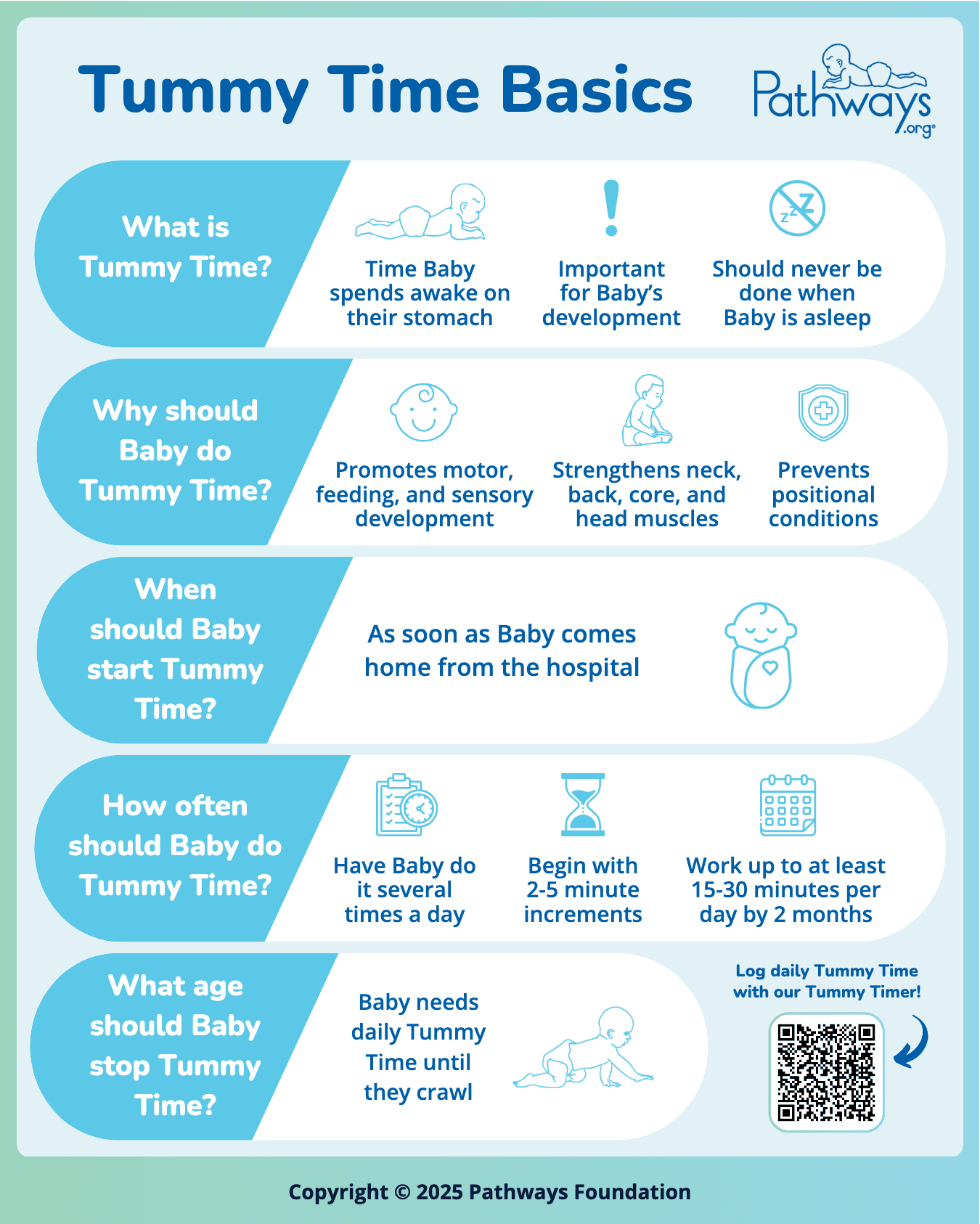
Tummy Time means placing Baby on their tummy while they're awake and you're watching (also called the prone position). It's Baby's very first exercise, and one of the most important things you can do for their development every single day.
The ultimate goal is Tummy Time on the floor, where Baby has the most space and freedom to move and build strength. But that takes time, and that's completely okay. Many babies start out uncomfortable or fussy in this position, so it's perfectly fine to begin on your chest or lap and work your way down to the floor gradually. Every minute counts, no matter where you start.
Why Tummy Time Matters
Daily Tummy Time offers so many benefits for Baby's development, including:
Aids muscle development. Tummy Time strengthens Baby's neck and head control, and builds shoulder, back, and core muscles—the same muscles that will help Baby push up, roll, sit, crawl, and walk.
Helps prevent common conditions. Daily Tummy Time reduces the risk of positional plagiocephaly (flat head syndrome) and torticollis (tight neck muscles), which can be caused by too much time lying on the back.
Boosts sensory and visual skills. On their tummy, Baby feels and sees the world in a new way. They practice visual tracking as they lift their head to follow your face or a toy.
Encourages bonding and communication. Getting down on Baby's level to talk and play is a great way to connect and encourage early communication skills.
Builds confidence. As Baby learns to lift their head higher, reach farther, and stay up longer, they're motivated to explore what their body can do (especially if you celebrate each small win!).
How to Do Tummy Time
The American Academy of Pediatrics (AAP) recommends starting Tummy Time shortly after birth, and increasing the time as Baby grows stronger. It’s normal for Baby to fuss at first; this position is new and takes effort! Stay positive and keep it short and sweet in the beginning. Here are some tips on how to get started:
When to Start and How Long to Do Tummy Time
Tummy Time can begin as soon as Baby comes home from the hospital! Begin with short sessions of 2–5 minutes, a few times daily. Only do Tummy Time when Baby is awake, alert, and calm, and stop if Baby gets fussy to keep the experience positive.
Gradually work up to at least 15–30 minutes per day by 2 months and at least 60 minutes a day by 6 months. More is always better and every bit counts!
Continue daily Tummy Time until Baby can crawl.
Creating a Safe Tummy Time Environment
Choose a firm, flat surface like a clean blanket or play mat on the floor. Always supervise Baby closely, and never place them on soft surfaces like beds or couches, where they could sink in or roll over accidentally.
If Baby falls asleep during Tummy Time, gently roll them on their back to sleep. Remember: back to sleep, tummy to play!
How to Keep Baby Engaged During Tummy Time
Some babies take to Tummy Time right away, while others need extra encouragement. Both are completely normal! Here are tips to help Baby enjoy Tummy Time more:
Build it into routines. Try a couple minutes after every diaper change or bath so Baby starts to expect it.
Time it well. Do Tummy Time when Baby is most happy and stop just before they get upset.
Sing songs to calm and soothe Baby.
Use rattles, toys, and mirrors to encourage visual tracking and keep play interesting.
Get down on the floor at Baby's eye level. Baby loves your face!
Tummy Time Positions to Try
Tummy Time doesn't have to start on the floor! There are many Tummy Time positions you can do to help your newborn get comfortable being on their stomach. Pediatric physical therapists recommend:
Tummy to Tummy (or Tummy to Chest): Lie on your back (flat or propped with pillows) and place Baby tummy-down on your chest, face-to-face. Talk, sing, or smile to encourage them to lift their head.
Tummy-Down Carry (Football Carry): Slide one hand under Baby's tummy and between their legs, supporting head and neck with the other. This "flying" position helps Baby get used to their tummy while feeling your warmth.
Lap Soothe: Place Baby tummy-down across your lap, head to one side, hand resting on their bottom. Great for soothing or even burping while sneaking in practice.
Eye-Level Smile: Get down on the floor at Baby's eye level. Smile, make silly faces, and talk. Try placing colorful toys, mirrors, or high-contrast books nearby.
See what these Tummy Time positions look like in the video below!
Tummy Time for babies in the NICU
Regular Tummy Time is important for all babies, including those born premature and/or staying in the NICU. You should always follow the guidance of Baby’s medical team when trying new activities, but general tips include:
Do Tummy Time when Baby is awake and alert, and keep sessions very short (especially if Baby has a large head)
Use positions that keep Baby close to your body, like Tummy to Tummy
If Baby has a feeding tube or sensitive abdominal area, use Lap Soothe to create a gap around that area
See more tips in our Tummy Time in the NICU guide
Tummy Time by Age: Skills to Look For
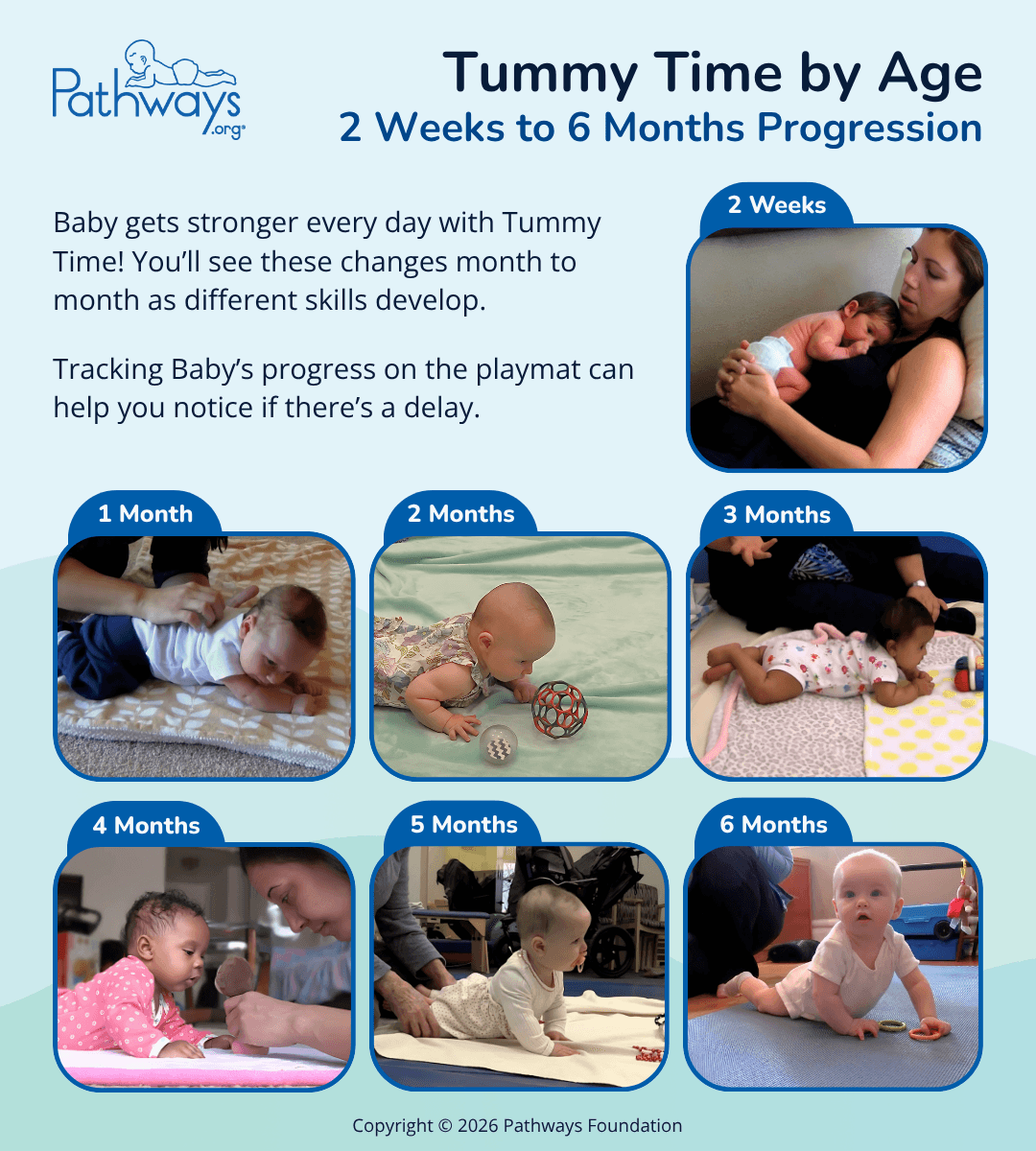
Baby gets stronger every day with Tummy Time! You’ll see these changes month to month as different skills develop. Open your child's age range to see how skills progress from 2 weeks to 6 months, with videos showing you what to look for.
Tummy Time at 2 Weeks
Spends time in Tummy to Tummy, Tummy-Down Carry, and Lap Soothe positions
Lifts head briefly to clear nose from the surface
Attempts Tummy Time on the floor
Tummy Time at 1 Month
Attempts to lift head up—even if only for a second
Turns head to both sides equally
Tummy Time at 2 Months
Spends at least one minute in Tummy Time several times a day (5-10 sessions) without becoming upset
Spends at least 15-30 minutes of Tummy Time on the floor per day by 2 months of age
Lifts and holds head up
Possibly tilts head to one side
Does the majority of Tummy Time on the floor
Tummy Time at 3 Months
Begins to put weight on forearms, with elbows behind shoulders at a 45 degree angle
Gains head control and is able to lift head between 45 to 90 degrees, without tilting head to either side
Starts to visually track toys or rattles you move around
Tummy Time at 4 Months
Pushes up on forearms and brings chest off floor. Elbows will be under shoulders at a 90 degree angle or in front of shoulders.
Lifts head up 90 degrees and keeps head centered
Lifts head and moves neck to track toys, voices, and faces
Tummy Time at 5 Months
Begins to push up on hands with straight elbows
Starts to move hands forward to reach for toys that are placed nearby
Tummy Time at 6 Months
Starts to prefer being on their stomach. Being on their tummy allows them to play, move, and explore more easily.
Pushes up on straight arms
Reaches and grabs toys of different sizes
Able to pivot in a circle while on stomach
Rolls from back to tummy and tummy to back
Self-directs Tummy Time
Tummy Time FAQs
Why does my baby hate Tummy Time?
It’s common for babies not to like Tummy Time, especially in the beginning. This is because the position is new and takes time for their muscles to get used to. Baby may also get upset during Tummy Time if they just ate, are tired, or simply bored. When Baby starts to get fussy on their tummy, take a break to keep the experience positive. Find tips for a baby who doesn't like Tummy Time here.
What can I do if my baby has reflux during Tummy Time?
If your baby has reflux, make sure to wait 15-30 minutes after feedings to do Tummy Time. Keep them upright during this period. Putting Baby in an inclined Tummy Time position or placing a rolled up blanket or pillow underneath Baby’s chest can also help reduce spit-up. For more guidance, talk to Baby’s healthcare provider.
What if my baby keeps rolling over during Tummy Time?
If your little roly-poly loves showing off their new skill, that's great! Let them do their thing, but make sure they still get plenty of belly time. Keep doing Tummy Time until at least 6 months. Use these tips to keep Baby on their tummy!
When to Get Support with Tummy Time
Tracking Baby's progress on the playmat with the age-by age skills above can help you notice if there's a delay. If Baby isn't reaching those markers, or consistently can't tolerate Tummy Time despite the tips above, bring it up with Baby's healthcare provider.
If Baby has physical disabilities that limit their ability to do Tummy Time, talk to Baby's healthcare provider about alternative ways to build their strength.
TUMMY TIME RESOURCES