Make Your Next Grocery Store Trip a Learning Experience for Kids
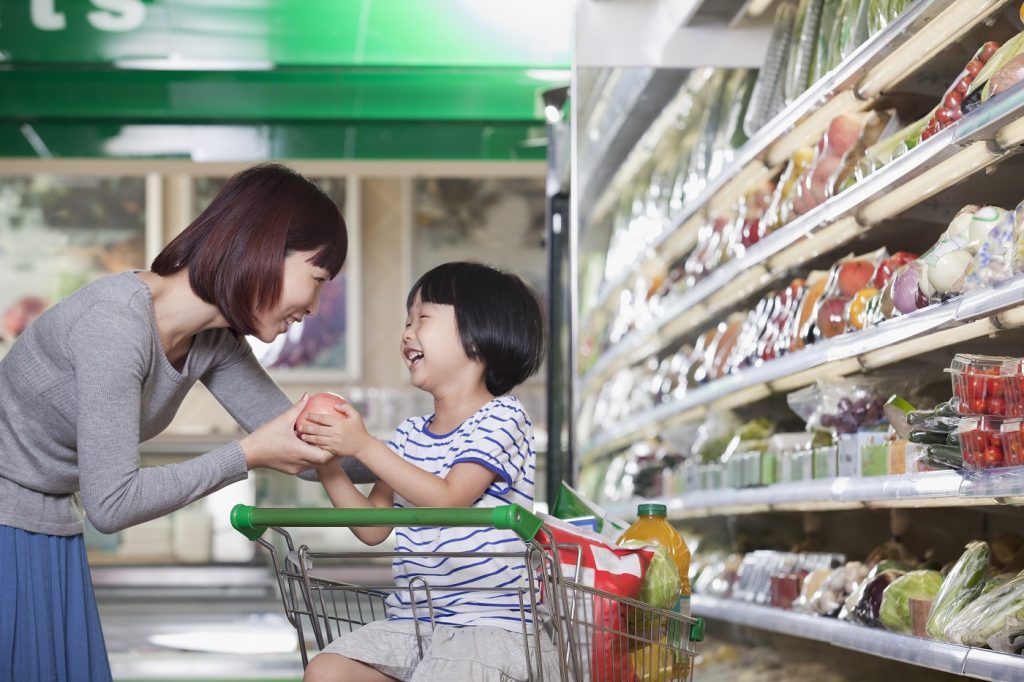
Grocery shopping is the perfect opportunity to help toddlers and preschoolers build important skills like planning, communication, and self-control.
Making a grocery list together, turning item-finding into a scavenger hunt, and talking to store associates are some of the many ways you can make grocery shopping a learning experience for your child.
Keep your child's age and developmental milestones in mind when deciding how much to involve them in the shopping trip.
Going to the grocery store may be just another weekly errand for adults, but for kids, it's another opportunity to learn! Every aspect of grocery shopping—from making a list to cooking a meal with your purchases—touches on important skills your child needs to develop, such as planning, self-control, time management, communication, and task completion. Support your child's skill-building during your next trip to the store with these tips!
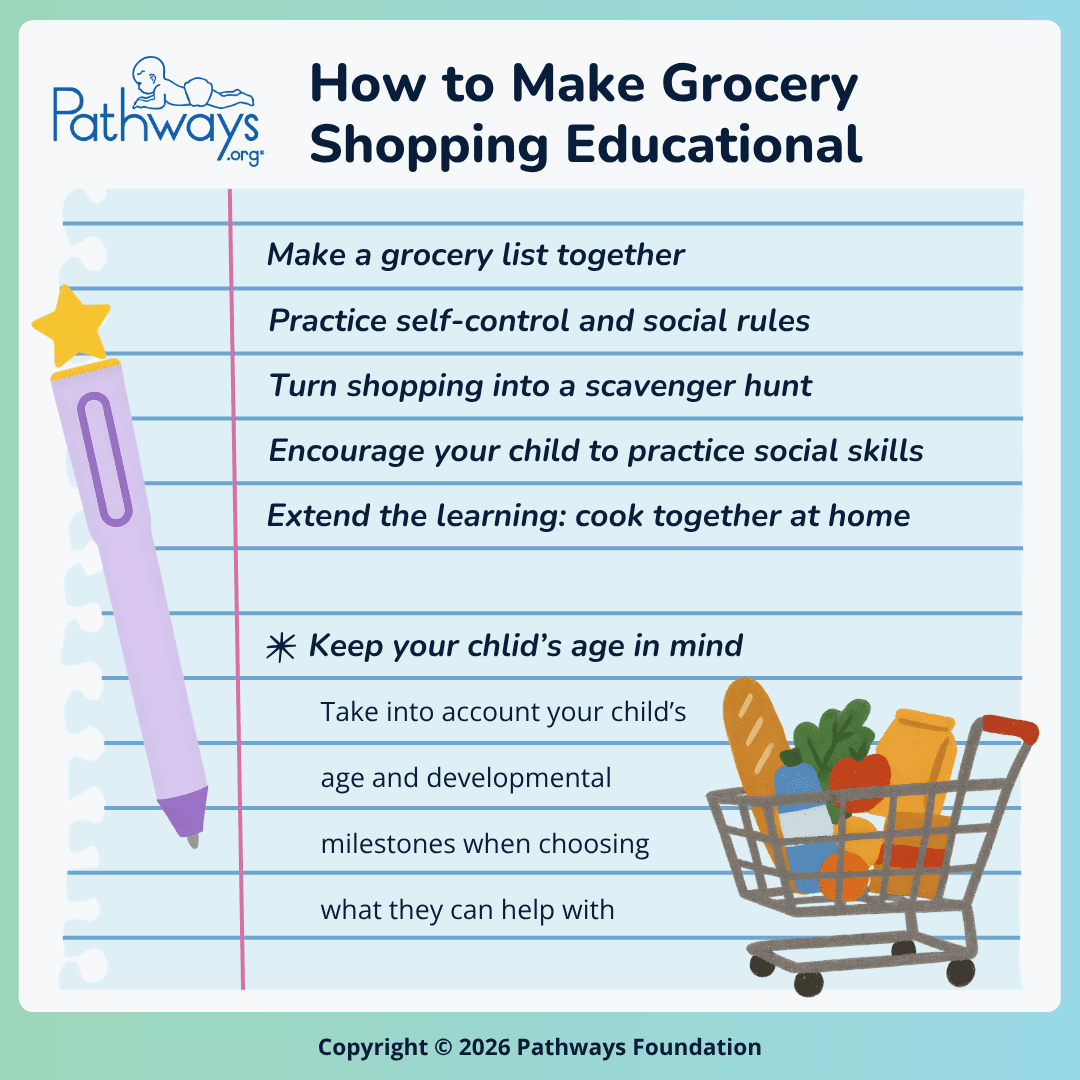
Make a Grocery List Together
Every good grocery store trip needs a list! Have your child help you make that list. If they’re too young to write, then ask them out loud what their favorite foods are and what they’d like to eat this week (Try to encourage healthy selections!). Showing them pictures can help while they're still learning words for things. Narrate while you’re making the list so they become familiar with the process.
Practice Self-Control and Social Rules
Grocery shopping teaches kids social rules, like not eating cookies the minute they put the box in the cart. While they might see their favorite box of cookies and want to open it right there in the store, teaching them how to wait until they get home to open the box and eat a few cookies will help them learn to apply executive function skills like impulse control to real-life social settings!
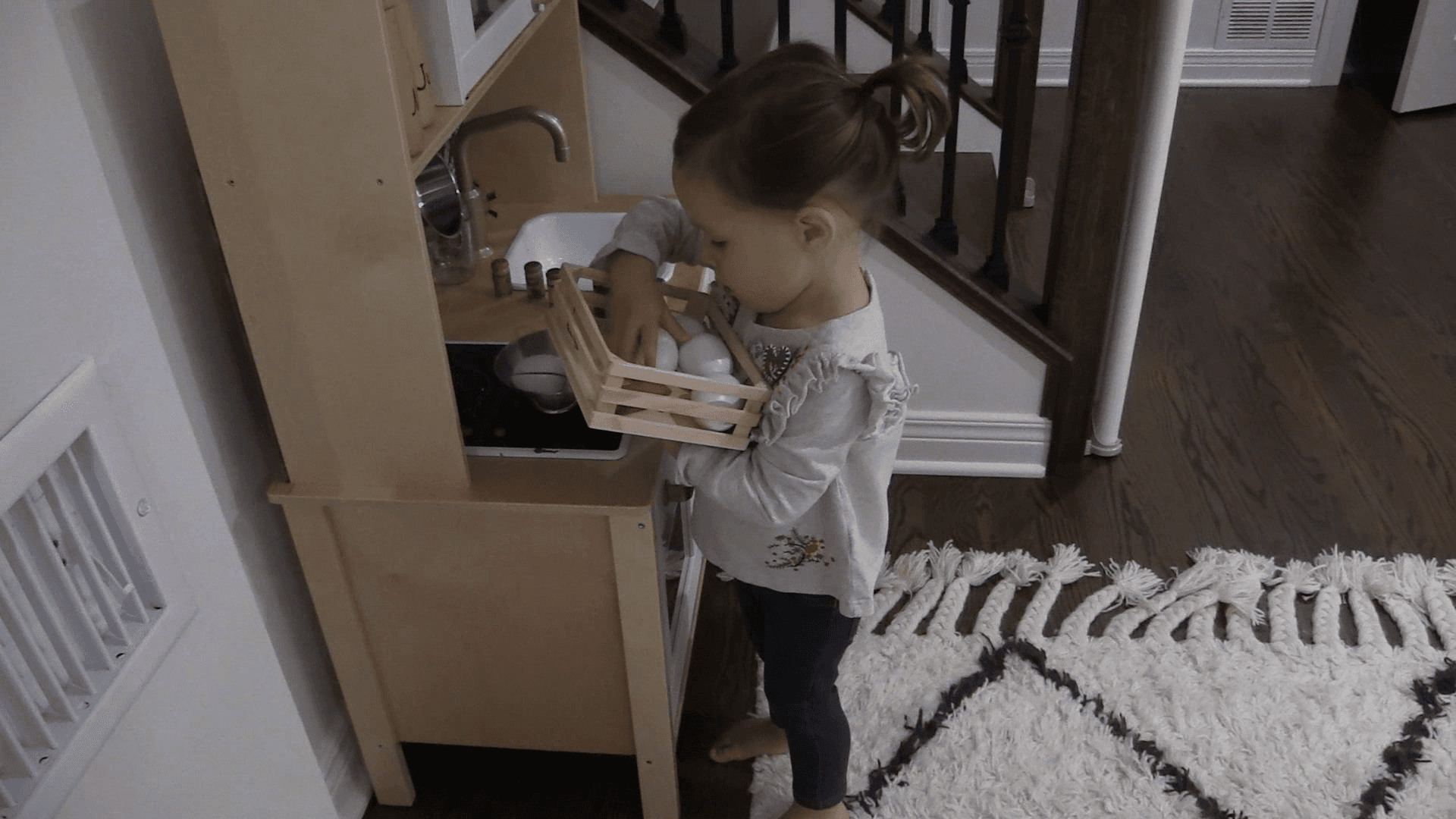
Turn Shopping Into a Scavenger Hunt
As you search for your items in the grocery store, have some fun! Practice problem-solving skills by having your child help search for the items you need. You can nudge them in the right direction with clues (“We’re by the chocolate chips”) or by asking questions (“What do you see here?”). If your child is learning to read, you can challenge them to sound out new words.
Encourage Your Child to Practice Social Skills
At the grocery store, there are many different interactions that you can have. From ringing up items with the cashier to asking an associate for help finding an item, include your child in these interactions with others and explain what they do. If your child is old enough, you can even have them help out! For example, they can hand the cashier money or say “thank you!” to the associate after they answer your question.
Extend the Learning: Cook Together at Home
After you bring the groceries home, let your child be a part of the cooking process. Cooking is a great sensory experience for kids that also helps with planning, following directions, early math skills, and even picky eating! Here are some ways to include your child in the kitchen at any age.
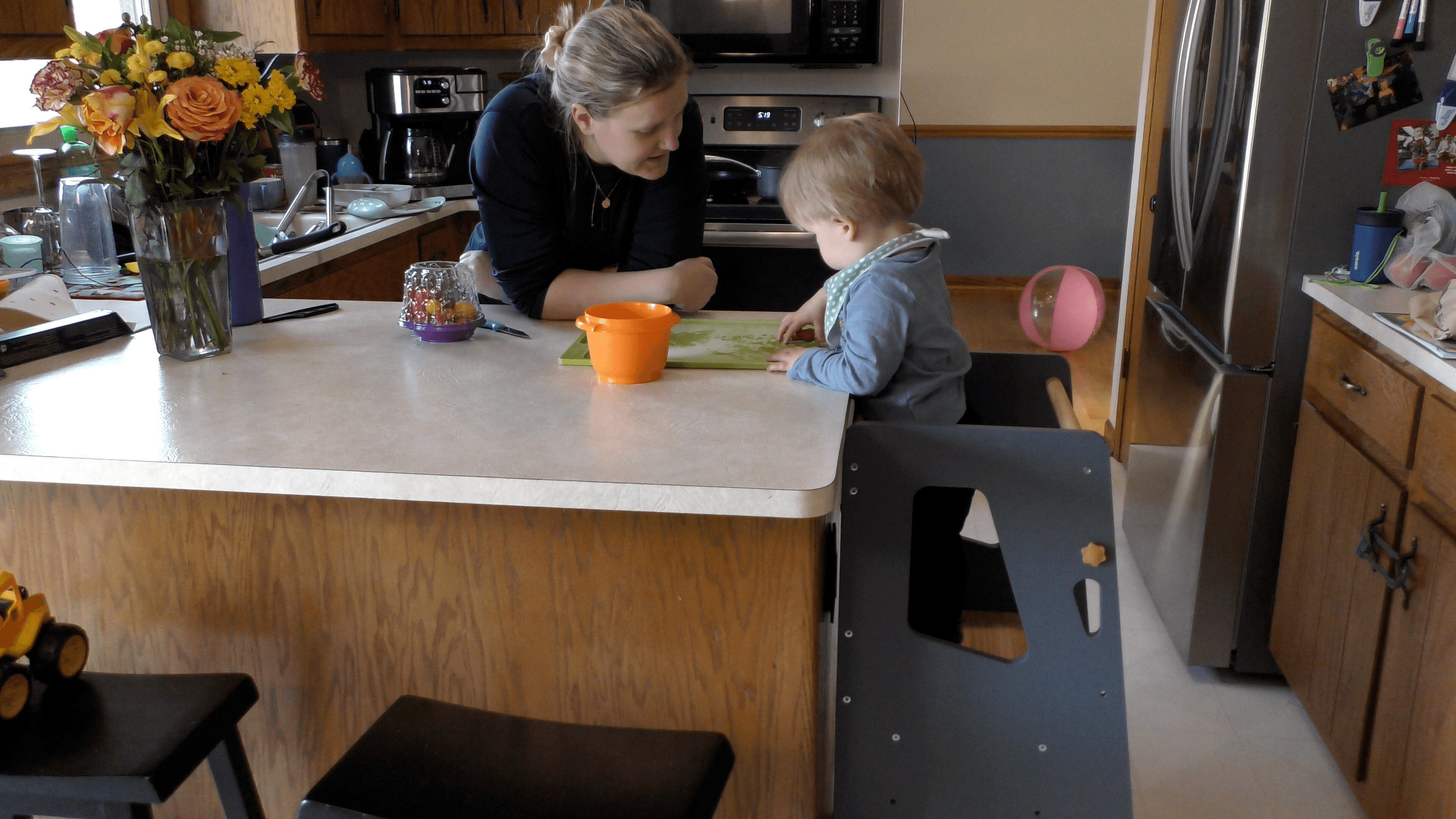
Keep Your Child's Age in Mind
Remember, kids’ ages will impact how much they can help at the grocery store. Take into account your child’s age and developmental milestones and make adjustments when trying out any of the tips above.
For example, these are age-appropriate ways young kids can help out at the store:
Two-year-olds can start following two-step directions (e.g., "Grab the crackers and put them in the cart, please."), but might not be able to interact with the cashier using full, conversational sentences.
Three-year-olds can help you ask a store associate "what" and "where" questions, but they might not be able to do a math lesson while grocery shopping.
Four- and five-year-olds can remember 2 to 3 items, get them, and put them in the cart, but they won't be able to read off the grocery list just yet
As they grow, they’ll be able to do more!
Don’t forget: Make grocery shopping safe by reminding your child to stay near you in the store at all times and hold your hand in the parking lot.