How to Use Infant Equipment Safely: Answers to Common Parent Questions
Infant equipment can be a helpful and safe part of your daily routine when used in moderation.
Spending too much time in “containers” may limit movement and impact Baby’s strength and development.
Being in equipment while in poor alignment can encourage the use of improper muscles in sitting or standing positions.
Balancing equipment use with plenty of free movement, like daily Tummy Time, helps support healthy development.
Caring for Baby is a full-time job, and infant equipment can often make it easier when you need an extra set of hands. These devices give Baby a safe place to rest, whether you're going for a car ride or taking care of your own needs.
Infant equipment can be a helpful (and sometimes necessary) part of your routine. Here's what to know about using it safely while still supporting Baby's movement and development.
What is infant equipment?
Infant equipment, sometimes called "baby containers", is any device that holds Baby during playtime, daily activities, and transportation. These devices include:
Jumpers
Baby swings
Exersaucers
Baby carriers
Walkers
What does the term “container baby” mean?
The term “container baby” describes an infant who spends too much time in equipment. These "containers" often restrict Baby from moving freely and may put excess pressure on their head, depending on the type.
What problems are associated with overusing containers?
Overusing infant equipment such as strollers, bouncers, and car seats can impact Baby’s head shape by causing flat spots (a condition known as positional plagiocephaly) to form due to prolonged pressure on their head. Positional torticollis, or tightening of the muscles on one side of the neck, may also develop and affect Baby’s posture and ability to turn their head from side to side.
Too much time spent in equipment can also increase the risk of delays in sitting, crawling, walking, and even speaking.
Here is what one of our expert pediatric physical therapists has to say about infant equipment:
Being in poor alignment in standing equipment, such as an exersaucer/jumper, can encourage poor motor patterns that can lead to delays in standing/walking or doing so with poor patterns/compensations.
Baby walkers are unsafe and should never be used, as babies use poor movement patterns and are not cognitively developed enough to have independent upright mobility.
ℹ️ The American Academy of Pediatrics has long called for a ban on mobile baby walkers due to injury risks. Both mobile and non-mobile walkers (including exersaucers and jumpers) are also known to restrict hip movement and proper weight-bearing, which is important for learning to walk.
How much time should my baby spend in infant equipment?
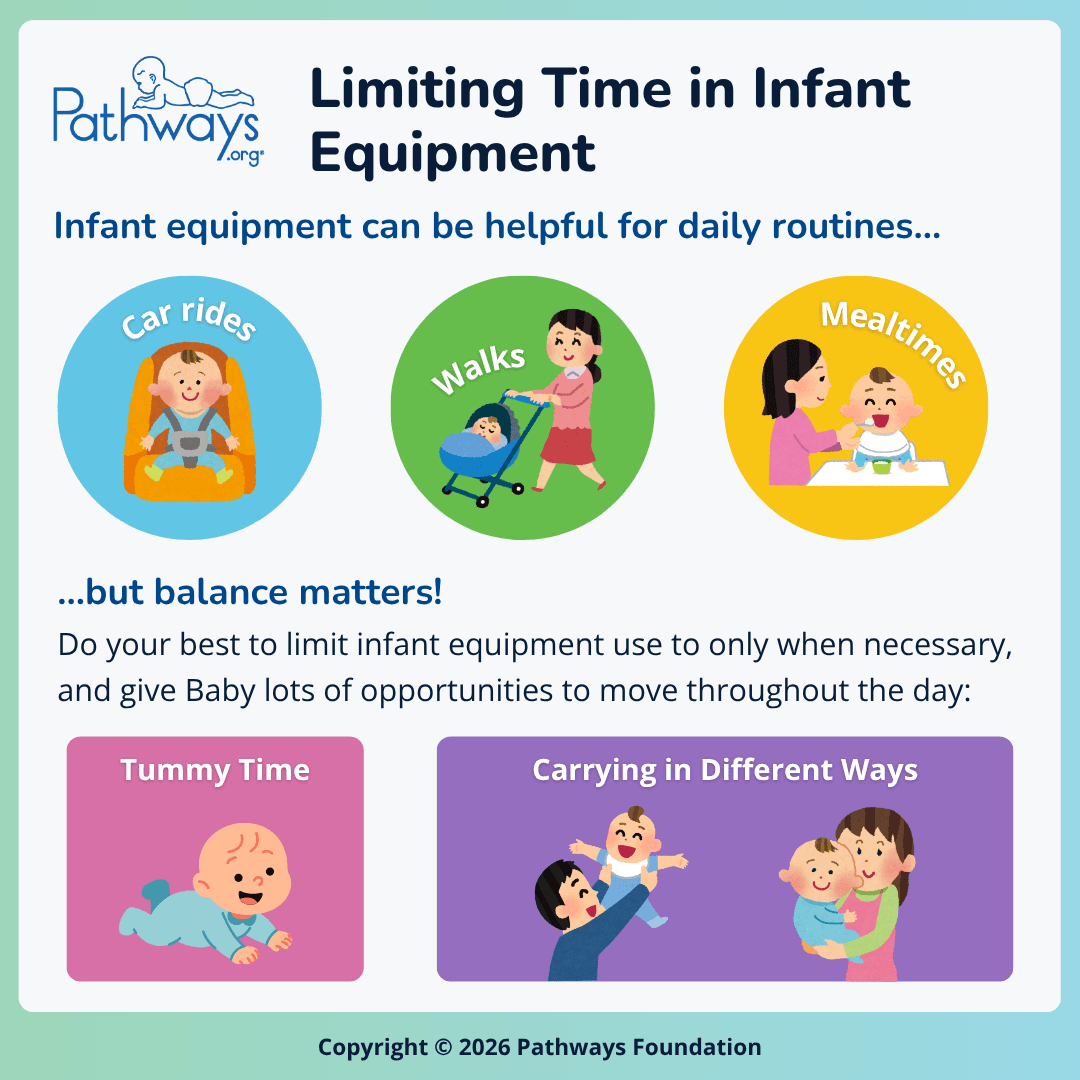
Moderation is the key here! Just because there are downsides to infant equipment doesn't mean you should never use it. Some situations make using infant equipment unavoidable, such as riding in the car. Other times, infant equipment can be the best available option when you need to take care of yourself, like when showering or making food. Do your best to limit Baby’s time in equipment to when it’s necessary for safety reasons, but know that occasional use (no more than 15-30 minutes per day) for convenience is okay too.
What can I do to reduce my baby’s time in infant equipment?
Make sure to give Baby lots of opportunities to build strength and move freely throughout the day! Tummy Time is one of the best ways to do this, and it can start as soon as Baby comes home! Begin with 2-5 minute sessions a few times a day, working up to 60 minutes a day by 6 months.
Caregivers can also carry Baby often and in different positions instead of using infant equipment. When babies are carried, they get vestibular stimulation. This means the carrying motions stimulate their sense of balance and movement. Up and down, back and forth, and side-to-side movements help Baby keep their head and body in a neutral position.
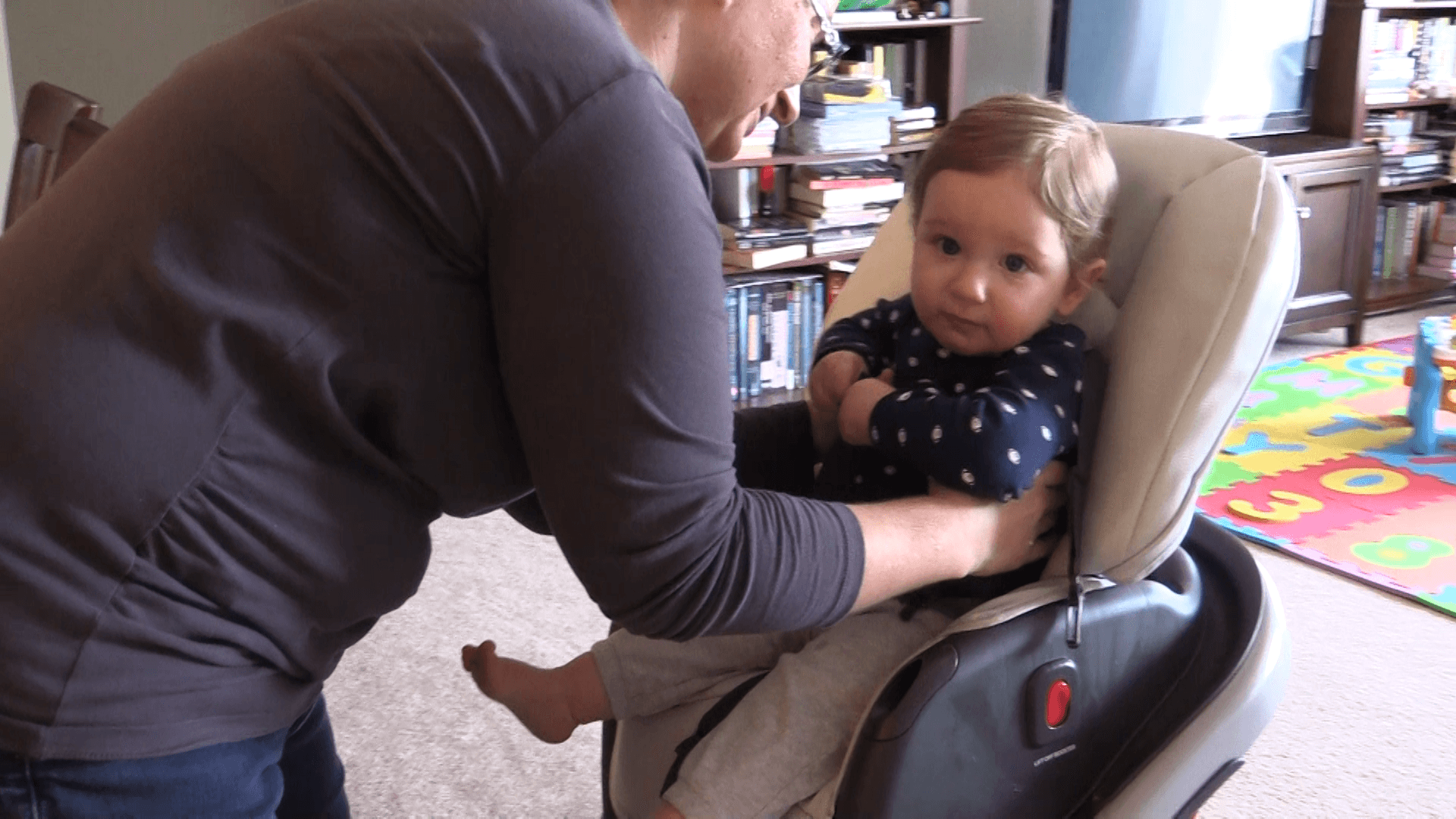
Watch this video for more tips on reducing Baby’s time in infant containers:
What can I get instead of infant equipment for a new baby?
If you’re considering buying non-essential baby equipment (such as exersaucers, jumpers, or swings) as a gift for a new baby, know that there are plenty of other, more developmentally friendly baby items out there. Try visually stimulating or textured toys, large board books, baby mirrors, and stacking toys. Check out our tips for picking the best toys for Baby.
Have more questions?
Never hesitate to bring up concerns with Baby's healthcare provider. To make sure Baby is meeting developmental milestones on time, be sure to track progress over on our Track page. And if you're looking for ways to keep Baby entertained and out of containers, check out our Play page for fun, therapist-approved activities!
Sources
Children's Rehabilitation Institute TeletonUSA. Caution with Walkers, Jumpers, Exersaucers. 30 Apr. 2020, critusa.org/caution-with-walkers-jumpers-exersaucers/. Accessed 16 Apr. 2026.
Cleveland Clinic. “What Is Container Baby Syndrome?” Children’s Health, 18 Apr. 2025, health.clevelandclinic.org/container-baby-syndrome. Accessed 16 Apr. 2026.
Grisez, Lori. “Container Baby Syndrome: How Equipment Can Hinder a Child’s Development.” 700 Children’s® – A Blog by Pediatric Experts, 5 Nov. 2025, www.nationwidechildrens.org/family-resources-education/700childrens/2018/10/container-baby-syndrome. Accessed 16 Apr. 2026.
Jenco, Melissa. “Study: Infant Walker Injuries Support AAP’s Call for a Ban.” AAP News, 17 Sept. 2018, publications.aap.org/aapnews/news/13889. Accessed 16 Apr. 2026.
McCarthy, Claire. “Parents: Don’t Use a Baby Walker.” Harvard Health Blog, 27 Sept. 2018, www.health.harvard.edu/blog/parents-dont-use-a-baby-walker-2018092714895. Accessed 16 Apr. 2026.