Screen Time for Babies and Toddlers: What the Latest AAP Guidance Means for Your Family
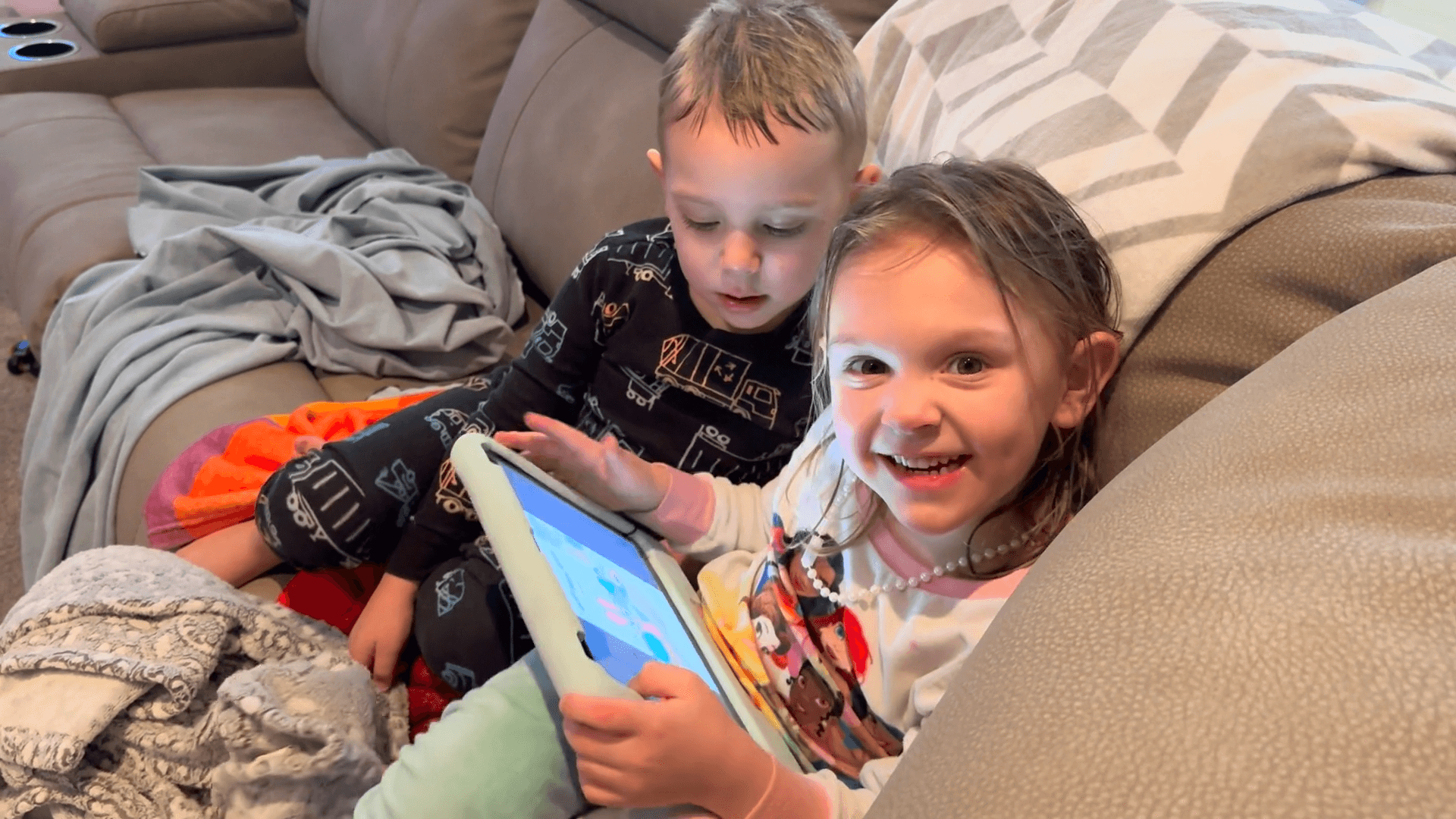
The AAP now focuses less on strict screen time limits and more on how, when, and why media is used.
The 5 Cs of media use give parents simple tips for making screen time decisions that work for their family.
Real-life interactions are the best way to teach kids important skills, but it’s all about balance! Screen time can be a part of that learning when used intentionally.
Screens are a part of everyday life for many families. With so many opinions on parenting in the digital age, it’s natural to wonder: what’s actually best for my child? Recent guidance from the American Academy of Pediatrics (AAP) is shifting the conversation. Instead of focusing only on strict screen time limits, experts now emphasize how, when, and why media is used, especially in the early years.
Screen Time for Babies (0–18 Months)
The AAP still recommends avoiding screen time for babies under 18 months, except for video chatting with family and friends. These real-time interactions can support Baby’s early communication and help them build relationships with loved ones who live far away. Outside of that, babies learn best through face-to-face interaction, movement, and play.
Screen Time for Toddlers and Preschoolers (2–4 Years)
For toddlers and preschoolers, the focus is less about “how much” and more about how screen time is used. The AAP encourages:
Watching together (co-viewing) whenever possible
Keeping screen time balanced with play, sleep, mealtimes, and family time
Helping children connect what they see on screen to the real world
Just like during story time with your child, you’re there to guide, explain, and engage.
-AYhmlz.png&w=3840&q=75)
A New Way to Think About Screen Time: The 5 Cs
To help families make thoughtful choices, the AAP Center of Excellence on Social Media and Youth Media Health introduced the “5 Cs of Media Use”. These questions shift the focus from following strict limits to encouraging intentional, healthy use of media that makes sense for your family.
Here’s how to apply them to screen time for toddlers and preschoolers:
1. Child
Who is your child, how do they react to media, and what are their motivations for using it?
Think about your child’s personality and how they interact with screens. Do they struggle to put the tablet down, or transition easily? Do they rely on it to calm down? Understanding your child's reactions helps you set boundaries that work for your family.
2. Content
What is worth their attention?
Much of what’s marketed to kids isn’t actually developmentally appropriate, especially on platforms like YouTube, where content is designed to maximize watch time and often includes hidden advertising. When choosing what your child watches, look for age-appropriate, high-quality media with these features:
Simple plots and slow pacing
Clear language and visuals
Opportunities to learn and interact
Life lessons and skill-building
Watch this video for more tips on choosing high-quality content:
3. Calm
How do they calm their emotions or go to sleep?
Toddlerhood is the age of big feelings. Using screens to soothe, distract, or cure boredom can get in the way of learning to manage those emotions.
In tough moments, stay calm yourself and help your child name what they are feeling. Use calming techniques to support self-regulation, like deep pressure. Follow a calming bedtime routine with screen-free activities that help them wind down.
4. Crowding Out
What does media get in the way of?
Screens shouldn’t replace or take away from important activities your child needs for their development. Make sure media doesn’t crowd out:
Active play
Family interaction
5. Communication
How can you talk about media to raise a smart and responsible child?
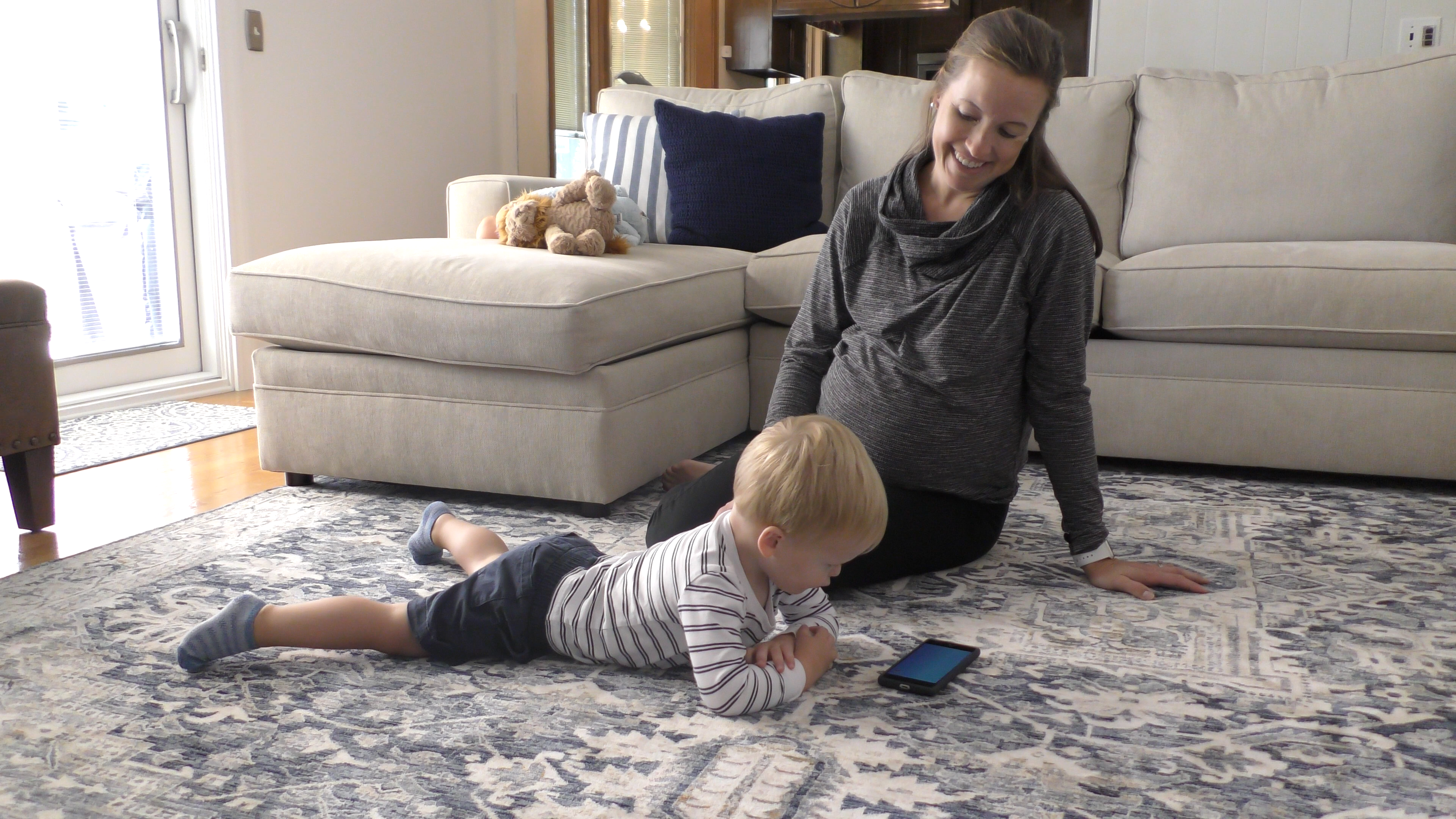
Watch together and make it a conversation. Ask questions, react out loud, and talk through what characters are doing and why. Explaining the lessons and behaviors they see on screens can help your child understand important qualities you want to see in them like being kind, patient, and responsible.
Extend their learning by applying what they see to real life. For example, if they watched a video about instruments, make some music together!
Why Real-Life Interaction Still Matters Most
Even with high-quality content, young children learn best through real-world experiences and human interaction. So many important early skills for toddlers can’t be taught by screens alone, including:
Motor skills: writing, catching a ball, riding a bike
Sensory skills: hand-eye coordination, balance
Communication skills: eye contact, back-and-forth communication
Social-emotional skills: emotional regulation, forming positive relationships
Executive function skills: self-control, adapting to change
Balancing screen time with play and connection gives your child more opportunities to build these skills and learn from the best teacher they have: YOU!
Learn More About Healthy Screen Time for Kids
For more guidance, check out these AAP resources:
Sources
“Kids & Screen Time: 5 C’s Questions for Toddlers & Preschoolers.” HealthyChildren.org, American Academy of Pediatrics, 30 Apr. 2024, www.healthychildren.org/English/family-life/Media/Pages/kids-and-screen-time-5-cs-questions-for-toddlers-and-preschoolers.aspx. Accessed 7 May 2026.
“Kids & Screen Time: How to Use the 5 Cs of Media Guidance.” HealthyChildren.org, American Academy of Pediatrics, 6 Jan. 2026, www.healthychildren.org/English/family-life/Media/Pages/kids-and-screen-time-how-to-use-the-5-cs-of-media-guidance.aspx. Accessed 7 May 2026.
Munzer, Tiffany, et al. “Digital Ecosystems, Children, and Adolescents: Policy Statement.” Pediatrics, vol. 157, no. 2, American Academy of Pediatrics, Feb. 2026, https://doi.org/10.1542/peds.2025-075320.
Munzer, Tiffany. “Helping Kids Thrive in a Digital World: AAP Policy Explained.” HealthyChildren.org, American Academy of Pediatrics, 20 Jan. 2026, www.healthychildren.org/English/family-life/Media/Pages/helping-kids-thrive-in-a-digital-world-AAP-policy-explained.aspx. Accessed 7 May 2026.
“The 5 Cs of Media Use.” American Academy of Pediatrics, 27 May 2025, www.aap.org/en/patient-care/media-and-children/center-of-excellence-on-social-media-and-youth-mental-health/5cs-of-media-use/. Accessed 7 May 2026.