When Is the Best Time to Play with Your Newborn? A Guide to Newborn Alertness States
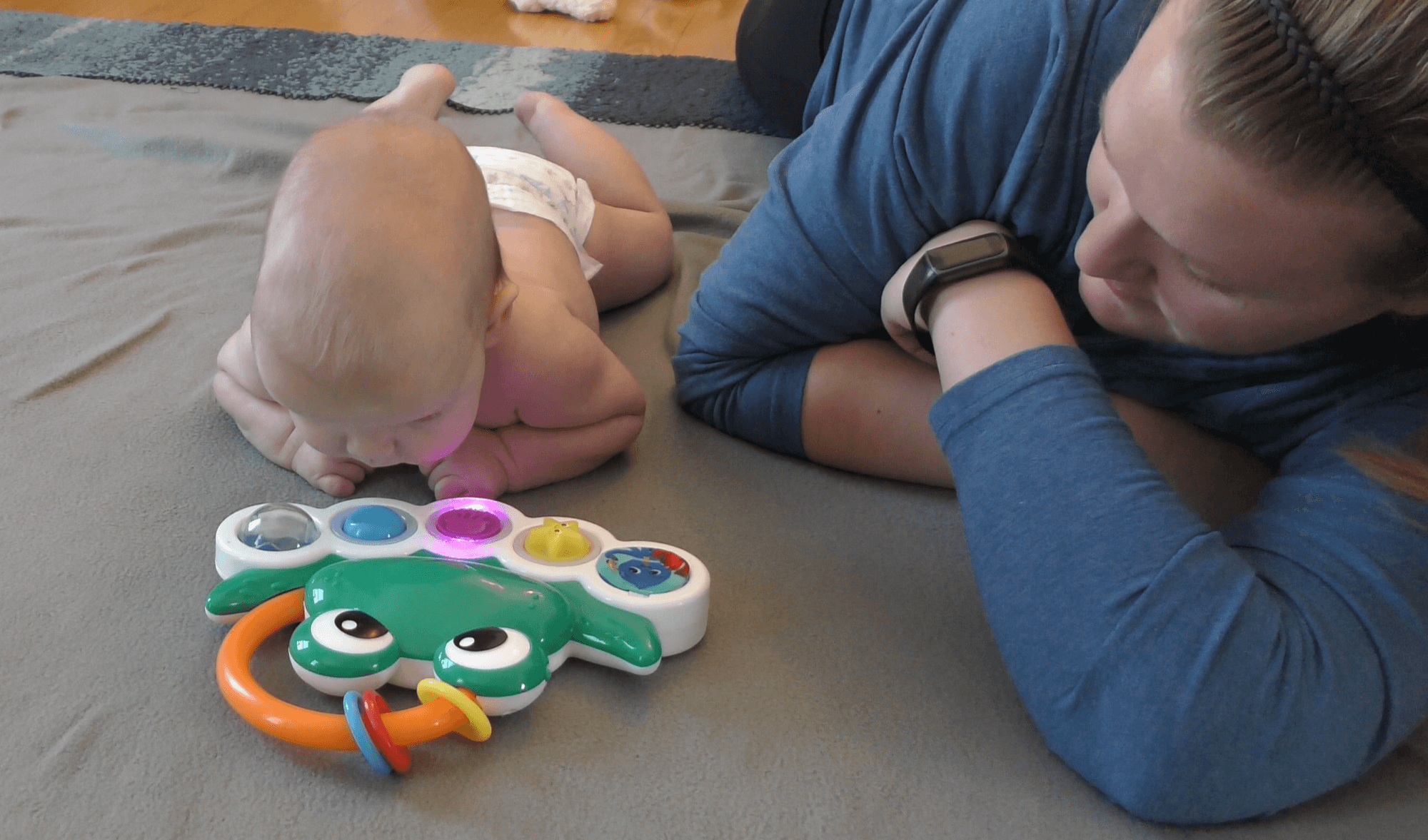
Timing is everything when it comes to playtime with your newborn, and it all comes down to knowing what state of alertness they're in.
Newborns cycle through six states of alertness and sleep throughout the day, and each one calls for a different response from you.
Learn how to read Baby's cues so you can make the most of every opportunity to play, bond, and support their development.
Playtime is so important for your newborn’s development! It helps them learn communication, exercise motor skills, sharpen their senses, and so much more. But if you've ever tried to play with a baby who's hungry, fussy, or half asleep, you know timing is everything.
Throughout the day, newborns cycle through different states of alertness and sleep. Knowing which state your baby is in means you can make the most of the small windows when they're truly ready to play and connect with you. Every baby moves through these states at their own pace, but most experience all of them every day.
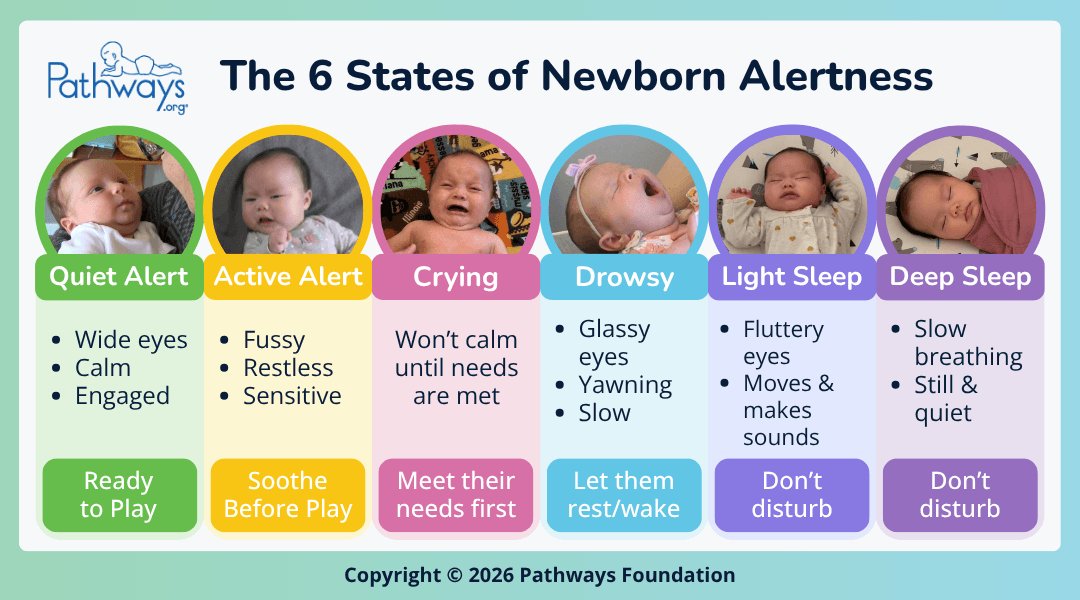
These six states of newborn alertness were first identified by pediatrician Dr. T. Berry Brazelton, whose research on newborn behavior has shaped how caregivers and clinicians understand infant development to this day.
Quiet Alert: Ready to Play
In the quiet alert state, Baby is calm and still, with steady breathing and eyes wide open. They are taking in the sights and sounds around them, but their body moves very little. You may hear them make sweet coos or gurgles as you interact with them.
This is the best time to play! Because Baby is calm but fully awake, they’re at their most engaged and ready to respond to you. Try to get some Tummy Time in, introduce a new toy, give them a baby massage, or simply make eye contact while you talk or sing to them. Here are more ideas for playtime with a newborn!
The quiet alert state is a great time to try some of our baby games with your little one! Download the FREE Pathways.org Baby Milestones App for game recommendations that are perfect for Baby’s age and abilities.
Active Alert: Soothe Before You Play
Sometimes called the “fussing” state, active alert is when Baby is awake but restless. They are moving around a lot but may seem uncomfortable or on the verge of crying. They’ll be more sensitive to sounds and movements around them. You may also see Baby show hunger cues during this state.
This usually isn’t the best time to play. If Baby seems hungry, feed them first. If they’re just fussy, try soothing them. A calm baby can often settle back into a quiet alert state, which is your window for playtime.
Crying: Meet Their Needs First
When your newborn is crying, they're telling you something is wrong (loud and clear!). They may be hungry, tired, need a diaper change, or just uncomfortable—and until that need is met, nothing else, including playtime, will hold their attention.
This isn’t a good time to play with Baby! Focus on soothing and meeting their needs first. Once Baby is calm, they may return to a quiet alert state.
Drowsy: Let Them Rest/Wake Up
The drowsy state happens when Baby is waking up or drifting back to sleep. Their eyes may be open or closed, but if open, they’ll have a glassy, unfocused look. They may react to sound or your touch with slow, smooth movements. (Look for these other common sleep cues!)
This isn’t a good time to play. Baby is on their way in and out of sleep, and pushing playtime now is likely to either wake them fully when they need rest, or fall flat when they’re too sleepy to engage. Let them follow their body’s lead, and watch to see if they move into the quiet alert or active alert state once fully awake.
Deep and Light Sleep: Don’t Disturb
Newborns spend a lot of their time in two sleeping states: deep sleep and light sleep. In deep sleep, Baby is completely still and quiet, breathing slowly and regularly as they snooze away. In light sleep, they may twitch or startle suddenly (the Moro reflex), make small sounds, have fluttery eyes, or show little facial expressions. This can look like Baby is waking up, but they’re usually still asleep (and possibly dreaming!).
During these states, let Baby be. Sleep is just as essential for your newborn’s development as playtime, which is why they do a lot of it!
Staying Responsive During Playtime
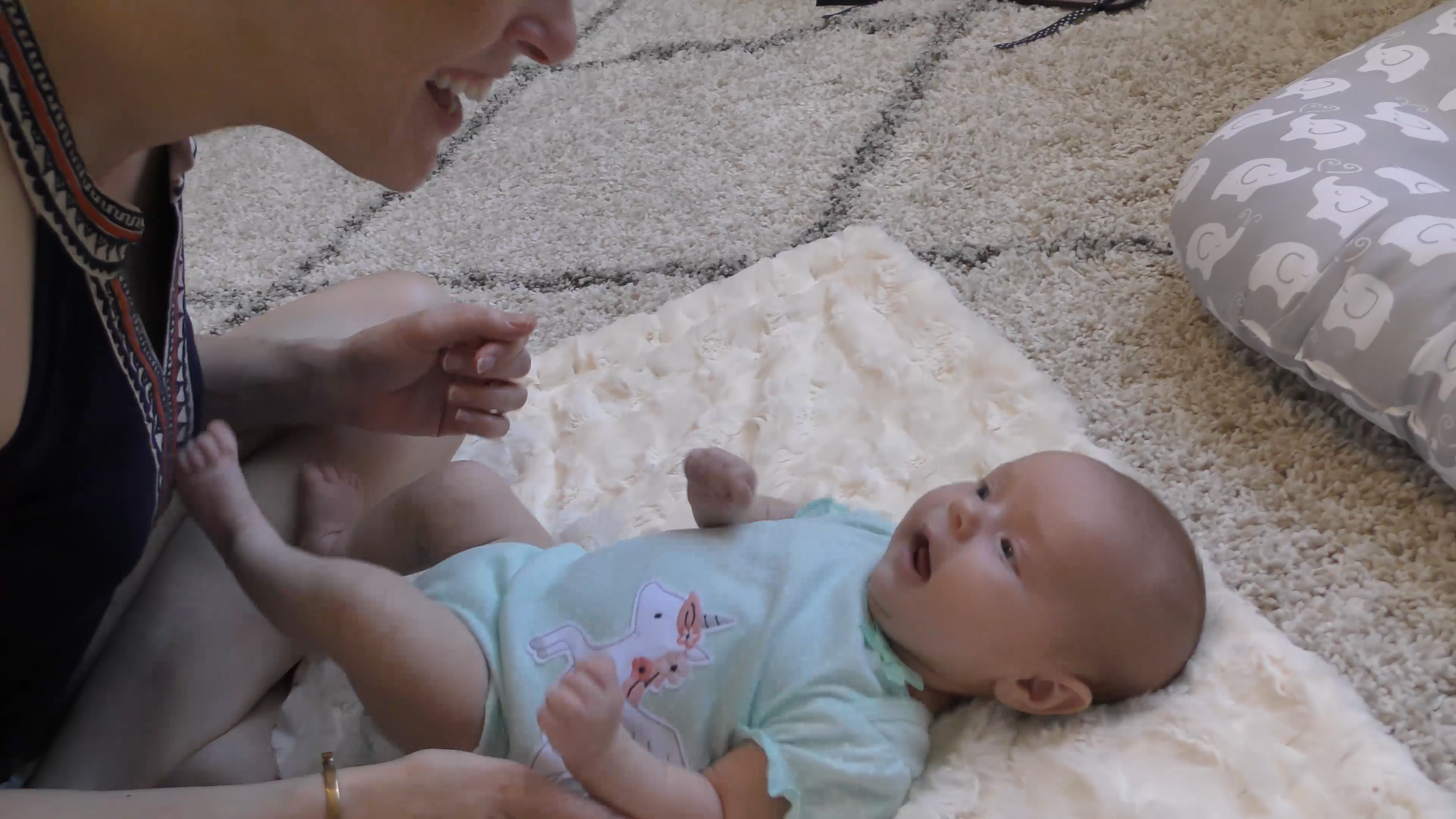
Once Baby is in the quiet alert state and playtime begins, it’s important to stay responsive. Newborns communicate constantly during interactions, and learning to read their cues helps you follow their lead and get the most out of every play session.
Engagement cues tell you Baby is enjoying the interaction and wants to keep going. Look for:
Making eye contact or looking intently at your face
Smooth, relaxed body movements
Cooing, gurgling, or other happy sounds
Smiling or showing a calm, open facial expression
Turning toward you or following your voice
Disengagement cues tell you Baby needs a break or that playtime is winding down. Look for:
Looking away or turning their head
Yawning or glazed eyes
Fussing, whimpering, or hiccupping
Arching their back or pushing away
Falling asleep
When you notice disengagement cues, pause and give Baby a moment to reset. You’ll know Baby is ready to connect again when their expression is calm and clear-eyed, they meet your gaze, or turn toward you. And if they drift to sleep, that’s a sure sign the session is over (and that playtime wore them out in the best way!). Make sure to place them on their back in their crib for safe sleep.
Sources
Barlow, Jane, et al. “The Neonatal Behavioral Assessment Scale (NBAS) and Newborn Behavioral Observations (NBO) System for Supporting Caregivers and Improving Outcomes in Caregivers and Their Infants.” The Cochrane Database of Systematic Reviews, vol. 3, no. 3, 14 Mar. 2018. PMC PubMed Central, 10.1002/14651858.CD011754.pub2. Accessed 28 July 2026.
Brazelton Centre UK. Brazelton UK Behavioural States Poster. 2024, https://www.brazelton.co.uk/wp-content/uploads/2025/03/Brazelton-behavioural-states-poster.pdf. Accessed 28 July 2026.
Brazelton, T. Berry. Neonatal Behavioral Assessment Scale. First ed., Mac Keith Press, 1973, pp. 5–8, https://nidcap.org/wp-content/uploads/2013/12/Brazelton-1973-BNBAS.pdf. Accessed 28 July 2026.
The Royal Children’s Hospital Melbourne. Cues. https://www.rch.org.au/cocoon/project/getting-to-know-baby/Cues/. Accessed 28 July 2026.