Why Newborns Sneeze So Much: Causes and What to Do
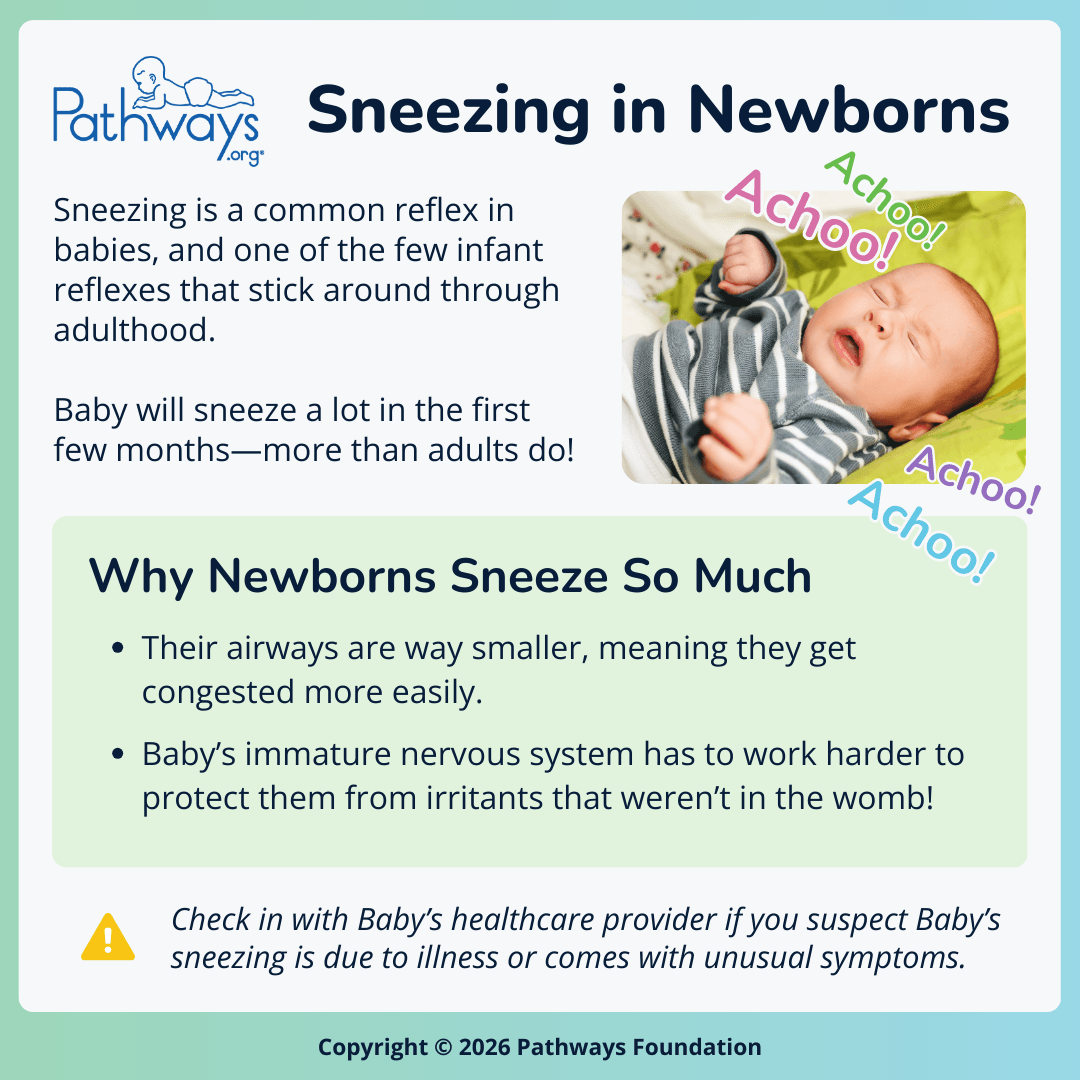
Newborns sneeze more than adults due to their smaller airways and exposure to irritants they didn’t have in the womb.
Sneezing with other symptoms can be a sign of illness, but sneezing due to allergies is very unlikely at this age.
Unless Baby is sick or needs their nose to be cleaned, there isn’t much to do about a sneezing Baby.
Achoo! Achoo! Achoo! Is your newborn baby sneezing a lot? Sometimes several times in a row? That precious scrunchy face and those tiny “achoos” are some of the cutest things you’ll see from your baby in the early months. But is all that sneezing typical for babies? Read on to find out what it could mean.
Main Causes of Newborn Sneezing
Sneezing is a common reflex in babies, just like when they cutely grab your finger (palmar grasp reflex) or startle suddenly (moro/startle reflex). Except sneezing doesn’t go away after the newborn months! This noisy reflex sticks around through adulthood because it’s an important defense mechanism for keeping out germs and everyday irritants.
But the reason it happens so much in infants often comes down to two simple facts:
Their airways are way smaller, meaning they get congested more easily.
Baby’s immature nervous system has to work harder to protect them from irritants that weren’t in the womb!
Many environmental factors can cause your little one to have a sneezing fit. They may be trying to sneeze away mucus, dust, breast milk, or germs they come into contact with. Bright lights can also be a trigger (Ever look up at a light to get a trapped sneeze out?).
Don’t be alarmed if Baby is sneezing more than three times in a row, or many times throughout the day; this is often just a sign that Baby’s nervous system is doing its job!
Does sneezing mean Baby is sick?
Sneezing can sometimes be a sign of a respiratory illness. The best way to tell is if other symptoms come with it. Look for coughing, a runny nose, increased sleepiness, difficulty feeding, fever, or trouble breathing. Reach out to Baby’s healthcare provider if Baby checks any of those boxes so you can find the right treatment.
Can babies get allergies?
It’s very unlikely that Baby’s sneezing is due to allergies, simply because they haven’t been earthside long enough to develop them! Seasonal allergies typically don’t show up until toddlerhood, but allergies to indoor allergens like dust or pet dander may develop earlier, as Baby will spend most of their early months inside.
What You Can Do About Baby’s Sneezing
If Baby is sneezing because they are sick, the best thing you can do is take them to the doctor. If it’s due to a bit of booger blockage, a good nose clean will often do the trick. It’s also a good idea to keep Baby away from highly polluted areas and strong irritants such as secondhand smoke, bonfire smoke, car exhaust, and mold. Baby’s weak immune system can’t fend off these things with a simple sneeze!
But more often than not, there’s not much for you to do when Baby gets into a sneezing fit. Sneezing in infants is a healthy sign that their nervous system is working as it should. As Baby’s nervous system gets stronger, their frequent sneezing will decrease. So unless Baby is sick, bask in the cuteness of those funny little sounds and say, “Excuse you, Baby!”
When to Talk to a Doctor
If you suspect Baby’s sneezing is a sign of something more, trust your instincts and talk to their healthcare provider. In general, you should seek medical attention if Baby’s sneezing is due to illness or comes with unusual symptoms such as high fever (at or above 100.4°F), breathing difficulties, or rash. In some rare cases, excessive sneezing can be caused by a condition Baby was born with. An evaluation with Baby’s healthcare provider can help rule this out.
Sources
“Newborn Reflexes.” Cleveland Clinic, 14 June 2022, my.clevelandclinic.org/health/articles/23265-newborn-reflexes. Accessed 15 Jan. 2026.
“Sneezing: Why You Do It and How You Can Stop.” Cleveland Clinic, my.clevelandclinic.org/health/symptoms/sneezing. Accessed 15 Jan. 2026.
Esposito, Susanna, et al. “How Air Pollution Fuels Respiratory Infections in Children: Current Insights.” Frontiers in Public Health, vol. 13, 28 Apr. 2025. PMC PubMed Central, https://doi.org/10.3389/fpubh.2025.1567206.
“Symptomviewer.” HealthyChildren.org, 24 June 2017, www.healthychildren.org/English/tips-tools/symptom-checker/Pages/symptomviewer.aspx?symptom=Newborn+Reflexes+and+Behavior. Accessed 15 Jan. 2026.
“Common Cold in Babies.” Mayo Clinic, 11 Apr. 2025, www.mayoclinic.org/diseases-conditions/common-cold-in-babies/symptoms-causes/syc-20351651.