Social-Emotional Development: How Baby Builds Connection
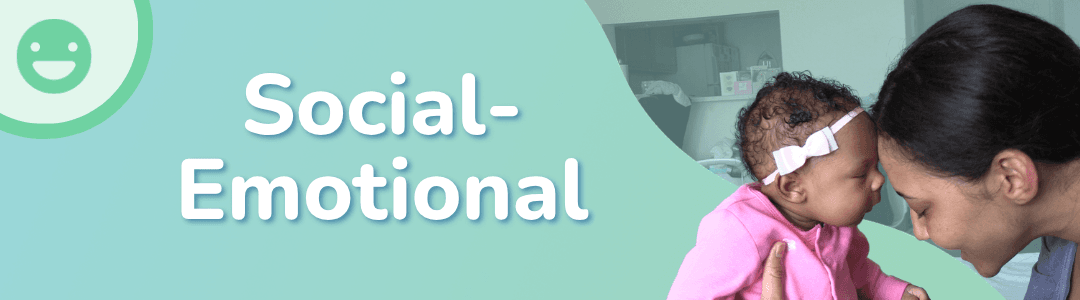
Social-emotional skills are essential for connecting with others! They help us understand and manage emotions, establish positive relationships, and navigate different social environments, like recognizing if someone is sad and asking if they're okay, or expressing yourself with friends differently than with parents.
In the early months, responding to Baby's cues and helping them feel safe and loved are the best ways to support their social-emotional development. These early experiences with you build the foundation for friendships, learning, and mental health later in life.
⚑ How Social-Emotional Skills Develop
Babies are born wired for connection, so Baby is learning about emotions and relationships from day one. They're watching your expressions, listening to your voice, and figuring out the world based on how you respond to them.
The 5 Core Areas of Social-Emotional Skills
Self-Awareness
Recognizing themselves in a mirror; saying "me" and "mine" (~18 months)
Self-Regulation
Being soothed by your voice; slowly developing calming strategies in toddlerhood
Social Awareness
Reading facial expressions; looking to you for safety cues
Relationship Skills
Back-and-forth cooing and smiling — Baby's first "conversations"
Decision-Making
Choosing which toys to engage with by directing their gaze or grabbing intentionally
What to Expect by Age
Open your child's age range to learn how social-emotional skills develop as they grow:
Baby's first year (0–12 months)
0–2 Months
Calms to the sound of your voice
Makes eye contact during feedings
2–4 Months
Smiles more at familiar faces
Wiggles with excitement when they see you
Begins to trust you as a reliable, safe presence
4–6 Months
Laughs out loud
Shows clear pleasure and displeasure
Reaches toward familiar people
6–9 Months
Looks to your face for reassurance in new situations
Strong attachment to familiar caregivers
9–12 Months
Waves bye-bye
Plays peek-a-boo and pat-a-cake
Protests when you leave
Toddler years (12–36 months)
12–18 Months
Gives hugs and kisses
Plays alongside (not yet with) other children
Shows early empathy
18–24 Months
"No!" and "Mine!" are very popular words
Begins pretend play
Feels jealousy, pride, and guilt
Very tuned in to your mood
24–36 Months
Starts playing cooperatively with peers
Takes turns in simple games
Uses words to express feelings
Seeks comfort when hurt or upset
Helping Social-Emotional Skills Grow
The most powerful thing you can do is be present, responsive, and consistent.
Respond promptly to Baby's cues. There's no such thing as "spoiling a baby", because they rely on you to fulfill their needs! Every response helps build trust and secure attachment.
Name emotions out loud. "You look frustrated." "I can see you're excited!" Hearing emotion words helps toddlers understand what they're feeling and learn to "use their words."
Model your own emotions. "I'm feeling frustrated, so I'm going to take a deep breath." Kids learn healthy coping strategies by watching you.
Stay calm during meltdowns. "I know you're really upset. I'm right here." Staying calm teaches them how to calm down too.
Play together every day. Face-to-face play, singing, reading, and turn-taking games are powerful tools for emotional growth.
Read books together. Pause and ask, "How do you think they feel?" Even young toddlers can start to think about others' emotions.
Encourage independence. Let them try without jumping in. Struggling and succeeding are important for building self-confidence.
Keep routines predictable. Consistent routines reduce anxiety and create the safety children need to grow emotionally.
Limit screens. Screen time is not recommended for babies under 18 months (except video calls with family). For 18–36 months, watch together and talk about what you see, and make plenty of time for unstructured, screen-free play.
When to Get Support with Social-Emotional Skills
Things like tantrums, stranger anxiety, and trouble with sharing are all developmentally normal stages most toddlers grow out of. But talk to your child's healthcare provider if you notice:
No smiling or response to smiling by 3 months
No eye contact or interest in people
No recognition of familiar caregivers
No babbling, pointing, or waving by 12 months
Your child is consistently very hard to soothe
No interest in other children or play
Not imitating actions or words by 18 months
Loss of skills they previously had
Extremely intense or prolonged tantrums past ages 2–3
Your child seems withdrawn or unresponsive to affection
Trust your instincts. You know your child best, so bring up any concerns at your next well-baby visit, or sooner if needed. Early support makes a real difference.
Specialists who may help: occupational therapists, speech-language pathologists, child psychologists, developmental pediatricians, and social workers. Your child's healthcare provider can point you in the right direction.