How to Change Baby's Diaper: A Step-by-Step Guide for New Parents
-xq-abi.png&w=3840&q=75)
Make sure your changing station is stocked and the supplies are within arm’s reach so you always stay by Baby’s side.
Follow our 9-step diaper changing routine, including how to wipe, prevent diaper rash, get a leak-proof fit, and squeeze in some Tummy Time.
Learn extra tips, like how to safely lift Baby when wiping and prepare for changes on the go.
Diaper changes are one of the most frequent tasks you'll tackle as a new parent. Newborns alone can need up to 12 changes per day! While it might feel overwhelming at first, a little preparation and a consistent routine will have you changing diapers like a pro in no time. This step-by-step guide walks you through everything you need to know, from setting up your changing station to keeping Baby comfortable and rash-free.
Track Baby’s diaper changes with our Diaper Tracker online or in the free Pathways.org Baby Milestones App!
Diaper Changing Supplies: What to Keep at Your Changing Station
Before you get started, make sure your changing table is fully stocked. Having everything within arm's reach means you'll be right by Baby's side and keep them safe throughout the whole change.
Here's what to keep on hand:
Diapers (size-appropriate for Baby's current weight)
A changing pad or disposable liners to protect your surface
Hand sanitizer or easy access to a sink for handwashing
Unscented baby wipes or a damp washcloth
A small (washable) toy or other distraction for Baby
Diaper ointment or cream
Paper towels or a small cloth for patting Baby dry
A diaper pail or garbage bag
A spare outfit, in case of a blowout
Disinfectant wipes for cleanup
Pro tip: Keep a small "diaper caddy" (a portable organizer stocked with wipes, diapers, and ointment) so you can move it from room to room or grab it for travel.
How to Change Baby’s Diaper Step-by-Step
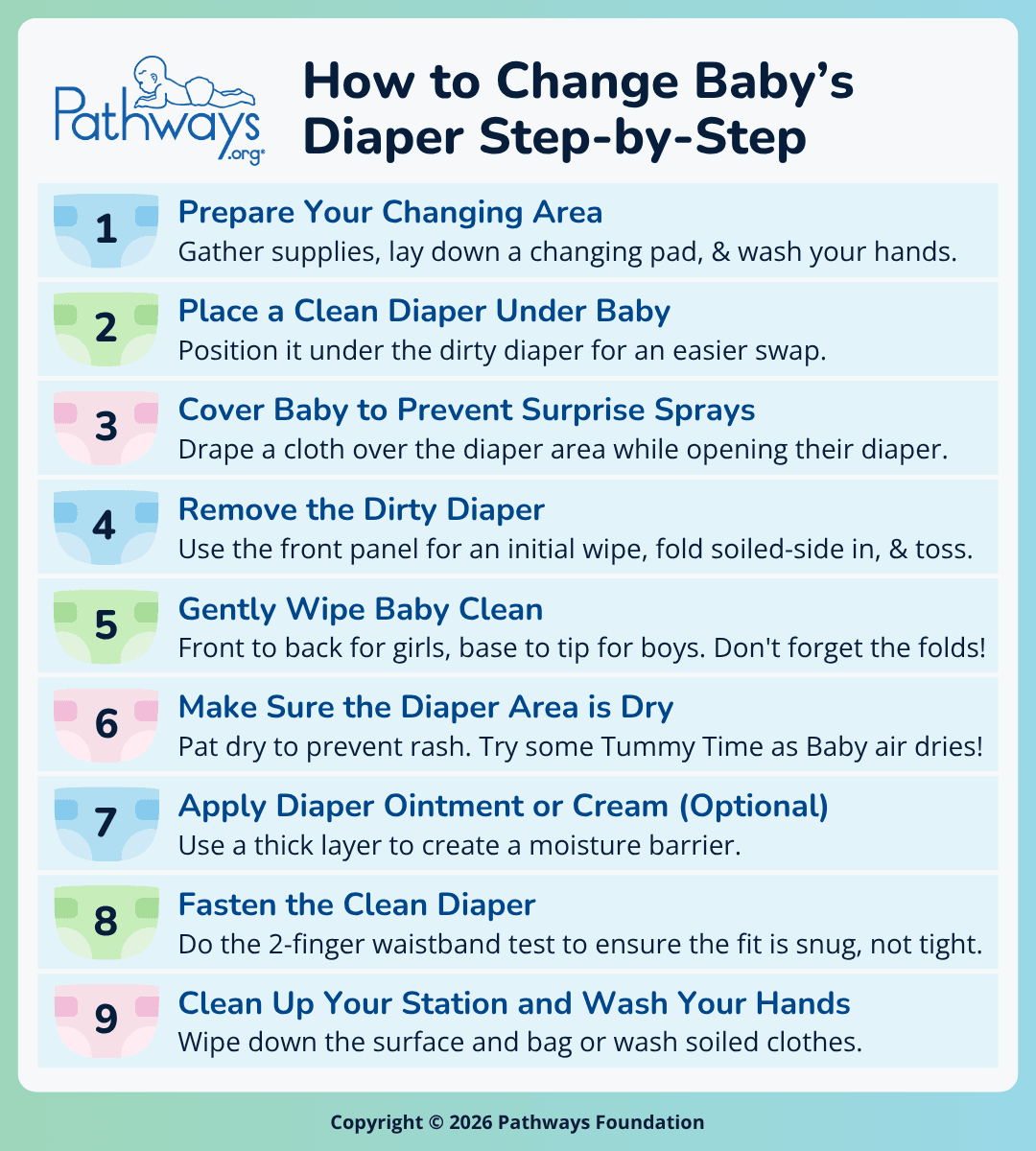
1. Prepare Your Changing Area
Gather your supplies, protect your surface with a changing pad (you can use a washable one at home and disposable ones on the go), and wash your hands for at least 20 seconds. If using a public restroom station, wipe it down first.
2. Place a Clean Diaper Under Baby
Before removing Baby’s dirty diaper, slide a fresh one under them. Double-check that the back panel (the side with sticky tabs) is positioned under Baby’s bottom. Having the clean diaper already in place makes the swap much faster, especially when Baby gets squirmy or fussy!
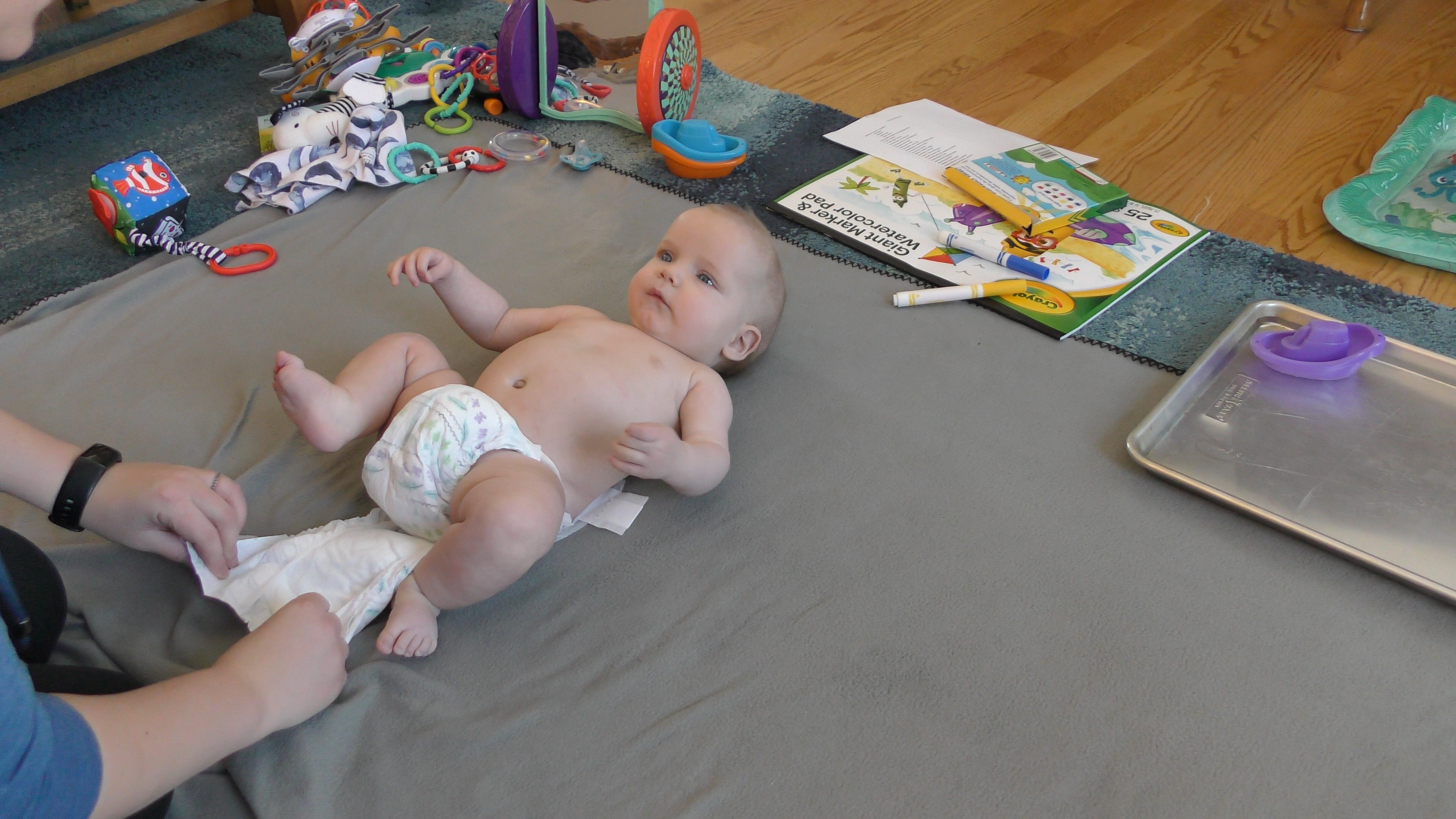
3. Cover Baby to Prevent Surprise Sprays
Exposure to cool air can trigger babies to pee unexpectedly, so be prepared! Lay cloth or paper towel loosely over the diaper area as soon as you open the dirty diaper. For baby boys, a "peepee teepee" or draped cloth works well.
4. Remove the Dirty Diaper
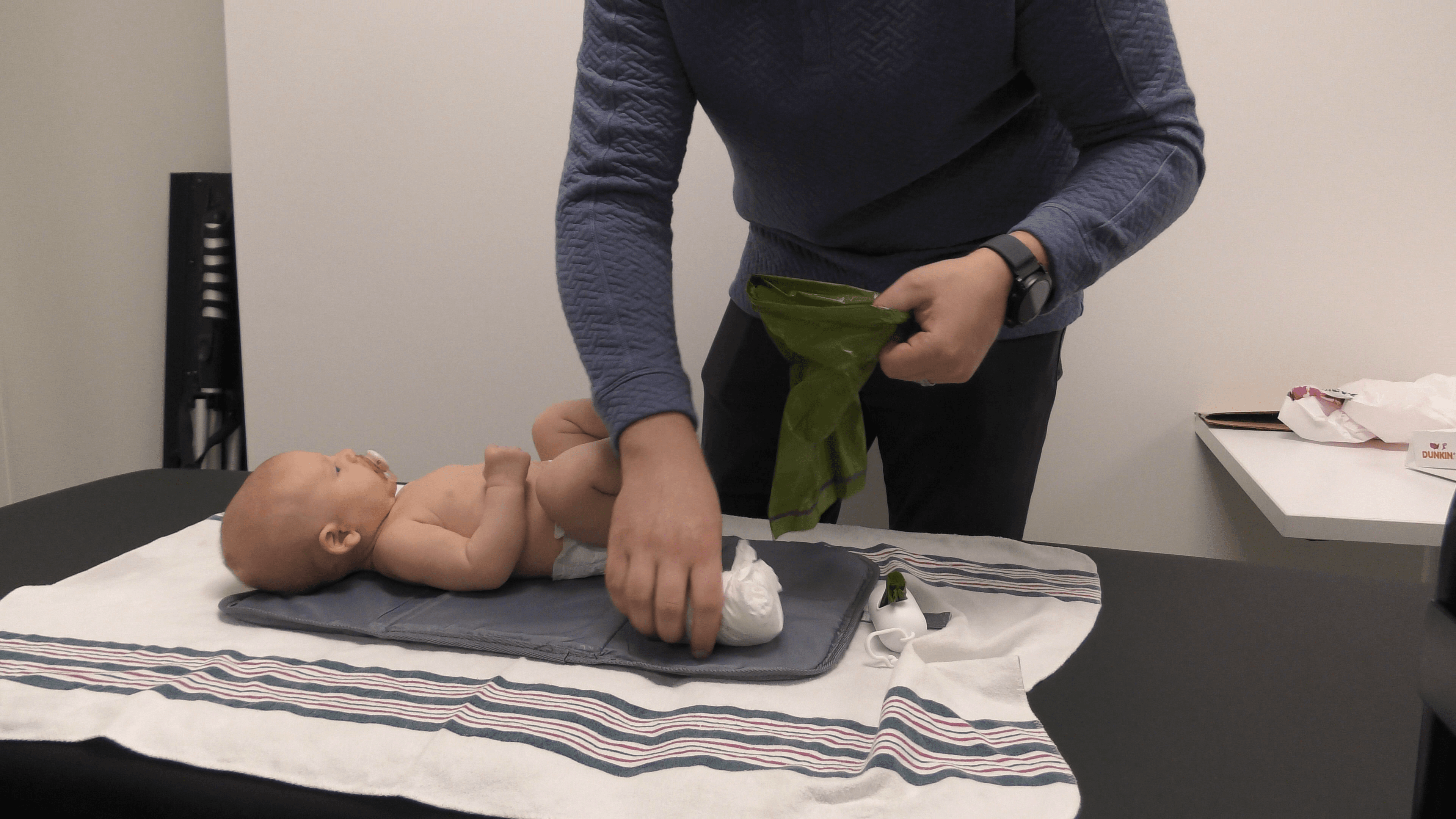
Unfasten the tabs and fold them back so they don't stick to Baby's skin. You can use the front inner panel of the dirty diaper to do an initial wipe-down as you pull it away. Fold the dirty diaper soiled-side inward, re-fasten the tabs around the bundle, and toss it. If you’re in a public space, place it in a bag before disposing it.
Blowouts will happen! To avoid spreading the mess even more, here’s a handy tip: If Baby is wearing a onesie with shoulder flaps (also called envelope folds), use them to shimmy the onesie down Baby’s body instead of over their head.
5. Gently Wipe Baby Clean
Wipe the whole diaper area thoroughly, including any old ointment. For baby girls, always wipe front to back. For baby boys, wipe base to tip and beneath the scrotum. Don't forget the skin folds around the thighs and bottom. If Baby had a blowout and is extra messy, it may be time for a bath!
6. Make Sure the Diaper Area is Dry
Pat the diaper area completely dry with a clean paper towel or soft cloth to prevent diaper rash. You also let them air dry for a minute or two. This is a great opportunity for a little Tummy Time! Leave the clean diaper under Baby to catch any accidents and keep a hand on them if they’re on an elevated surface.
7. Apply Diaper Ointment or Cream (Optional)
Once Baby’s skin is dry apply a thick layer of fragrance-free ointment or cream with a high zinc oxide or petroleum jelly content to create a moisture barrier. A silicone diaper spatula can help you spread it evenly while keeping your hands clean.
Note: The American Academy of Pediatrics recommends against using baby powder, as babies can inhale the dust and irritate their lungs.
8. Fasten the Clean Diaper
Bring the front up to just below Baby's belly button (fold it down for newborns with a healing umbilical cord stump). Pull the adhesive tabs around from the back and fasten them symmetrically for a snug, even fit.
How to Check the Fit of Baby’s Diaper:
You should be able to slide two fingers comfortably under the waistband — snug enough to prevent leaks, but not so tight it leaves marks (a sign they may need a bigger size!). Make sure the leg ruffles are pulled outward. They are your best defense against blowouts!
9. Clean Up Your Station and Wash Your Hands
Once Baby is somewhere safe (a play mat, crib, or held securely), wipe down the changing surface. Rinse soiled clothes in cold water, then wash them. Seal anything soiled in a bag if you're on the go. Finally, wash your hands for at least 20 seconds.
Diaper Changing Tips for New Parents
Once you have the basics down, these tips will help make diaper changes smoother, safer, and even a little more fun for both you and Baby.
Never leave Baby unattended: Even a very young baby can roll off a changing table in a split second. Always keep one hand on Baby and use the safety strap if your table has one. See more changing table safety tips here.
Make it a positive sensory experience: Narrate what you're doing, make eye contact, smile, and sing to help Baby enjoy the routine. A washable toy can also keep their little hands busy.
Lift Baby’s legs safely: Avoid lifting Baby by the ankles too much, as it can stress the spine over time. Instead, roll Baby to either side or gently push their knees toward their belly, lifting only as much as you need to wipe.
Monitor active diaper rash: Apply a very thick layer of diaper cream to the rash. Talk to Baby’s healthcare provider if it doesn't improve within 2–3 days, appears to be spreading, or if blisters or sores develop.
Use this time to clean Baby’s nose: Once Baby is diapered and relaxed, take this chance to clean their nose or tackle other quick hygiene tasks.
On-the-Go Diaper Change Hacks:
Keep a stash in your car: A few diapers, wipes, a spare outfit, and an old blanket in the trunk will save you when you forget the diaper bag.
Use dog waste bags for dirty diapers: These are perfect for disposing of diapers in a public space or when there isn’t a garbage nearby.
Pack a wet bag: A reusable zippered wet bag keeps soiled clothes and cloth diapers contained and odor-free in your diaper bag.
Change before you leave: Making it a habit to do a diaper check right before you head out can save you from a blowout in a less convenient location.
With a little practice, diaper changes will become second nature. For more tips on making them easier, check out this blog.
Sources
American Academy of Pediatrics. “Apply Diaper Cream the Right Way | AAP.” YouTube, 25 Dec. 2024, www.youtube.com/shorts/4Ng5V_UjTMk. Accessed 11 May 2026.
“Healthy Habits: Diaper Changing Steps at Home.” Centers for Disease Control and Prevention, 16 Apr. 2024, www.cdc.gov/hygiene/about/healthy-habits-diaper-changing-steps-at-home.html. Accessed 11 May 2026.
Hill, David L., and Tanya Altmann. Caring for Your Baby and Young Child: Birth to Age 5. 8th ed., American Academy of Pediatrics, 2024, publications.aap.org/aapbooks/book/768/Caring-for-Your-Baby-and-Young-Child-Birth-to-Age. Accessed 5 Mar. 2026.
Hirsch, Larissa. “Diapering Your Baby.” Nemours KidsHealth, The Nemours Foundation, June 2022, kidshealth.org/en/parents/diapering.html. Accessed 11 May 2026.
Jana, Laura A., and Jennifer Shu. “Changing Diapers.” HealthyChildren.org, American Academy of Pediatrics, 19 May 2021, www.healthychildren.org/English/ages-stages/baby/diapers-clothing/Pages/Changing-Diapers.aspx. Accessed 11 May 2026.