Infant Vision Development: What Baby Sees in Their First Year
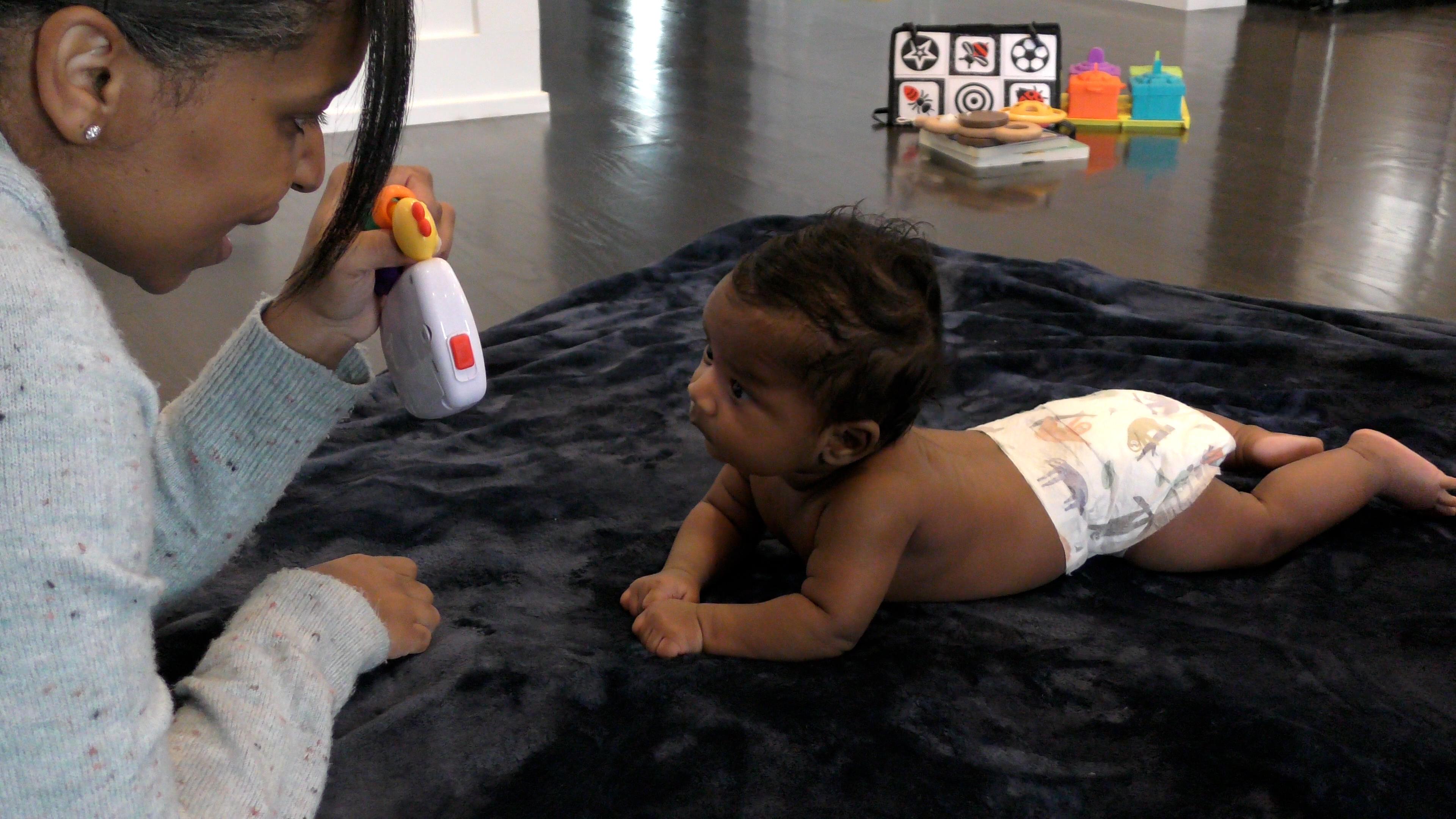
Vision is one of the slowest senses to develop; it goes through the most changes during Baby’s first year and fully matures by late childhood.
Baby’s vision starts out blurry and colorless, but their world quickly comes into focus and gains color and depth over several months.
Baby’s healthcare provider will check their eyes at well-baby visits; this is a good time to bring up concerns, such as eye crossing or trouble tracking beyond 3 months.
Did you know vision is one of the slowest senses to develop? When you consider the fact that babies spend several months in a dark womb, it’s not all that surprising! It’s only toward the end of the second trimester that Baby begins seeing light and shadows. When they come into the world, it’s blurry and colorless.
But throughout their first year, things quickly come into focus, colors become more vibrant, and they start seeing further distances and depth. These changes mark exciting milestones in Baby’s sensory development. Learn all about Baby’s early vision below!
Why It’s Important to Support Baby’s Vision Development
Vision is an important part of our sensory system, just like hearing, smell, taste, and the rest of our eight senses. Vision integrates with all the senses to develop so many skills, from grasping toys and crawling in the early months to walking, writing, and reading later on. By engaging in activities that support Baby’s sensory milestones, you’re helping them navigate their world with confidence!
How Baby’s Vision Changes from Birth to 12 Months
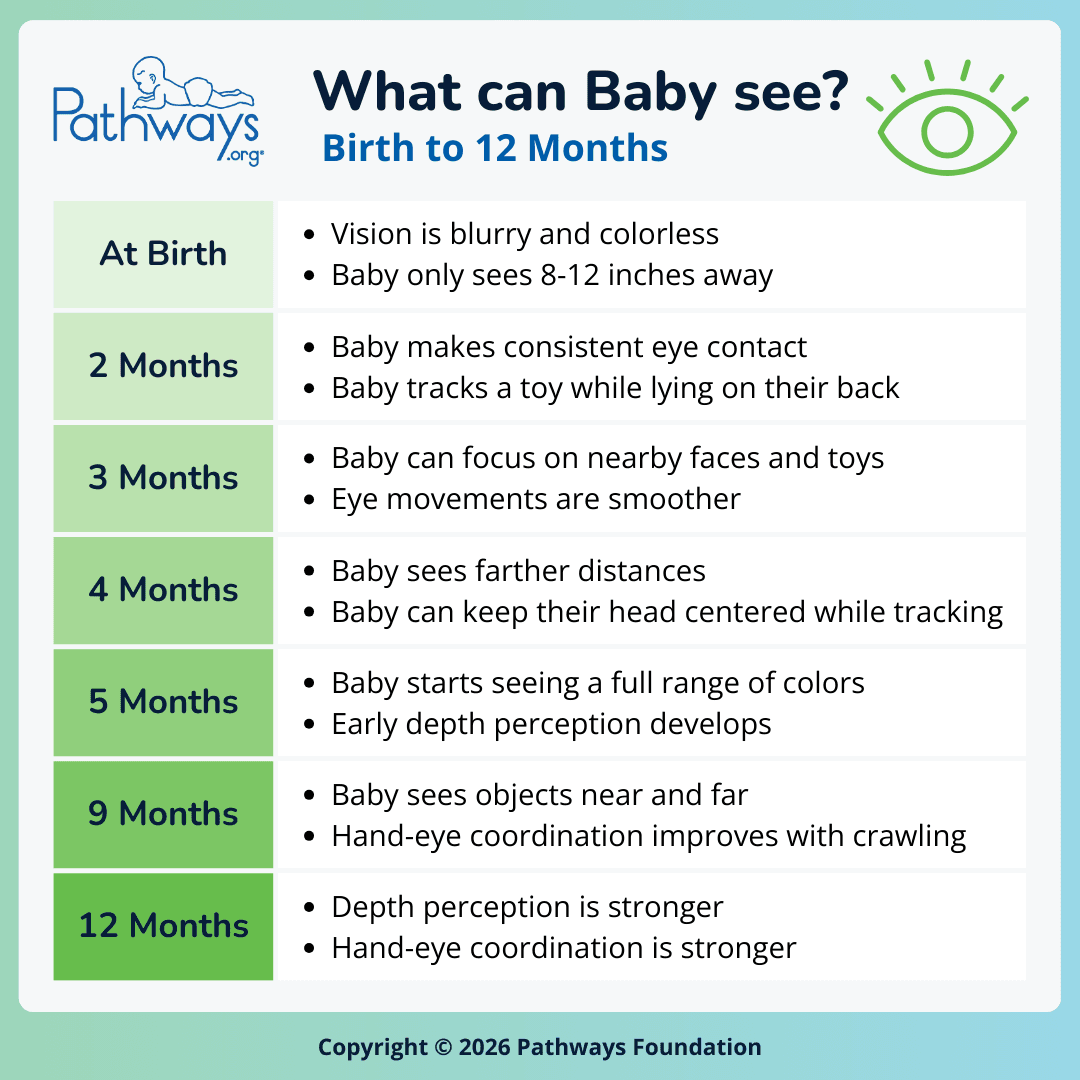
At Birth
Baby’s vision is blurry, and they can only focus on objects and faces that are 8 to 12 inches away.
They see shades of black, white, and gray.
Their eyes might cross or drift, as their eye muscles are just beginning to strengthen.
2 Months
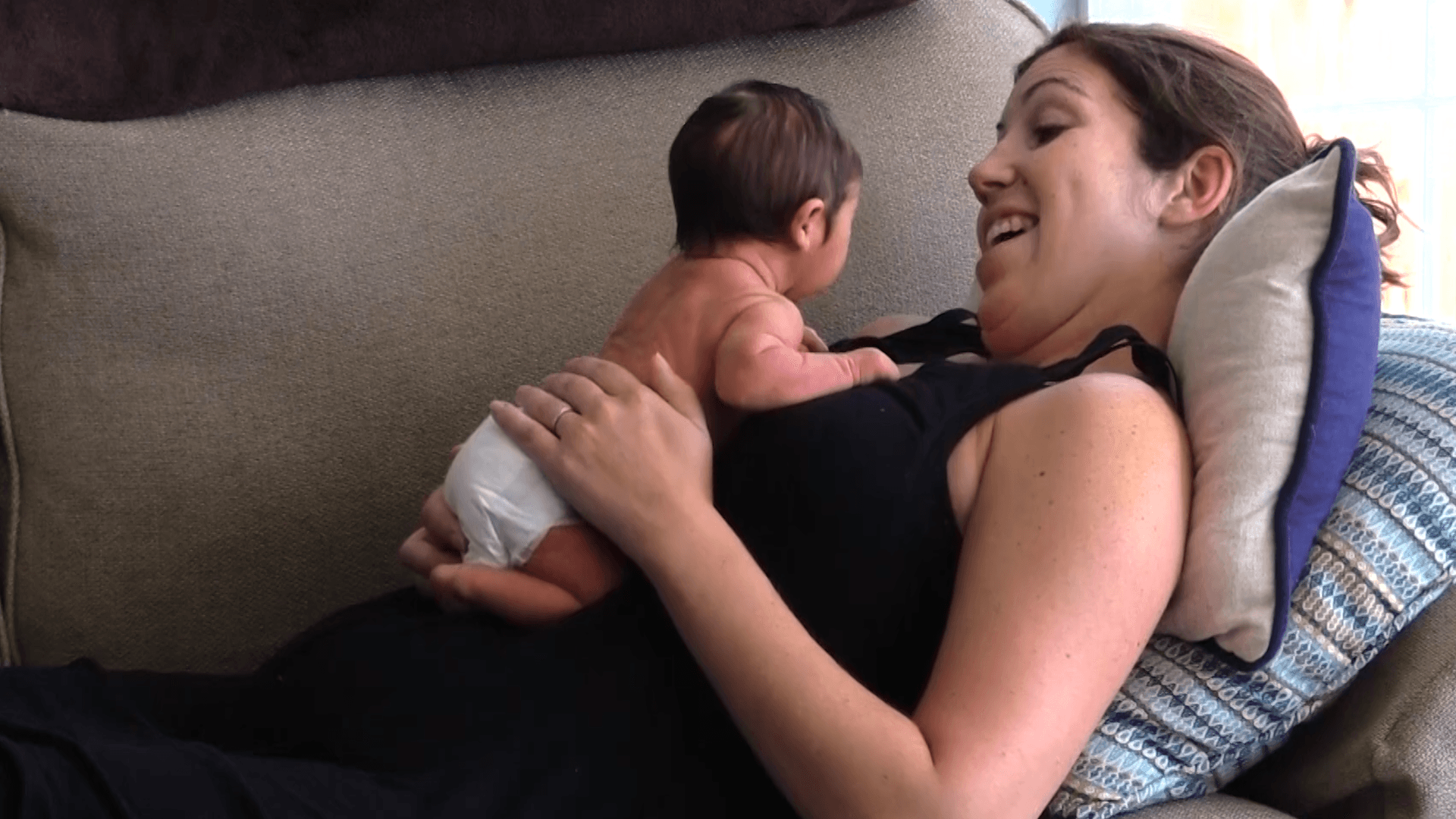
Baby’s eyes are a bit more coordinated.
They can track a moving toy from side to side while lying on their back.
Baby makes consistent eye contact when calm and alert.
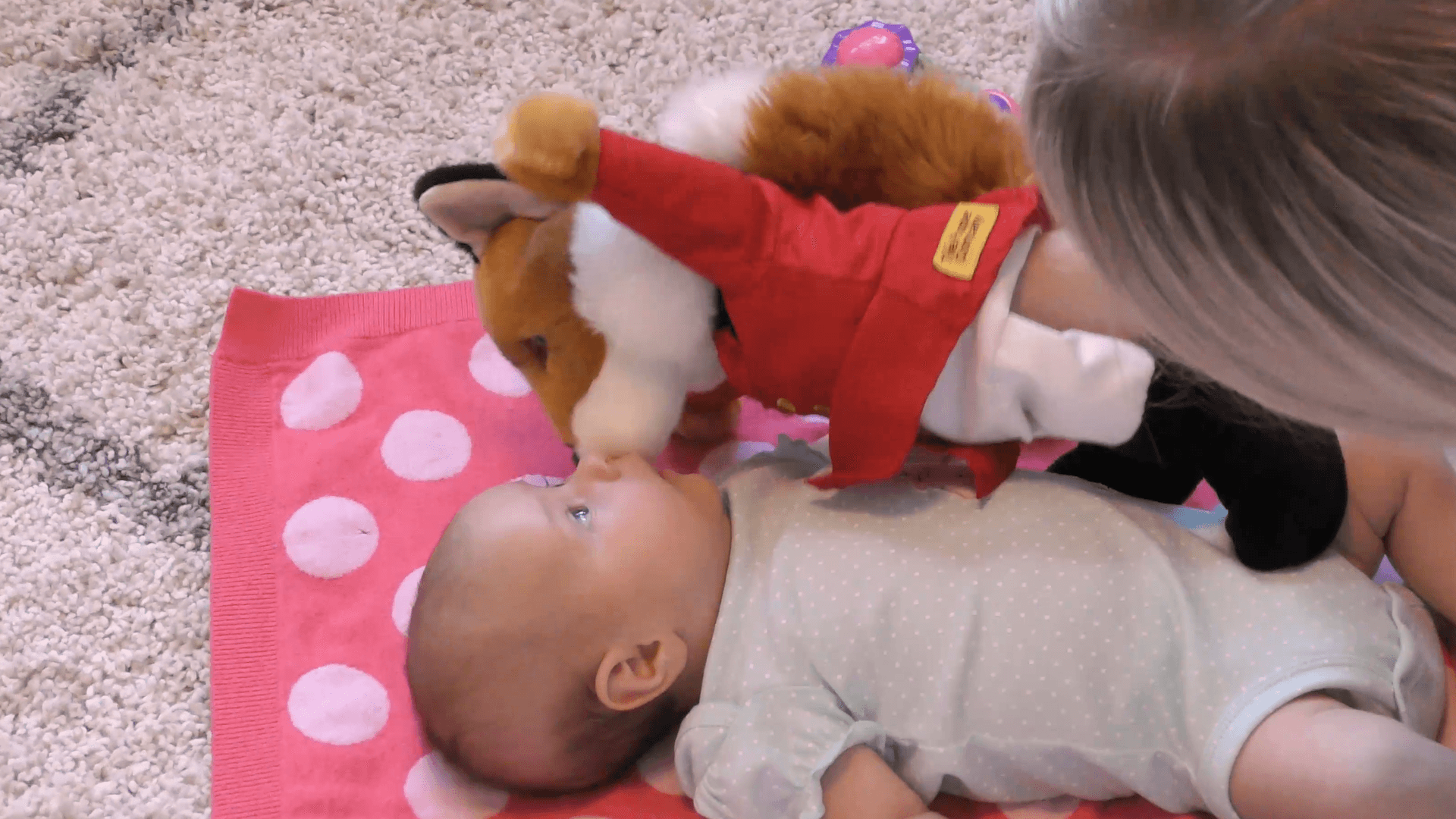
Activity to Try: Lie Baby on their back and slowly move your face or a toy from side to side to help them practice tracking.
Play This Game
3 Months
Baby’s vision is clearer, allowing them to focus better on faces and nearby toys.
Their eye movements are smoother, and their eyes track together.
Baby might reach out to swipe at toys held above them, a sign of early hand-eye coordination developing.
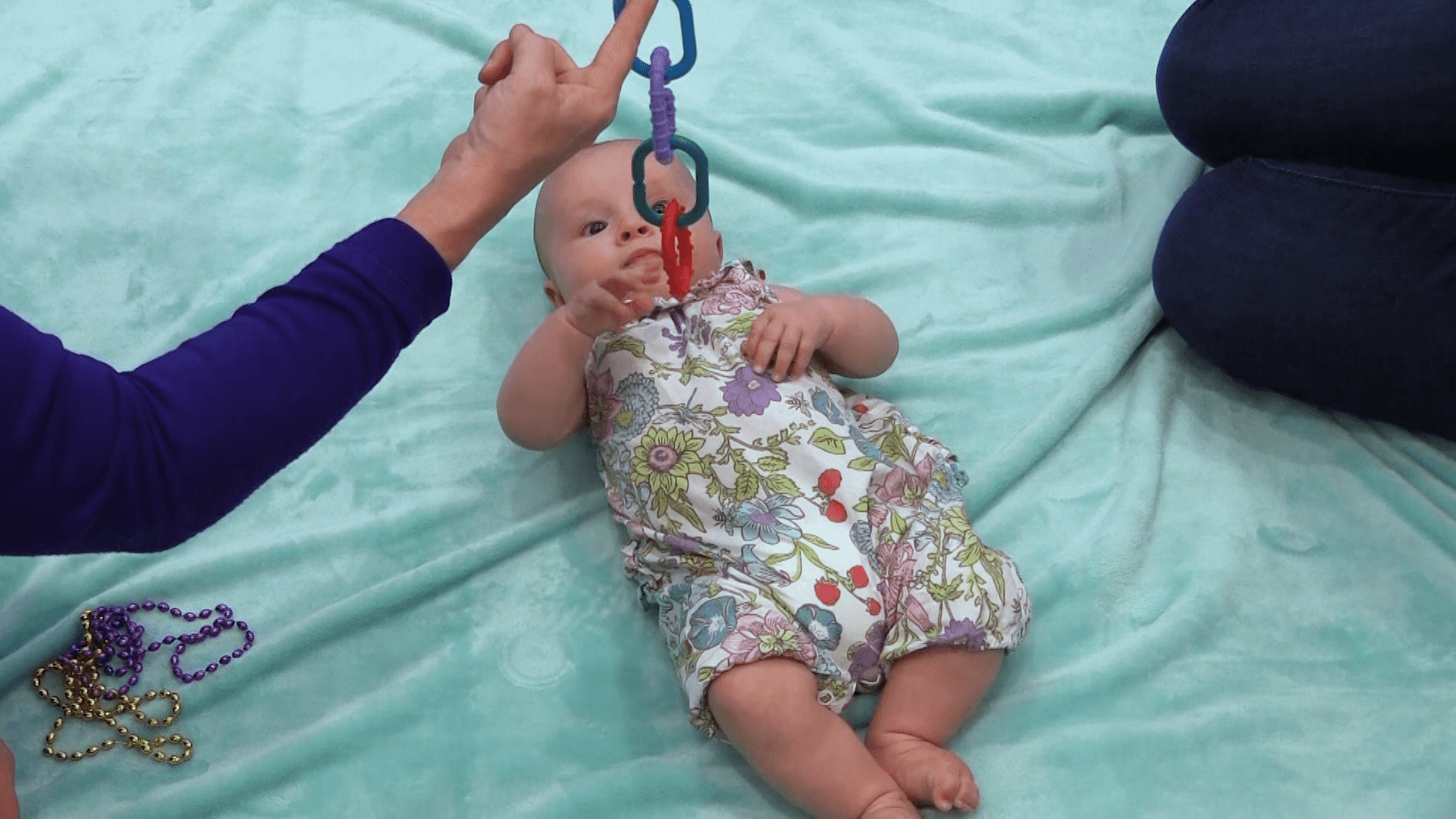
Activity to Try: Dangle simple objects (like a rattle or plastic measuring spoons) from a string so Baby can swipe at it while lying on their back.
Play This Game
4 Months
Baby can see farther distances.
They’re better at keeping their head centered as they follow objects around with their eyes.
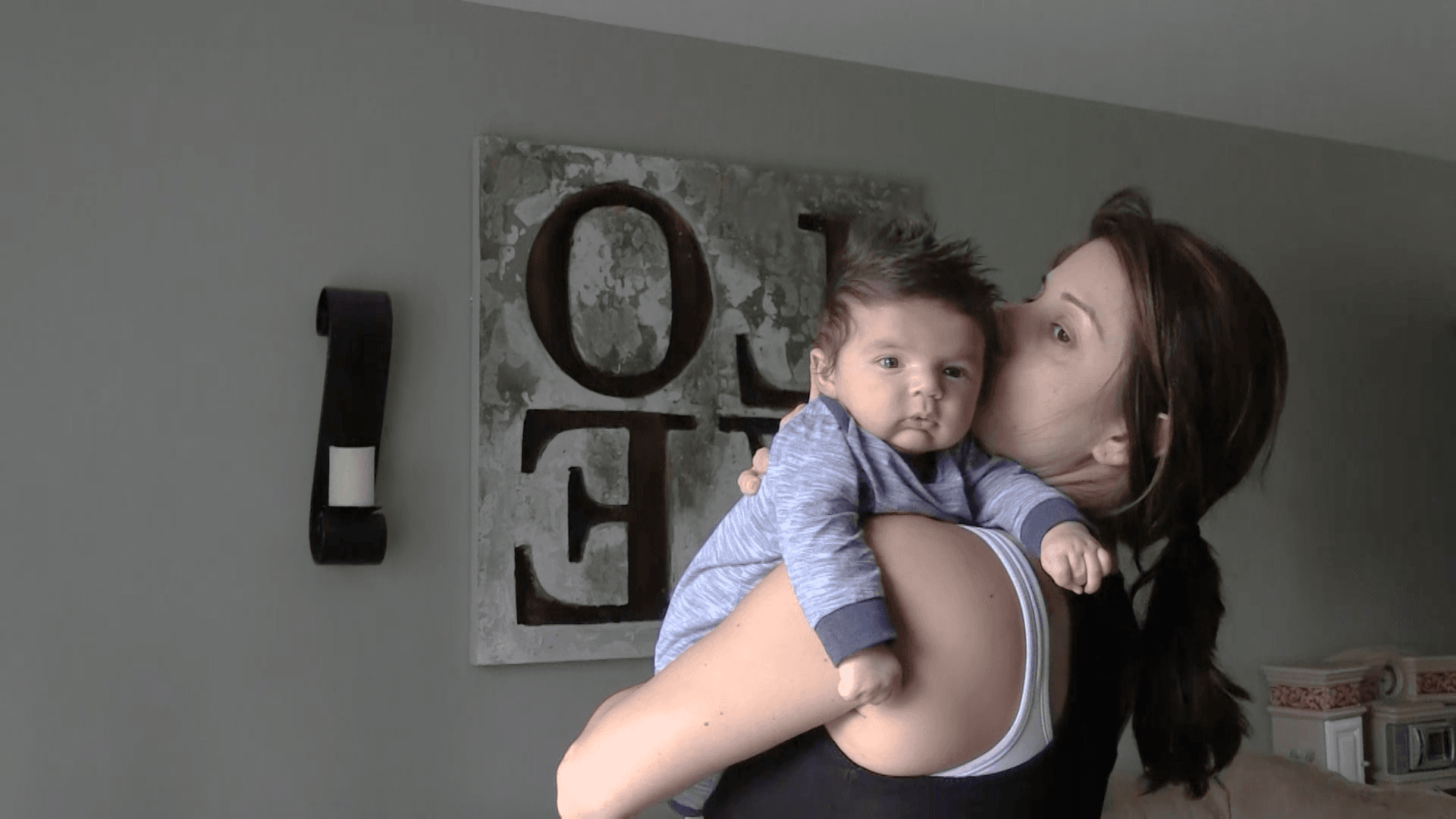
Activity to Try: Carry Baby in different positions (tummy-down, over your shoulder) as you walk around the house to give them new perspectives and help them develop head control.
Play This Game
5 Months
Baby starts seeing a full range of colors.
Early depth perception helps Baby begin to understand how far away something is.
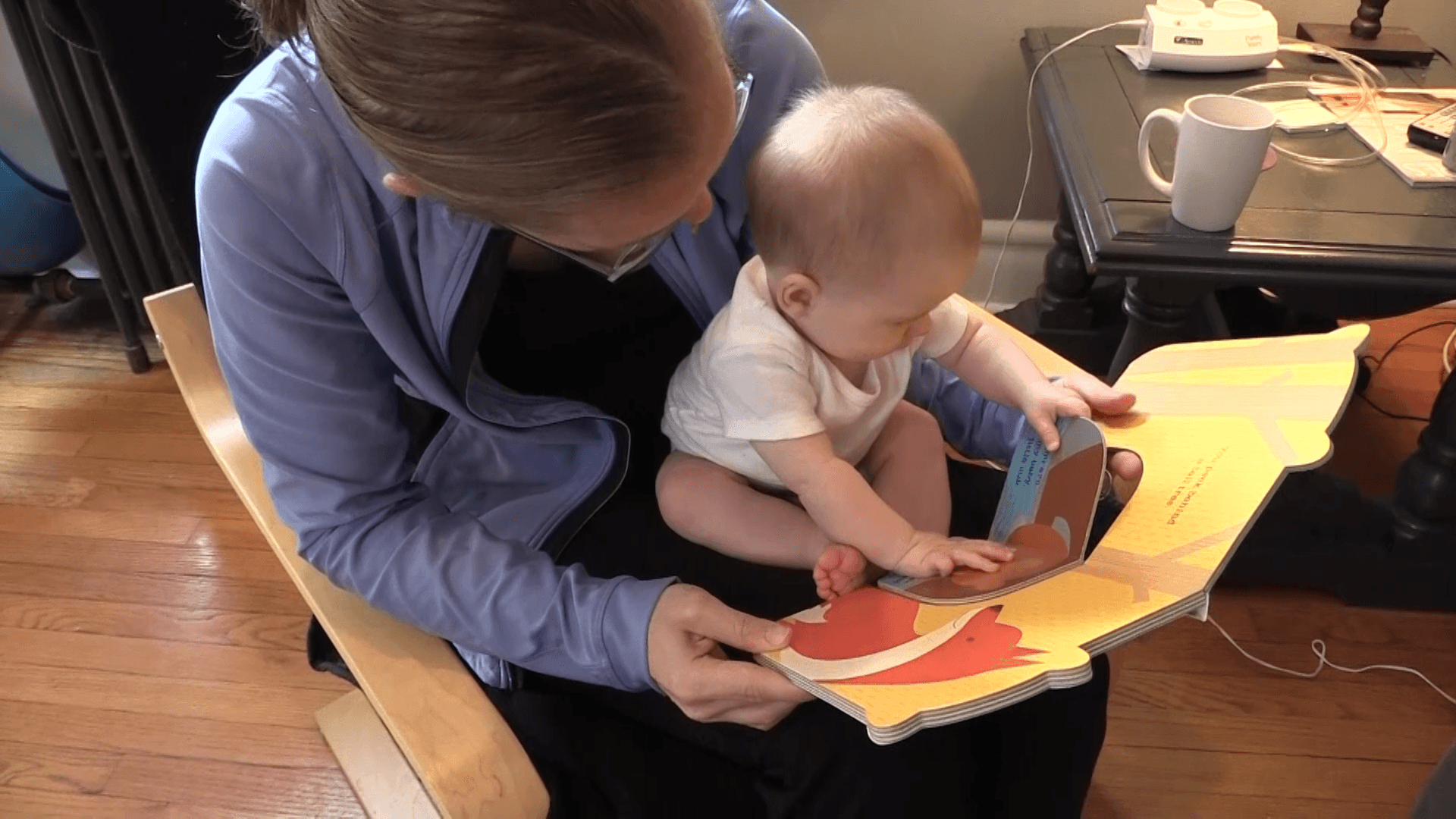
Activity to Try: Break out the colorful board books! As you read, name the shapes and all the new colors Baby can see.
Play This Game
9 Months
Baby can now see objects both near and far, allowing them to recognize you from across the room.
They’ll show interest in exploring toys of different shapes, sizes, and textures.
Hand-eye coordination improves as Baby starts crawling.
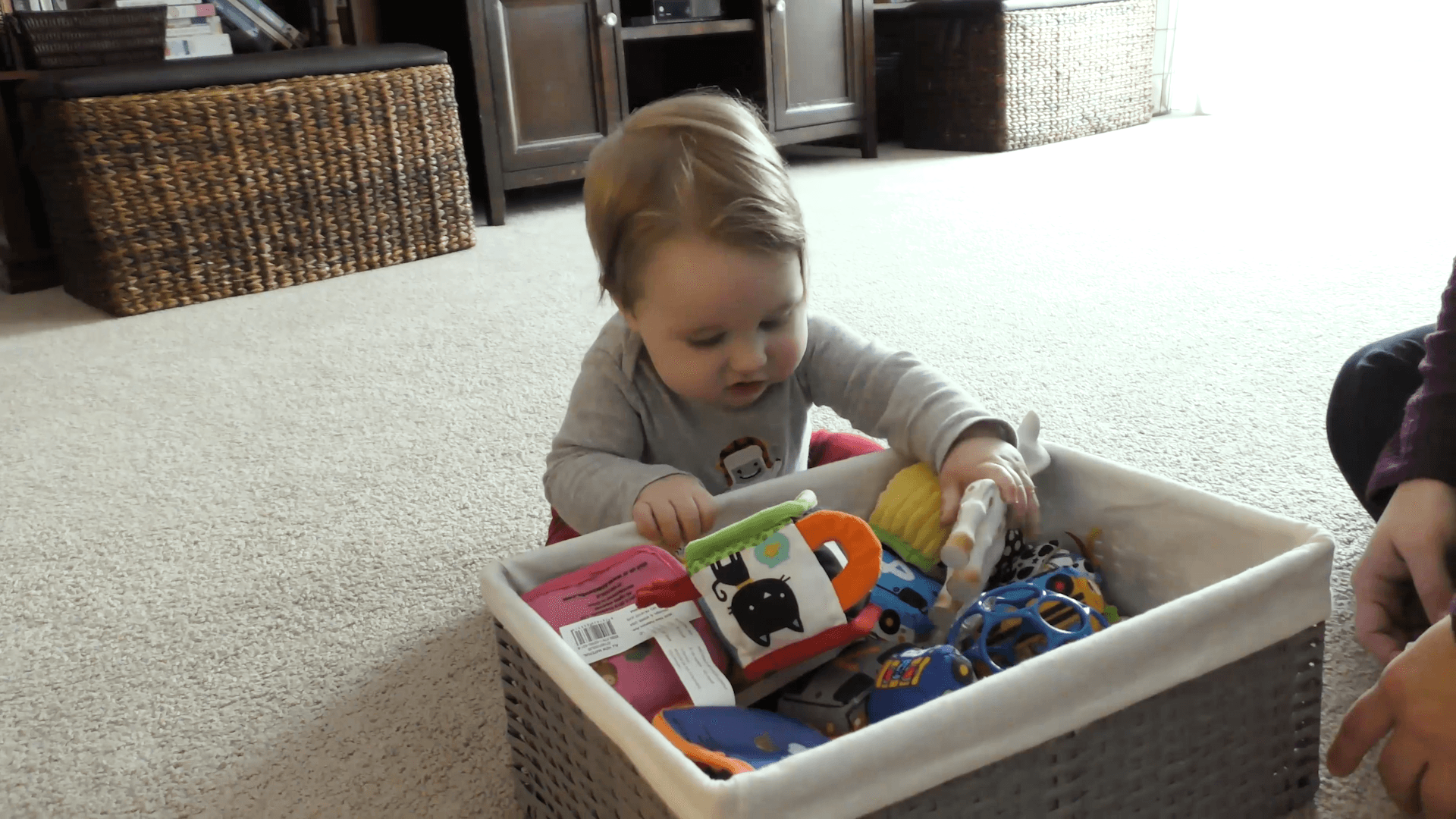
Activity to Try: Offer Baby toys of different sizes, textures, and colors and allow them to explore them using all of their senses.
Play This Game
12 months
Baby’s depth perception is much stronger, helping them know how far to crawl or cruise to grab desirable toys.
Improved hand-eye coordination helps Baby pick up small objects more accurately using the pincer grasp.
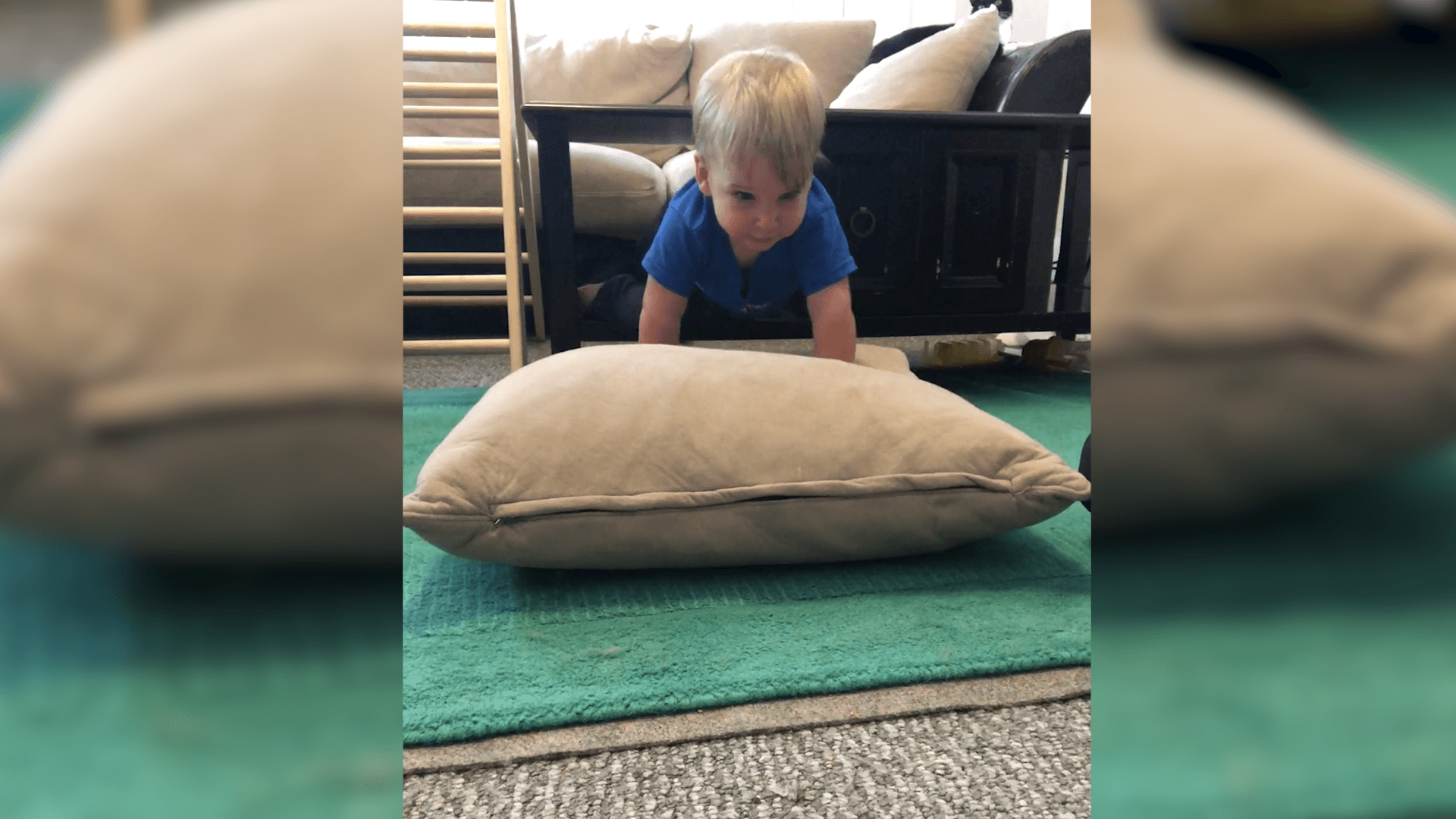
Activity to Try: Create a simple obstacle course with pillows, tunnels, or furniture Baby can crawl over and through to help them understand space around them.
Play This Game
Vision Beyond Baby’s First Year
Baby’s hand-eye coordination and depth perception will continue to develop through their 2nd birthday, helping with everything from walking and dressing themselves to going up steps and stacking objects. With typical vision development, Baby will see as well as an adult by around 3 to 5 years old. Their vision should be fully mature by the end of childhood.
When does Baby need to see an eye doctor?
Baby’s healthcare provider will check their eyes during well-child visits, so seeing an eye doctor may not be necessary in the early months. But if you notice things like frequent eye crossing or difficulties with tracking beyond 3 months, don’t hesitate to voice your concerns at these visits.
Baby’s First Eye Exam
It’s recommended that Baby get their first eye exam by an eye doctor between 6 and 12 months. After that, exams are recommended between 1 and 3 years, right before your child starts kindergarten, and as needed after age 5. Baby’s healthcare provider may recommend more frequent eye exams if your family has a history of vision problems. Learn about choosing an eye doctor for Baby.
Sources
American Optometric Association. “Infant Vision: Birth to 24 Months of Age.” American Optometric Association, www.aoa.org/healthy-eyes/eye-health-for-life/infant-vision. Accessed 22 Jan. 2026.
Cleveland Clinic. “Your Child Should Have a Pediatric Eye Exam Early and Often.” Cleveland Clinic, 12 Sept. 2025, health.clevelandclinic.org/pediatric-eye-exam. Accessed 22 Jan. 2026.
Greninger, Daniel. “Vision Screenings for Babies & Children.” HealthyChildren.org, 31 Mar. 2022, www.healthychildren.org/English/health-issues/conditions/eyes/Pages/Vision-Screenings.aspx. Accessed 22 Jan. 2026.
Healthychildren.org. “Infant Vision Development: What Can Babies See?” HealthyChildren.org, 2019, www.healthychildren.org/English/ages-stages/baby/Pages/Babys-Vision-Development.aspx. Accessed 22 Jan. 2026.