The Best Crayons and Markers for Every Stage of Your Toddler’s Grasp Development
-cYy1Aj.jpg&w=3840&q=75)
Different types of crayons and markers help toddlers build hand strength and move toward a mature grasp for writing.
Helpful art tools for toddlers and preschoolers include egg crayons, broken crayons, and jumbo markers.
Choose non-toxic, washable art supplies and supervise your child closely when using them.
Ready to raise a little Picasso? Once your toddler masters the pincer grasp around their first birthday, they’ll be able to pick up their first crayon. Though it may take them some time to actually make marks on paper (an 18-24 month milestone!), just handling art utensils is good practice for building their pencil grip!
From the toddler years to kindergarten, there are crayons and markers designed to support each stage of grasp development. Matching the right tool to your toddler’s stage helps them build the fine motor skills they'll rely on for everything from handwriting and using scissors to buttoning clothes and tying shoes.
Your toddler’s first attempts at “coloring” may just be a few random marks across the paper. True scribbling with more controlled, concentrated strokes doesn’t happen until about 30-36 months (it’s a sensory milestone!). By this time, they’ll be able to draw simple shapes.
Stages of Grasp Development in Toddlers and Young Children
When finding the best art tools for toddlers, it’s important to understand the typical progression of children’s grasp patterns and figure out which one your child is using. To learn about all grasp stages from birth, read this blog.
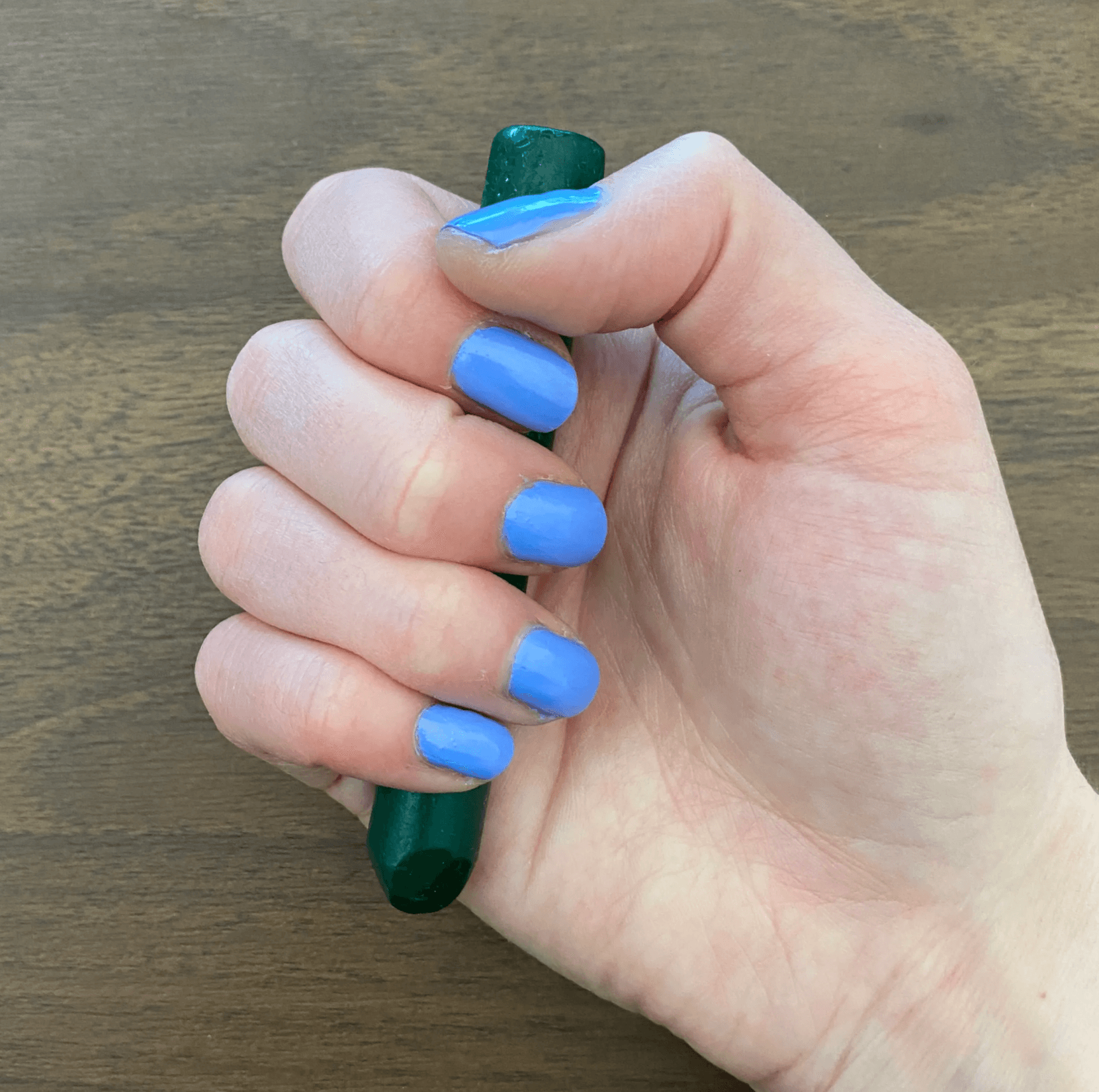
Palmar Supinate Grasp (12-15 months): The whole palm grips the utensil in a fist with the thumb on top; whole arm movements are needed to control the utensil.
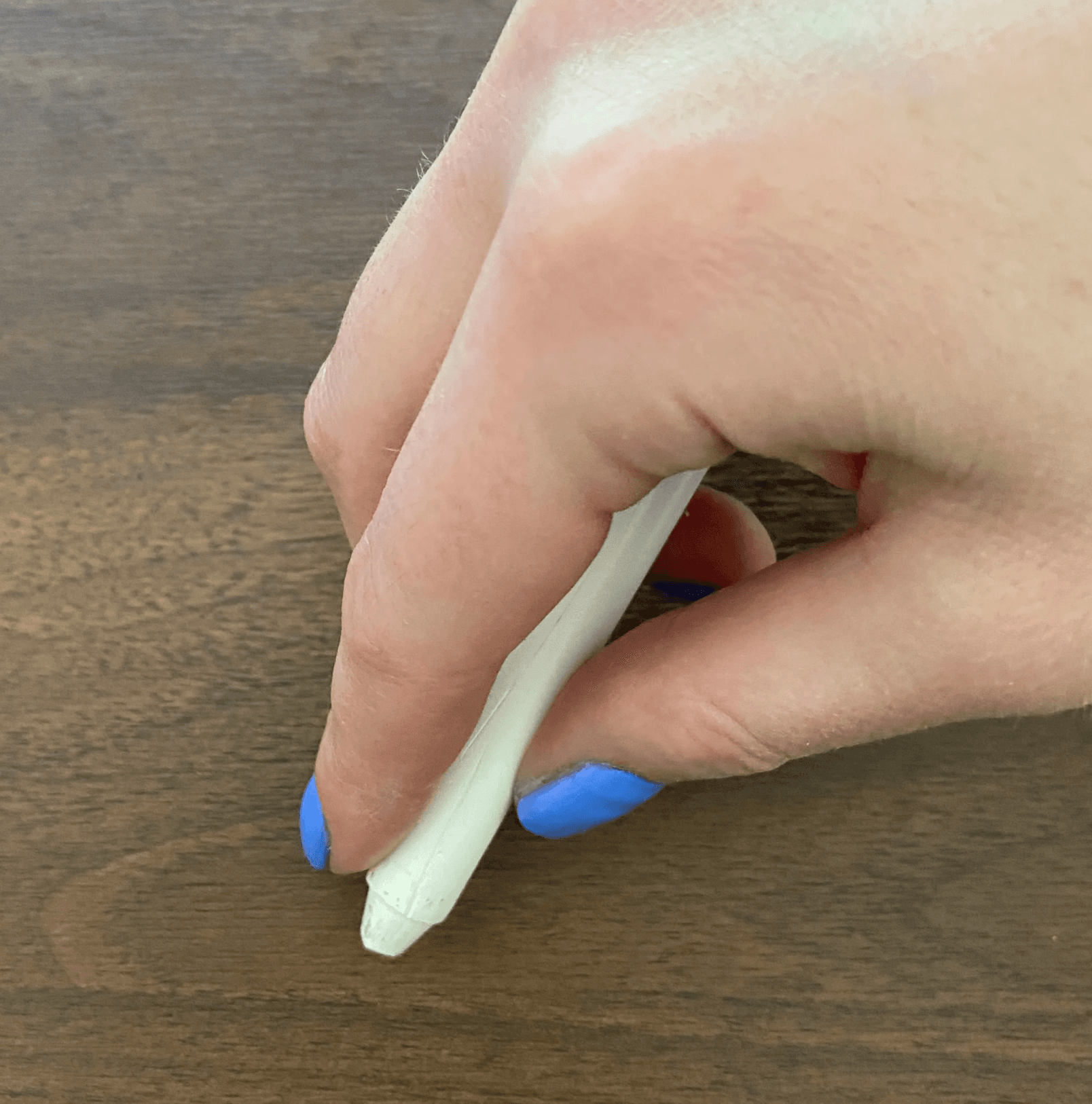
Digital Pronate Grasp (2-3 years): Utensil is held with the fingers and palm facing down; whole arm movements are still needed to control the utensil.
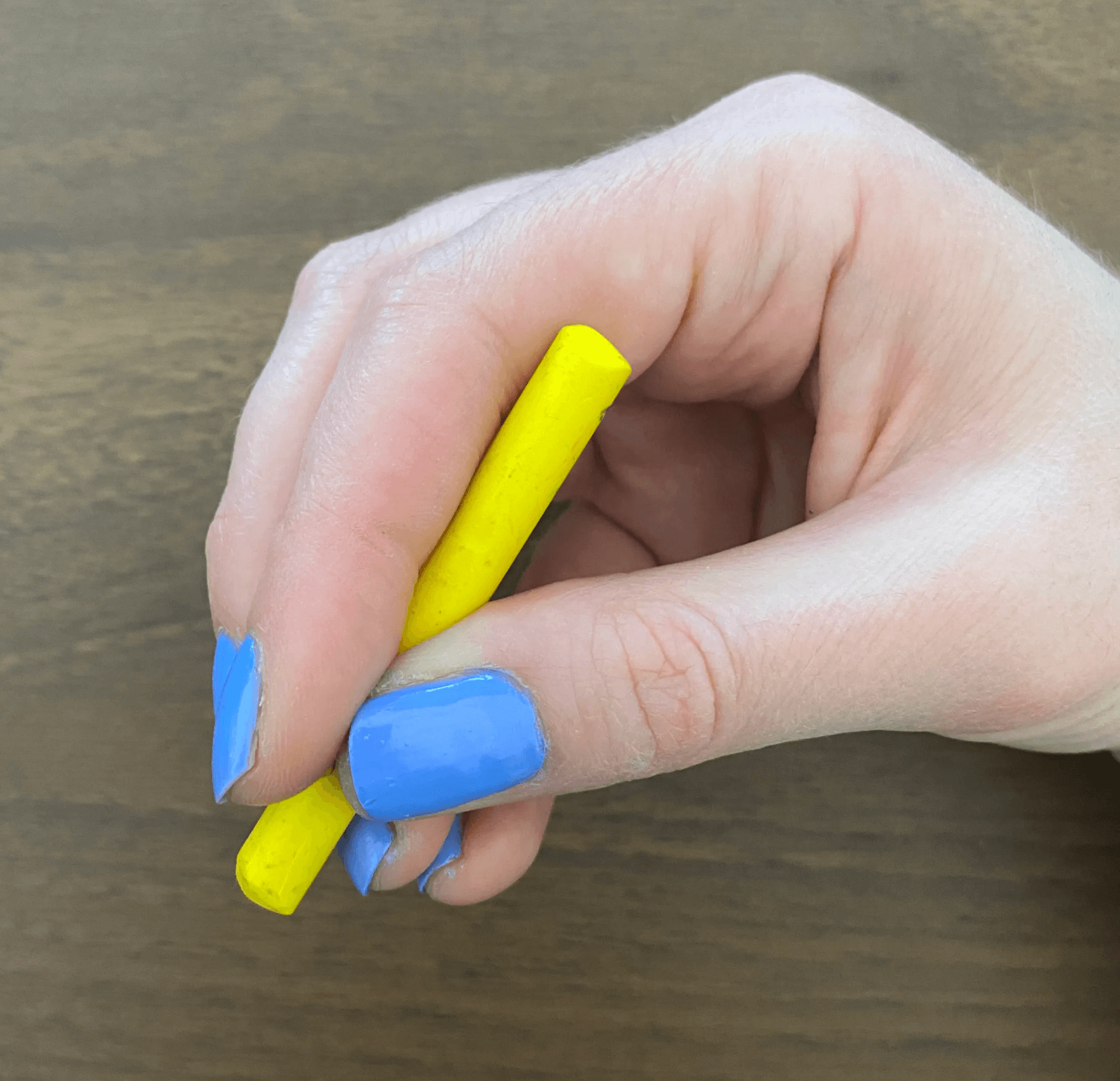
Static Quadrupod or Tripod Grasp (3-4 years): The finger pads pinch the utensil — either three fingers (thumb, index, and middle) in a quadrupod grasp or two fingers (thumb and index) in a tripod grasp — with the remaining fingers tucked underneath. The fingers stay still (static), while movement comes from the wrist, elbow, and shoulder.
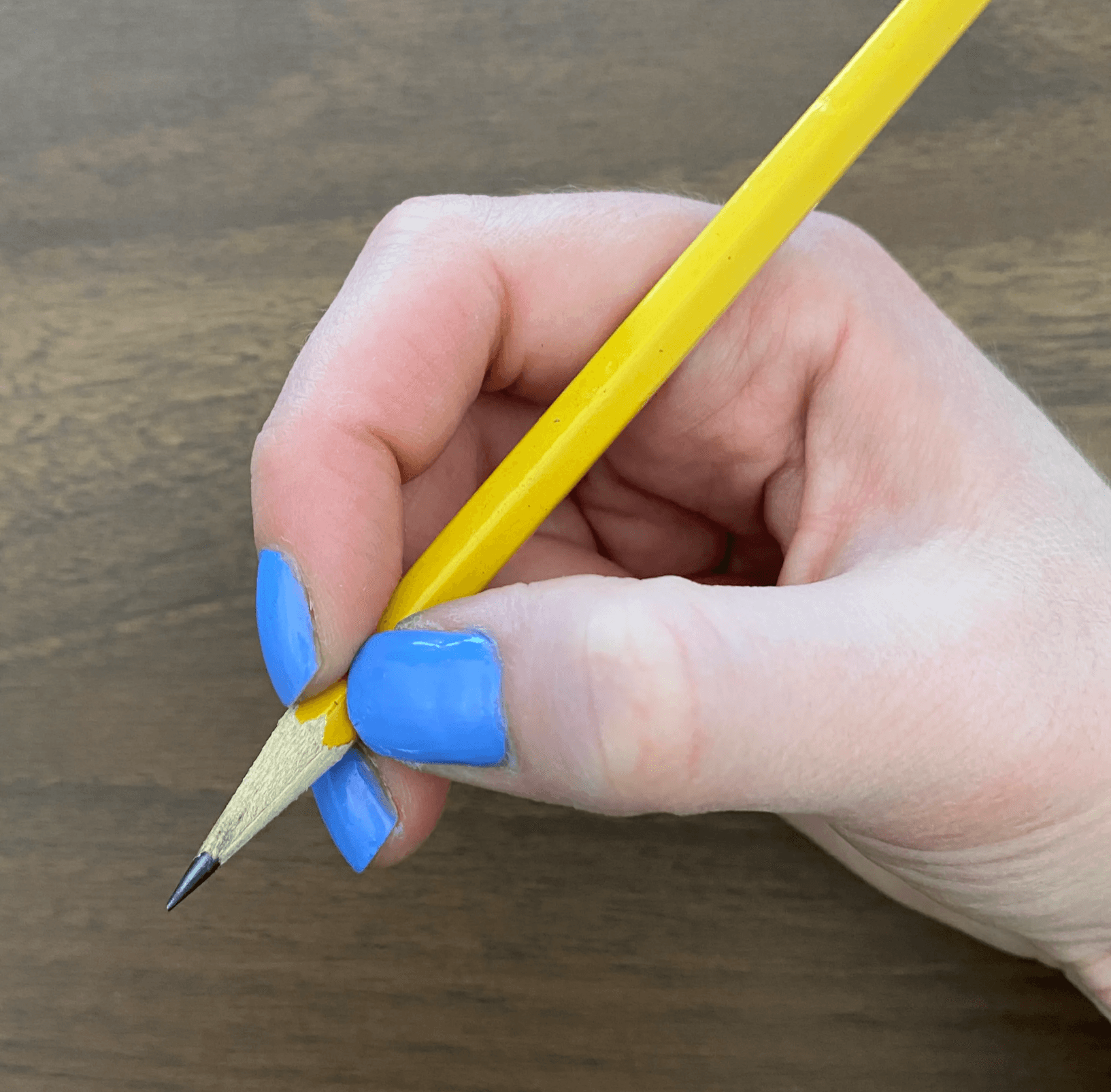
Dynamic Quadrupod or Tripod Grasp (5-6 years): Three or two fingertips (rather than the flat pads of the fingers) pinch the utensil, which is now held at more of an angle. The fingers move (dynamic) to control the utensil, with minimal movement from the wrist or forearm.
Tip from an occupational therapist: Good posture matters! When coloring, have your child sit at a table with feet flat on the floor, or try taping paper to a wall or easel to naturally encourage proper wrist positioning.
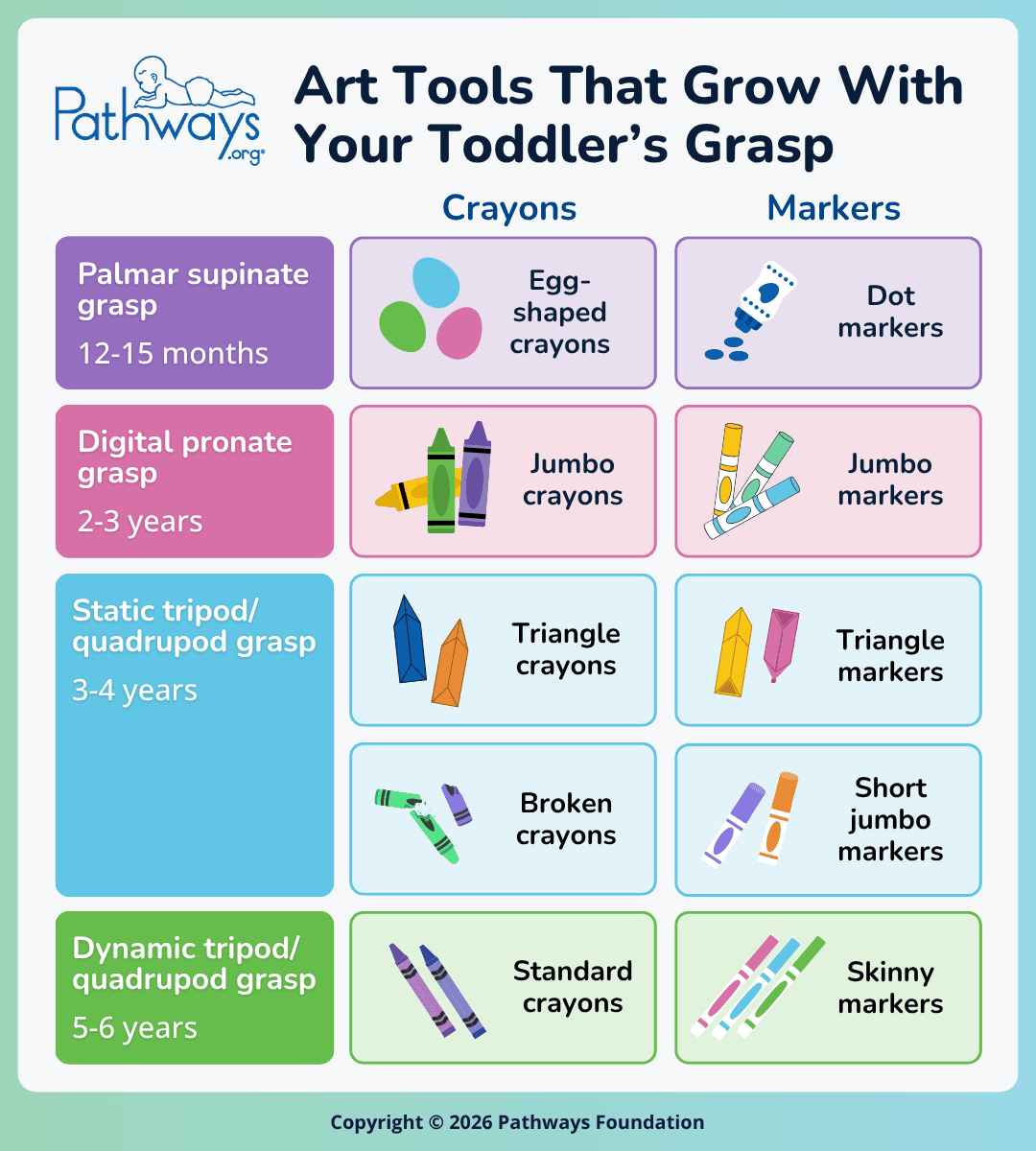
Choosing the Right Crayons and Markers for Your Toddler's Grasp Stage
When your toddler makes their first marks with a crayon or marker, they’ll likely grasp it with their whole fist (palmar supinate grasp). As they work up to a more mature grasp, different shapes and sizes of crayons and markers can support their fine motor development and make coloring easier.
Egg-shaped crayons:
The big, rounded egg shape makes this crayon easy for first-time colorers to grip while they still use the palmar supinate grasp.
Dot markers:
These circular sponge-tipped markers are very thick and easy to hold for toddlers still using a full-fist grasp.
Using dot markers for fill-in-the-dot worksheets can help kids develop hand-eye coordination and learn how much pressure to use.
Jumbo crayons and markers:
The thicker cylinder shape allows toddlers to have a comfortable grip as they transition from a full-fist palmar grasp to a digital pronate grasp.
You can also find shorter jumbo markers and crayons, which can encourage preschoolers to try a quadrupod or tripod grasp.
-FMtaVP.png&w=3840&q=75)
Triangle crayons and markers:
These are good options for preschool-aged kids who are learning to use a tripod grasp.
The triangular prism shape encourages their thumb, index, and middle fingers to rest on different sides.
Broken crayons:
Don’t throw out your broken crayons! The smaller pieces (around 1-2 inches) are great for encouraging a quadrupod or tripod grasp, since there isn’t enough room for a whole fist.
Broken crayons also help kids learn how much pressure to use, and can help build the small hand muscles needed for pre-writing skills.
Standard-sized crayons:
Your little one will be ready for a classic box of crayons once they’ve got a comfortable static tripod or quadrupod grasp!
Fine line markers:
Once your little one is comfortable with a static tripod or quadrupod grasp, they're ready to graduate to skinnier markers!
Unlike crayons, markers can leave behind some serious stains! Make sure to use washable markers so your tiny artist is easy to clean up.
Important Safety Notes for Children’s Art Supplies
Always supervise your child when using art supplies. Toddlers still like to put things in their mouths, and broken crayons or marker caps can quickly become choking hazards. (Plus, kids are great at making the whitest walls and couches their canvas when you aren’t looking!)
Look for the ASTM D-4236 label on any art supplies you buy. This means they've been evaluated for safety by the American Society for Testing and Materials and are certified non-toxic.
Enjoy making mini masterpieces with your little artist! For craft ideas, check out our blog, “Indoor Crafts for Kids to Make & Give”.
Sources
Cleveland Clinic. “Finger to Thumb: What to Know about the Pincer Grasp.” Children’s Health, 23 May 2023, health.clevelandclinic.org/pincer-grasp. Accessed 16 Apr. 2026.
Taylor, Allison. “Occupational Therapy, on the Dot!” Associates in Pediatric Therapy, 9 Dec. 2022, kidtherapy.org/occupational-therapy-on-the-dot/. Accessed 4 May 2026.
Witmer, Jane. “Motor Milestones: From Crayon to Pencil Grasp.” Wonderland Child & Family Services, 12 Feb. 2021, wonderlandkids.org/crayon-to-pencil-grasp/. Accessed 4 May 2026.