When Can My Child Use Scissors?
-izcouH.jpg&w=3840&q=75)
Cutting with scissors is a fine motor skill most children should learn by 3-4 years old.
To prepare your toddler for scissors, try activities that strengthen their fine motor skills, such as pulling apart magnets, using spray bottles, or playing with puzzles.
Always supervise your child when using scissors, and remind them about important safety rules, such as never run with scissors or use them for things other than cutting paper or crafts.
Sometimes when we think of motor skills, we think of gross motor skills, which involve the larger muscle groups of the body. But fine motor skills are just as important for children to develop! Fine motor skills use small muscles in the hand, fingers, and wrist. They help with things like writing, holding utensils, picking up small things, and... using scissors!
The ability to cut with scissors is a foundational fine motor skill for children to master before entering kindergarten. But your child will build the skills and strength needed for scissors long before they can actually cut. Learn the signs of readiness to look for, activities to help with early cutting practice, and tips to keep your child safe when using scissors!
When can children use scissors?
Even though they may seem simple to use, cutting with scissors is something that may take children a while to learn. It won’t be until around 3-4 years old, or preschool age, that children may be able to start using small scissors. Some signs your child is ready to try using scissors are:
They have enough balance and core strength to stay upright while sitting
They have good hand and arm strength and control
They have a mature pincer grasp
They can use both sides of their body together (bilateral coordination)
They can understand simple instructions
They show interest in coloring and simple crafts
--hWalK.png&w=3840&q=75)
Fine Motor Activities to Prepare Your Toddler for Scissors
Cutting with scissors takes a combination of gross and fine motor skills to master. Babies start developing many of their gross skills first, through activities like Tummy Time and exploratory play. They’ll develop more of their fine motor skills, such as the pincer grasp, as they get older. The toddler years are a great time to hone in on activities that build fine motor skills needed for using scissors.
Try these pre-cutting fine motor activities, suggested by a pediatric occupational therapist:
Stack cups and pull magnets apart to develop the arches of their hands
Use hole punchers, tongs, spray bottles, or loop scissors to help them practice opening and closing their fingers and strengthen the radial side of their hand (thumb, index, and middle fingers)
Play with chunky puzzles or toys with keys to help them manipulate their fingers
When buying your child’s first scissors, hand preference matters! Left-handed and right-handed scissors are designed differently, and using the right ones helps kids see where they’re cutting more easily.
Children may show a tendency to use one hand around 2-4 years old (it’s usually the hand they draw or feed themselves with), but true hand dominance isn't usually developed until age 5 or 6.
Tips for Early Cutting Practice
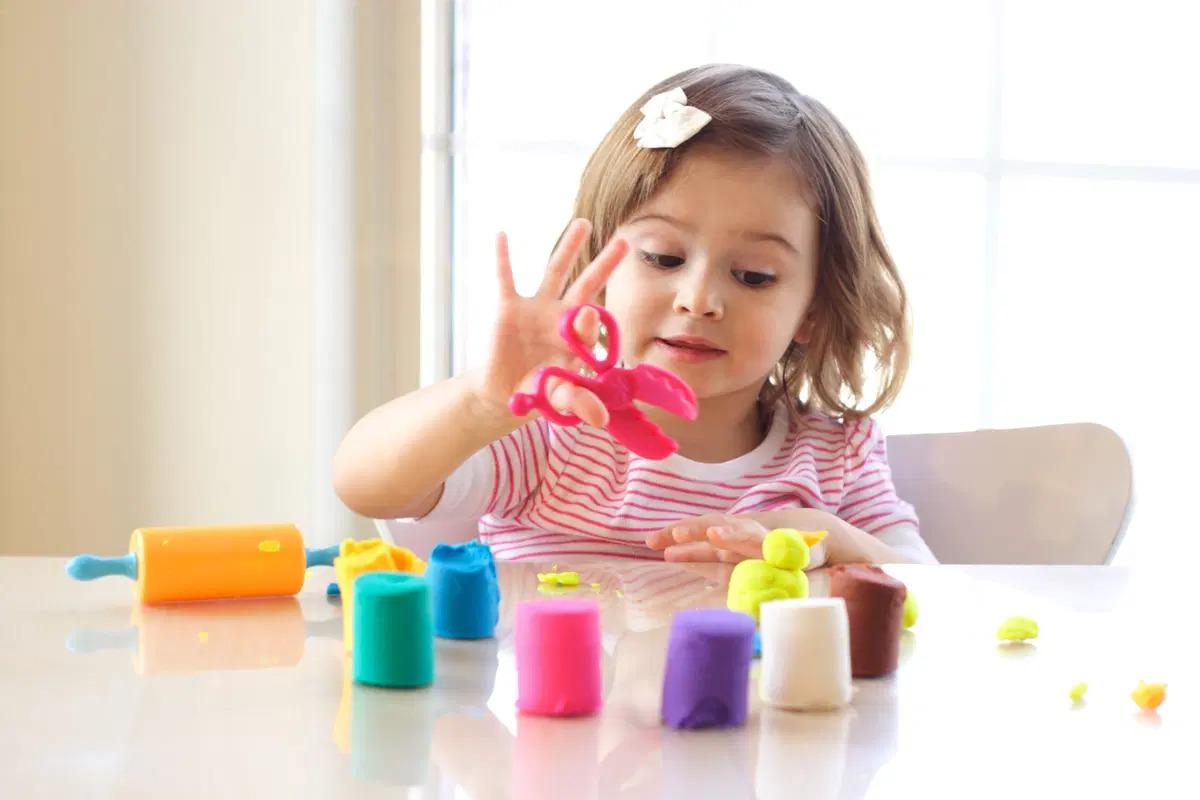
When your child is ready to use scissors, try these occupational-therapist-recommended tips to work on their scissor skills:
Practice cutting play-dough before using paper
Start with smaller pieces of heavy paper, such as index cards or construction paper
Practice cutting on lines (straight, curved, crooked)
Give them visual prompts, such as highlighted lines
Reduce visual clutter on the paper by only giving them 1-2 items to cut at a time
Helping kids learn proper finger placement for scissors is important! They should always hold scissors with their thumb on top (in the smaller loop) and the other fingers on the bottom. Putting a sticker or smiley face on their thumbnail is a fun way to help them remember “thumbs-up”!
How can you keep a child safe while using scissors?
Giving your child a pair of scissors may seem scary! But there are a few ways to make sure they stay safe. Here are some tips:
Only use small, child-friendly scissors. Children are not ready for regular scissors at this age.
Demonstrate cutting with scissors for them, so they can see how it works. Show them how to make sure their fingers aren’t in the way while cutting.
It’s a classic childhood rule: no running with scissors! Make sure your child knows this, and show them how to safely pass scissors to someone else (with the handle facing the person they are handing the scissors to). Teach them about other basic rules, like never throw scissors or use them for anything other than cutting paper or crafts.
Only allow your child to use scissors when you can supervise them.
Practicing using scissors can be fun!
Because scissors are often used in making crafts, there are lots of fun ways to practice. Here are some crafts that use scissors:
Sources
Krupa, Amanda. “How to Help Young Children Learn to Use Scissors.” PBS Kids for Parents, 20 Apr. 2020, www.pbs.org/parents/thrive/how-to-help-young-children-learn-to-use-scissors. Accessed 17 Feb. 2026.