Every time Baby hears your voice, feels a soft blanket, or gets swooped up in the air, their senses are working behind the scenes to help them take in the world and make sense of it. With each new sensory experience, Baby is building the foundation for movement, communication, and emotional growth.
You probably know the classic five senses: sight, hearing, smell, taste, and touch. But there are more than that! Three lesser-known senses—vestibular, proprioception, and interoception—play a huge role in how Baby moves, balances, and understands their own body.
Meet eight senses and find out what each one is doing for Baby every single day.
Why Sensory Development Matters
Developing Baby's sensory systems helps them:
Understand their world. Through eight senses, Baby learns how their body relates to their surroundings and processes new experiences.
Build foundational skills. Strong sensory processing supports motor coordination, communication, and emotional regulation.
Gain confidence and comfort. As Baby becomes familiar with different sights, sounds, and sensations, they feel secure exploring new environments and trying new things.
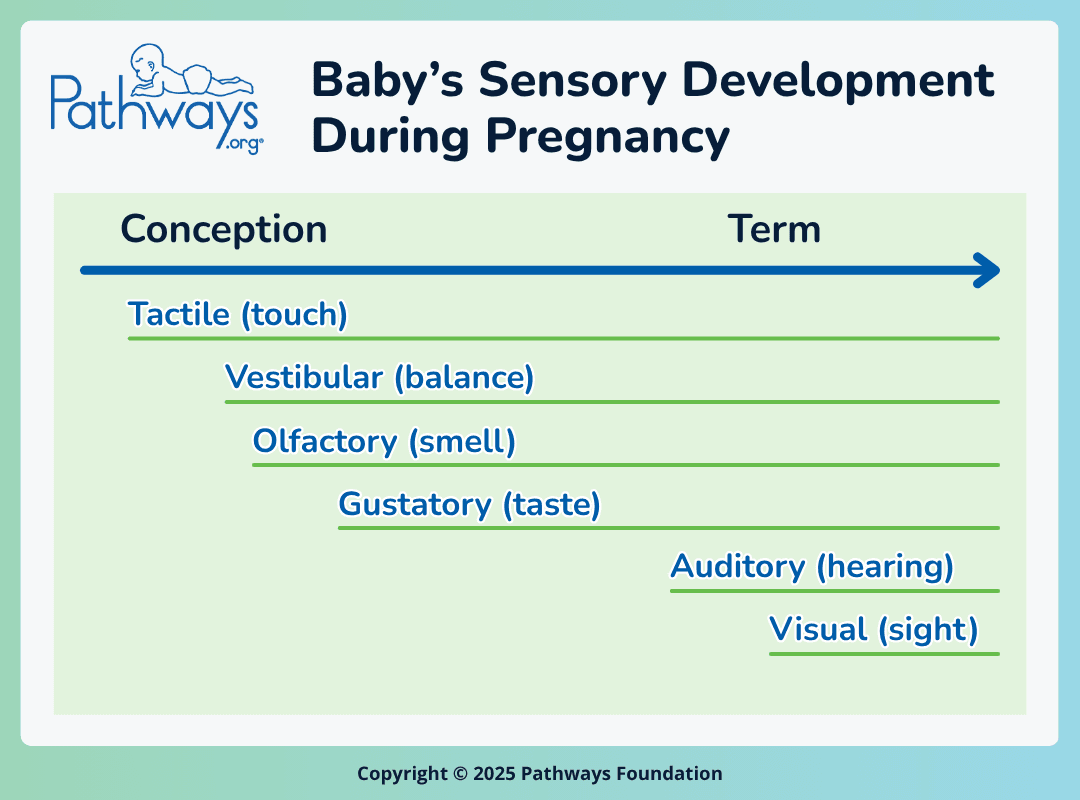
When does sensory development begin? Some sensory development, like sense of smell, begins before Baby is born. Although Baby is born with all their senses, many will continue to develop into adulthood.
Sensory integration is how Baby's brain takes in, organizes, and reacts to information from the body and the world around them. It's what helps Baby make sense of and respond to all those new sights, sounds, textures, and movements.
Here's what's going on behind the scenes:
1. Baby's brain receives input from eight senses.
2. The brain organizes and filters this information, deciding what to pay attention to and what to ignore.
3. It combines new sensations with past experiences to make sense of them.
4. Finally, Baby's brain creates a response, like turning toward your voice, reaching for a toy, or smiling when tickled.
Understanding Sensory Processing
Every child's nervous system is unique, which means every child experiences sensory input a little differently. Sensory processing exists on a spectrum: some children handle sensory input with ease, some have mild sensory sensitivities that are manageable, and others experience daily challenges that can affect their routines and behaviors.
Some children's sensory differences become less noticeable as they grow and develop coping strategies. Others may need ongoing support, like occupational therapy. Understanding your child's sensory profile is a great first step toward getting them the right support. Open any topic below to go deeper:
Hyper-responsivity vs. hypo-responsivity
It's typical for children to be a little more or less sensitive to certain sensory experiences. This only becomes a concern when those tendencies are strong enough to get in the way of everyday life. According to Jean Ayres' Sensory Integration theory, children with sensory differences typically fall into one or both of these categories:
Hyper-responsive (over-responsive): Easily overwhelmed by certain sensory input and may avoid or react strongly to it. For example, a child who is hyper-responsive to touch may get upset when someone taps their shoulder.
Hypo-responsive (under-responsive): Less sensitive to certain sensory input and may seek it out. For example, a child who is hypo-responsive may fidget or touch everything to feel more tactile input.
When a child's sensory needs aren't being met, their nervous system can become dysregulated. This may show up as meltdowns, trouble following directions, or withdrawal.
The four sensory profiles
Dr. Winnie Dunn’s Model of Sensory Processing is another way to understand sensory processing in children. This model describes four common patterns in how children respond to and manage sensory input. Like the hyper/hypo spectrum, these profiles aren't immediately a cause for concern; most children show tendencies across more than one. They become worth exploring further when a pattern is strong enough to affect daily life.
Each profile is shaped by two key ideas, threshold and response:
Threshold: how much sensory input it takes for a child’s nervous system to notice and react.
Low threshold: Notices sensations quickly and may get overwhelmed
High threshold: Needs stronger or more input to react
Response: how the child manages that sensory input.
Passive response: Lets the sensations happen and reacts afterward
Active response: Tries to control or change the sensory experience
Together, these create four profiles:
Low Registration (high threshold, passive response): May miss sensory cues or have a slowed response to them
Sensation Seeking (high threshold, active response): Craves input and actively looks for sensory experiences
Sensation Sensitive (low threshold, passive response): Notices stimuli quickly and can be easily overwhelmed
Sensory Avoiding (low threshold, active response): Tries to limit or avoid overwhelming sensations
Understanding your child’s sensory profile can help you adapt activities and environments to meet their needs.
Signs your child may need support
Sensory differences can appear in many ways. These are some things to look out for in children:
Overreacting or underreacting to touch, sound, sights, or movement
Struggling with certain textures or tastes
Frequent meltdowns or trouble following directions
Getting overly active or very tired after specific activities
Being easily distracted
Seeming clumsy or having poor body awareness
Delays in speech, motor skills, or learning
Struggling with transitions or new environments
Finding it hard to calm down once upset
Impulsivity or lacking self-control.
When to Get Support with Sensory Processing
Sometimes, sensory differences can have underlying causes. If you notice ongoing sensory challenges in your child, write down what you see and share it with your child's healthcare provider.
Who can help: Your provider may recommend an occupational therapist, who can assess your child's sensory profile and suggest helpful strategies or therapies to manage their unique challenges and thrive in different environments.
EXPLORE EIGHT SENSES
Click on a sense to find sensory milestones and activities by age.
-adPCRF.png&w=3840&q=75)

-Sj3Adf.png&w=3840&q=75)