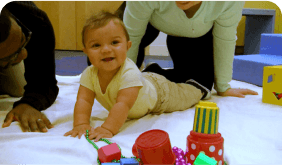
Baby's Senses: Touch
Touch, or the "tactile sense", is the very first sense Baby develops, and one of the most powerful ways they connect with the world! Long before birth, Baby is already experiencing touch in the womb, nestled snugly in a warm, tight space. That need to feel held close doesn't disappear at birth, which is why swaddling, skin-to-skin contact, babywearing, and other forms of deep pressure feel so calming to a newborn. Feeding time, especially breastfeeding, naturally provides hours of comforting touch each day.
As Baby grows, touch becomes a primary way they explore and learn. This is why Baby puts objects in their mouth all the time! Their lips and tongue are packed with nerve endings that help them identify texture, shape, size, and temperature. Crawling introduces a whole new world of sensations under their hands and knees, and play helps them discover what things feel like before they understand what things are.
⚑ How Touch Develops
From calming touches in the newborn stage to curious hands exploring every texture in reach, Baby's sense of touch is constantly at work. Watch for these signs of tactile development in Baby's first year:
2 Months
Can be calmed by rocking, gentle touch, and soothing sounds
4 Months
Intentionally reaches for and grabs objects as the automatic palmar reflex begins to fade
6 Months
Uses both hands to explore toys
Discovers their feet and loves to play with them
Brings hands and objects to their mouth to learn about texture, shape, and size
9 Months
Picks up small objects using their thumbs and fingers
Investigates the shapes, sizes, and textures of toys and surroundings
Starts crawling, opening up a new world of textures under their hands and knees
Explores objects using both hands and mouth together
12 Months
Experiences new textures underfoot as they begin to stand and take first steps
Uses the pincer grasp to pick up small objects with precision
Continues to explore toys with hands, fingers, and mouth
Helping Touch Develop
Try these expert-designed activities to help develop Baby's sense of touch!
When to Get Support with Touch
If you notice ongoing challenges, like strong distress at everyday touch, or seeking intense tactile input constantly, write down what you see and share it with Baby's healthcare provider.
KEEP EXPLORING