How to Create an Evening Routine That Helps Your Child Thrive
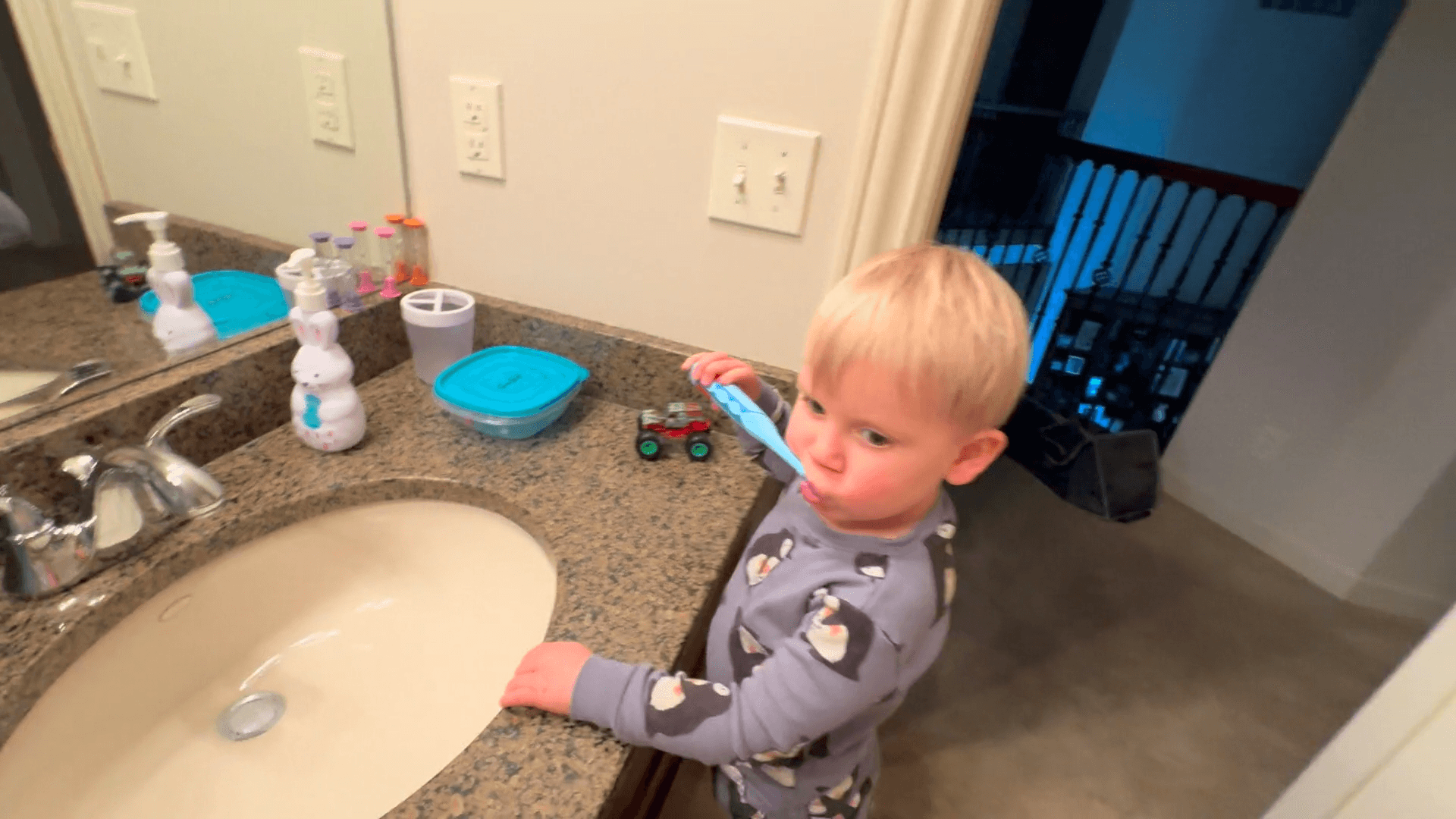
Beyond better sleep and executive function development, evening routines can help children perform better in school, reduce anxiety, gain independence, and regulate their energy levels.
From homework and chores to self-care and hobbies, a good evening routine balances what must get done with what your child enjoys.
Every child is different; the best routine is one that works for your family and evolves as your child grows.
Many families practice morning routines, as they can help everyone get up, get going, and get out the door on time. However, our evenings are often less structured—should your family consider ending the day with a routine, too? An evening routine can be a great way to help children gain independence, regulate energy levels, and build important skills, all while ensuring they get the quality sleep they need for their development.
Benefits of an Evening Routine for Kids
Promotes Better Sleep
Kids need consistent, quality sleep to maintain good health, most importantly, but also to keep their bodies regulated and perform well at daily activities and school. Studies have shown that children who follow nighttime routines have earlier bedtimes and sleep longer with fewer wake-ups, contributing to better sleep quality overall.
Builds Executive Function Skills
Evening routines provide many opportunities for young children to practice executive function skills. These skills consist of memory, self-control, and mental flexibility, and are essential to our daily behaviors and decision-making.
Think about it like this: you’re trying to get out the door, when all of a sudden the phone rings, the dog barks, and you remember you need to take tonight’s dinner out of the freezer. In that moment, you're using self-control to prioritize tasks, mental flexibility to shift between them, and memory to make sure nothing gets left behind.
Evening routines put these same skills to work in a low-stakes, familiar setting, helping children develop the executive functioning they'll rely on throughout their lives.
More Ways Evening Routines Help
In addition to promoting better sleep and executive function skills, evening routines can help:
Support academic success, as a structured evening creates space for homework and learning.
Reduce anxiety, as each day will have some predictability that makes children feel safe and secure.
Foster confidence and independence, as children learn to manage tasks on their own.
Regulate energy levels, as calm bedtime activities can help children wind down after a busy day.
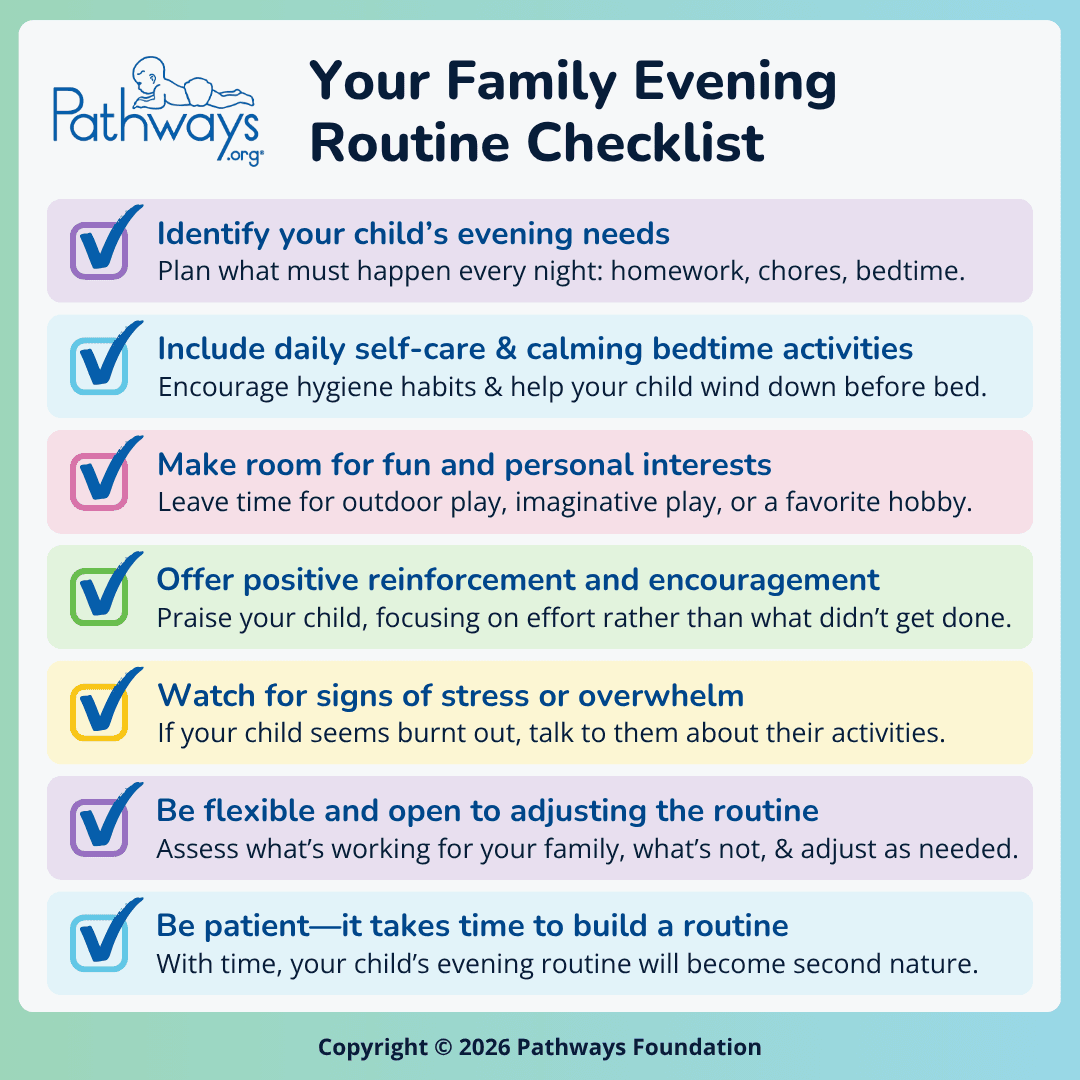
7 Tips for Starting an Evening Routine With Your Child
Remember, routines can vary from child to child due to individual needs, age, and parenting approaches. What is important is finding what works for your family and sticking to it to the best of your ability.
Start by Identifying Your Child's Evening Needs
A successful evening routine should incorporate and prioritize what must get done every night. Consider homework, chores, and bedtime.
Include Daily Self-Care and Calming Bedtime Activities
Self-care activities like brushing teeth and bathing are also a priority and should be included in the routine. They are essential for every area of development and create a foundation for healthy habits. Story time, drawing, and other "wind down" activities can work alongside self-care rituals to ease children into bedtime.
-2dNYy8.png&w=3840&q=75)
Make Room for Fun and Personal Interests
A routine doesn’t mean there can’t be fun! In fact, there should be time for unstructured play and activities that bring joy to your child. Consider outdoor play, imaginary play, and other recreational activities earlier in the evening.
Offer Positive Reinforcement and Encouragement
Praise your child for what they have accomplished. Don’t dwell on what didn’t get done. Here are some different ways to encourage your child!
Watch for Signs of Stress or Overwhelm
If your child seems overwhelmed, burnt out, or disengaged, talk to them about the activities they are involved in. Kids can feel stressed from not just having too many activities, but from doing activities that they don’t enjoy.
Be Flexible and Open to Adjusting the Routine
The routine that works best may not be the one you initially envisioned—and that’s okay! Assess what is working and what isn’t, so everyone feels empowered by their evenings. Stay open to making tweaks to your routine as your child gets older and activities change.
Be Patient—It Takes Time to Build a Routine
Starting something new always comes with difficulties, but it can have great benefits in the long term.
It may take time, patience, and practice, but establishing an evening routine can support your child’s development for years to come.
Sources
Miller, Heather. “The Power of Evening Routines.” Harvard Graduate School of Education, 22 Oct. 2018, https://www.gse.harvard.edu/ideas/usable-knowledge/18/10/power-evening-routines. Accessed 23 June 2026.
Mindell, Jodi A., and Ariel A. Williamson. “Benefits of a Bedtime Routine in Young Children: Sleep, Development, and Beyond.” Sleep Medicine Reviews, vol. 40, 6 Nov. 2017, pp. 93–108. PMC PubMed Central, https://www.ncbi.nlm.nih.gov/pmc/articles/PMC6587181/, 10.1016/j.smrv.2017.10.007. Accessed 23 June 2026.
Walker, Tim. “Study: Too Many Enrichment Activities Harm Mental Health.” neaToday, 31 Mar. 2024, https://www.nea.org/nea-today/all-news-articles/study-too-many-enrichment-activities-harm-mental-health. Accessed 23 June 2026.