What Is Positional Plagiocephaly & Positional Torticollis?
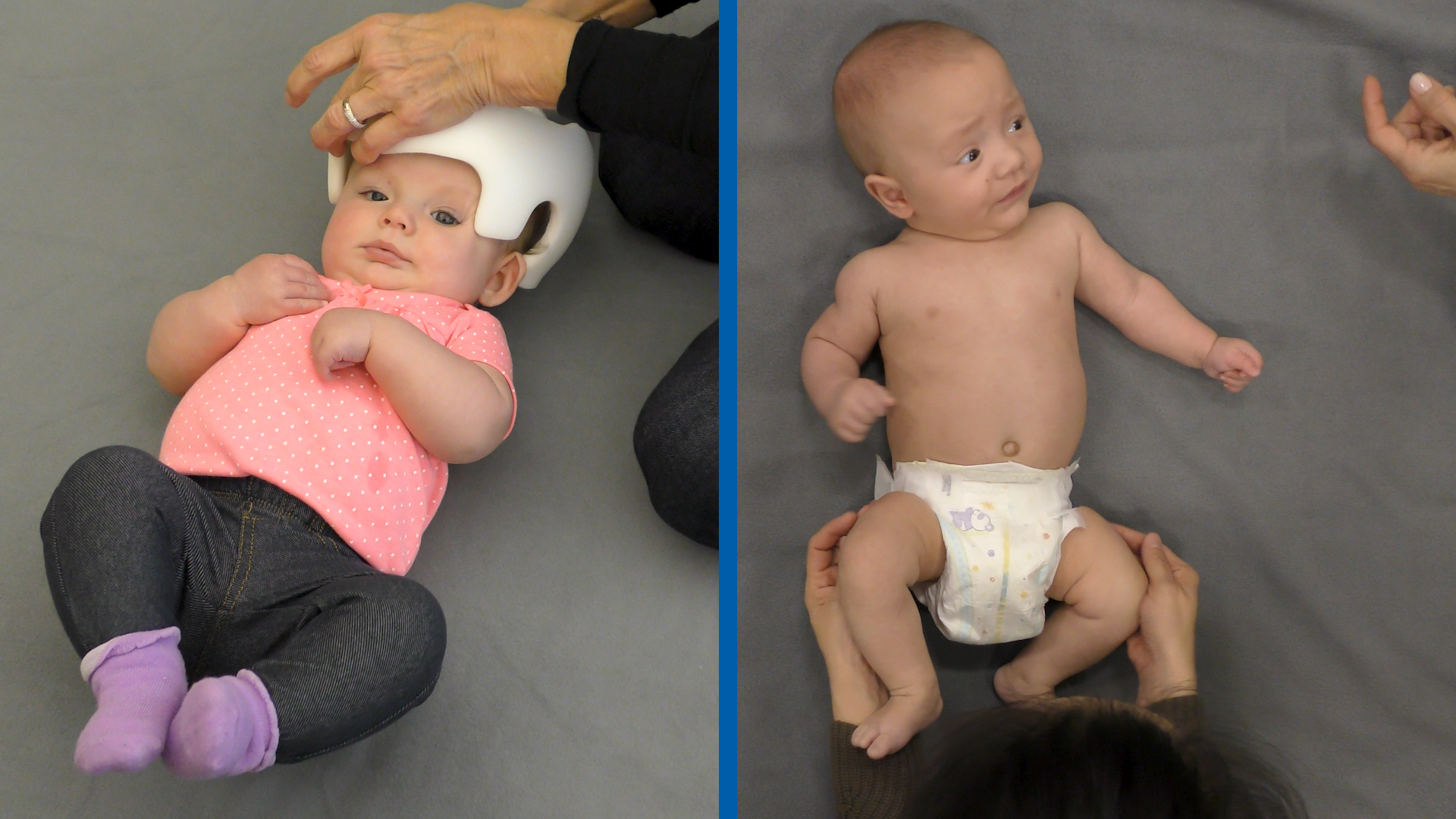
Positional plagiocephaly (flat head syndrome) and positional torticollis (tight neck muscles) are common infant conditions that can sometimes cause one another.
Both conditions can develop before, during, or after birth; early detection is important for fast, effective treatment.
Simple daily habits can help prevent these conditions from developing after birth and decrease or minimize symptoms for babies already diagnosed with either condition.
Positional plagiocephaly and positional torticollis are two common conditions in babies that can sometimes cause one another. Here’s what they are, how they’re connected, how they can affect a baby’s development, and what you can do to help prevent and treat them.
Positional Plagiocephaly (Flat Head Syndrome)
Positional plagiocephaly—often called flat head syndrome or simply an uneven head shape—is when a baby develops a flattening on the back or side of the head. It’s the most common type of plagiocephaly, or skull shape difference, in infants. Other, less common types include brachycephaly (flattening across the whole back of the head), scaphocephaly (more common in NICU preemies), and craniosynostosis (also known as congenital plagiocephaly, a rare birth defect caused by a baby’s skull bones fusing too early during pregnancy).
If left untreated, babies with positional plagiocephaly may develop vision problems or an uneven head and face shape over time.
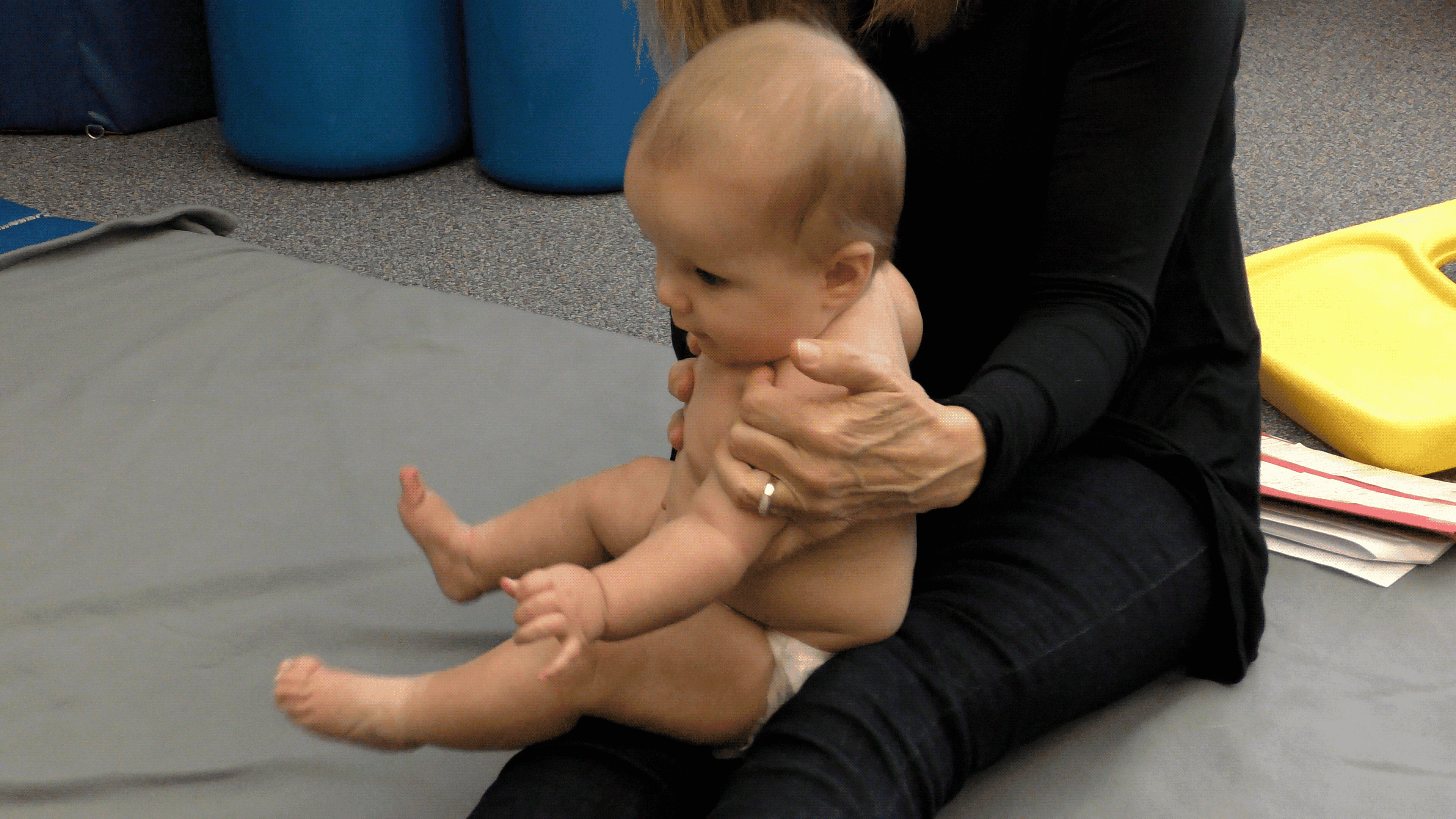
What causes flat spots?
During pregnancy and the first few months after birth, a baby’s skull is soft and moldable (like a piece of fruit!). Because of this, resting in the same position for long stretches can cause a flat spot to form. A baby’s positioning in the womb, a difficult delivery, time spent in infant containers, and back sleeping can all play a role.
Note: Back sleeping is the safest way for Baby to sleep, so keep doing it. The activities later in this article are simply about balancing out pressure on Baby's head during awake time.
Flat spots are most likely to develop in the first 6–8 weeks after birth, when Baby's skull is softest and they have the least head control. Risk tends to ease up around 4–6 months, as Baby starts moving more on their own and has better control of their head position at rest.
Premature babies have even softer skulls than full-term babies, so they’re more prone to flat spots. Babies who spend time in the NICU are also at higher risk because they often spend more time on their backs during medical care.
Positional Torticollis
Positional torticollis happens when the muscles in a baby’s neck tighten on one side, causing their head to tilt or turn toward one shoulder. This tightness can develop during pregnancy, labor, or in the months afterward. Torticollis present at birth (congenital muscular torticollis) may not be noticeable until weeks later, once Baby starts moving their head more.
Positional torticollis sometimes affects a baby’s posture, leading them to favor one side of their body.
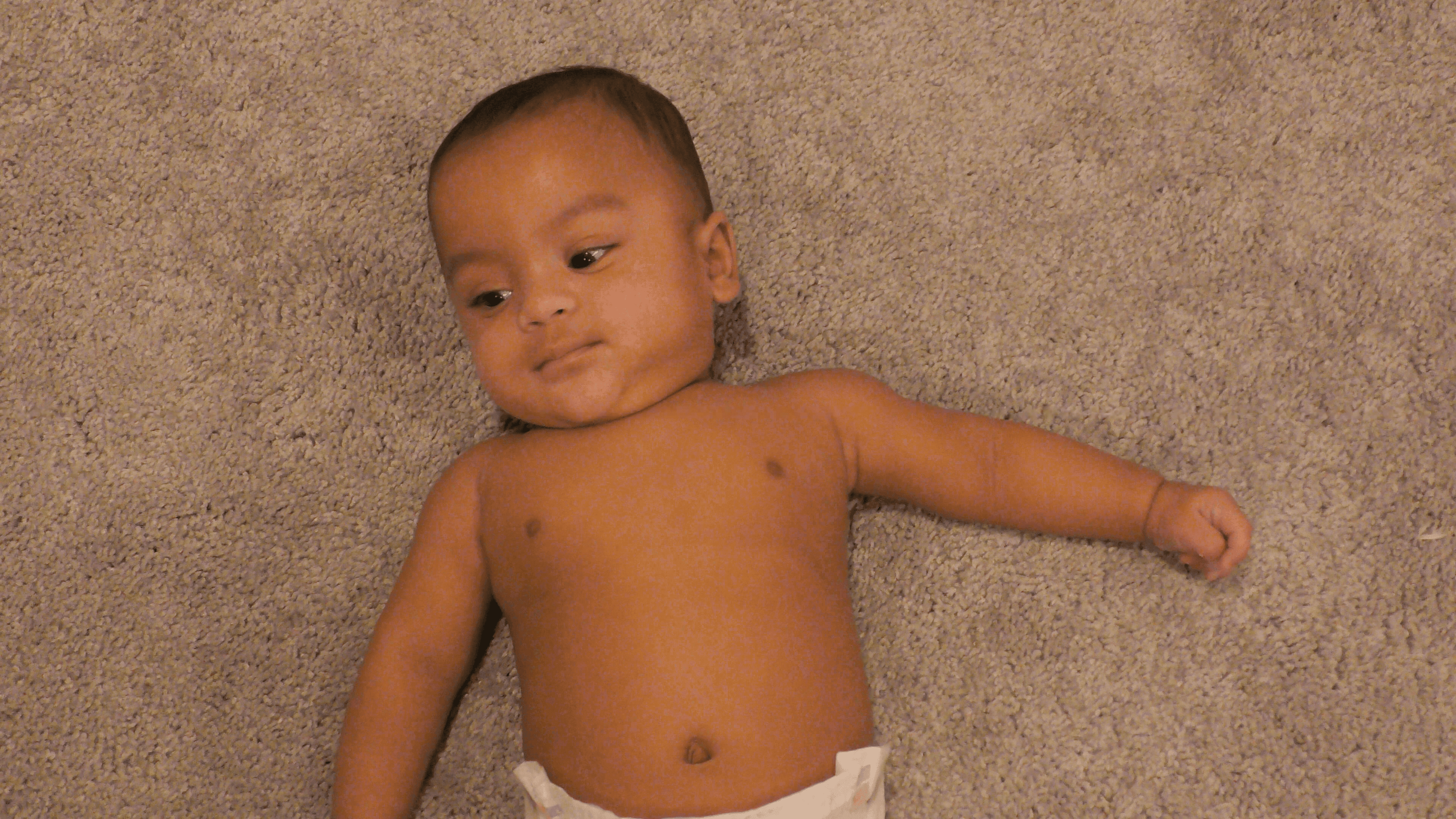
What causes tight neck muscles?
Positional torticollis can be caused by a baby’s position in the womb, a difficult delivery, or how they’re positioned after birth. Spending a lot of time with the head turned one way—such as during sleep, feeding, carrying, or lying in infant containers—can all contribute to neck tightness after birth.
Positional torticollis that develops after birth is most commonly seen in the first 4-6 months. Like flat spots, risk tends to ease as Baby gains more head control and starts moving more on their own.
Watch to learn more about torticollis:
How are positional plagiocephaly and positional torticollis connected?
Both conditions can develop when a newborn spends a lot of time on their back or in infant equipment such as swings or bouncers. They can also both be caused by a baby’s positioning in the womb or a difficult labor.
Sometimes, positional plagiocephaly and positional torticollis can be linked to one another:
A baby with positional torticollis may rest their head on their favored side so often that a flat spot forms there.
A baby with a flat spot may find it more comfortable to keep resting their head in that same position, which puts ongoing strain on one side of the neck and can lead to tightness over time.
Because of this connection, prevention for both conditions looks the same.
How can I check for positional plagiocephaly and positional torticollis?
The best time to check is after bath time, when Baby’s hair is wet.
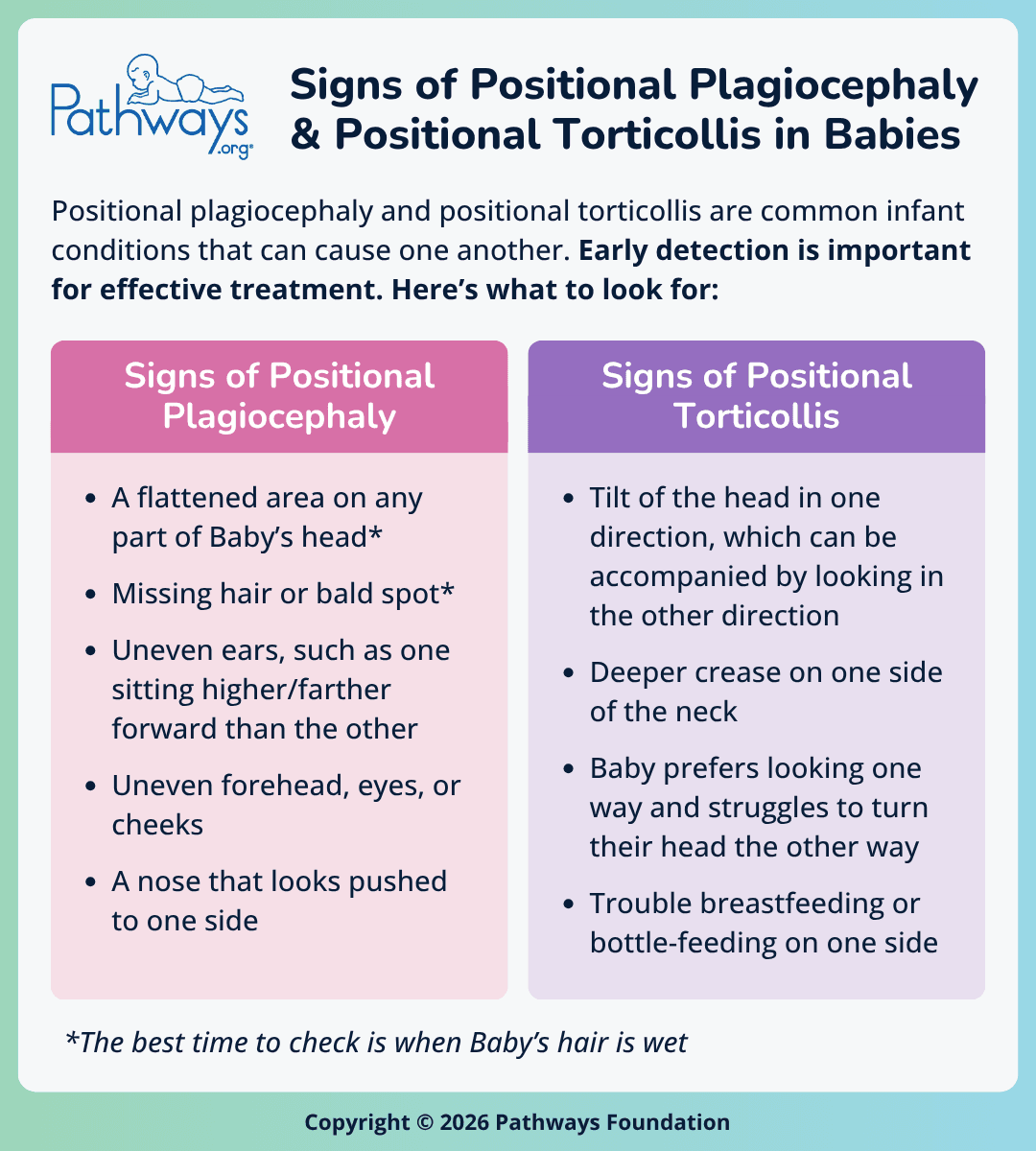
Common signs of positional plagiocephaly are:
A flattened area on any part of Baby’s head. This may also look like a misshapen head
Missing hair or a bald spot
Uneven ears, such as one sitting higher or farther forward than the other
Uneven forehead, eyes, or cheeks. One side may appear larger or fuller than the other
A nose that looks pushed to one side
Common signs of positional torticollis are:
Tilt of the head in one direction, which can be accompanied by looking in the other direction
A deeper crease on one side of the neck or under the shoulder blade
Baby prefers looking at you over one shoulder and struggles to turn their head fully the other way
Trouble breastfeeding or bottle-feeding on one side (or a clear preference for one breast)
Many pediatricians check for both conditions around the 2-month well-baby visit, but you can bring up any concerns at any appointment. You don't have to wait.
What should I do if I suspect Baby has positional plagiocephaly and/or positional torticollis?
If you have any concerns, talk to Baby’s healthcare provider. You don’t need to wait for a scheduled well-baby visit. Catching either condition early can make treatment quicker and more effective.
You can also directly reach out to a licensed physical therapist. In the United States, all 50 states allow some form of direct access to physical therapy. This means you don't need to wait for doctor’s referral can get treatment as early as possible.
Treatment for Positional Torticollis and Positional Plagiocephaly
Every baby’s treatment plan and timeline will look different. It can depend on the baby, the severity, and whether one or both conditions are present. Your healthcare provider can give you a clearer picture once they’ve seen Baby. However, treatment may include:
A corrective helmet to help reshape Baby’s head
Watch the story of one little boy who was diagnosed with positional torticollis and how therapy helped:
Preventing Positional Torticollis and Positional Plagiocephaly
Because these conditions are closely linked, prevention looks the same for both.
It’s important to note that in some cases, these conditions occur during pregnancy or a difficult labor and simply aren’t preventable. If that’s true for your baby, please know it’s not something you could have done differently.
To help prevent positional plagiocephaly and positional torticollis from developing after birth, a few simple daily habits can help:
Change Baby’s sleeping position. Try the Baby 180°: place Baby to sleep in one direction on even days and the opposite direction on odd days.
Get plenty of Tummy Time when Baby’s awake. This helps build neck, shoulder, and core strength.
Encourage head-turning to both sides. Play with toys on both sides of Baby’s body during floor time.
Limit time in infant equipment. Carry Baby and do Tummy Time when infant containers aren’t needed for their safety.
Worried about flat spots? Regular Tummy Time helps—and our Tummy Timer widget makes it easier to remember. Learn more ➝
Sources
American Physical Therapy Association. Levels of Patient Access to Physical Therapists Services in the U.S. 4 Sept. 2024, https://www.apta.org/advocacy/issues/direct-access-advocacy/direct-access-by-state. Accessed 2 Sept. 2026.
Boston Children’s Hospital. Torticollis. https://bchcmg.tch.harvard.edu/conditions-treatments/torticollis. Accessed 2 Sept. 2026.
Cleveland Clinic. Plagiocephaly (Flat Head Syndrome). 13 Apr. 2023, https://my.clevelandclinic.org/health/diseases/10691-plagiocephaly-flat-head-syndrome. Accessed 2 Sept. 2026.
Cleveland Clinic. Torticollis. 28 Feb. 2022, https://my.clevelandclinic.org/health/diseases/22430-torticollis. Accessed 2 Sept. 2026.
Kim, Eun-Hee, et al., 33262962. “Delayed Motor Development and Infant Obesity as Risk Factors for Severe Deformational Plagiocephaly: A Matched Case-Control Study.” Frontiers in Pediatrics, vol. 8, 11 Nov. 2020, p. 582360. PubMed Central, https://pubmed.ncbi.nlm.nih.gov/33262962/, 10.3389/fped.2020.582360. Accessed 2 Sept. 2026.
Minghelli, Beatriz, and Noémia Guerreiro Duarte Vitorino. “Incidence of Congenital Muscular Torticollis in Babies From Southern Portugal: Types, Age of Diagnosis and Risk Factors.” International Journal of Environmental Research and Public Health, vol. 19, no. 15, 26 July 2022, p. 9133. PMC PubMed Central, https://pmc.ncbi.nlm.nih.gov/articles/PMC9332427/, 10.3390/ijerph19159133. Accessed 2 Sept. 2026.
Panza, Raffaella, et al. “Positional Plagiocephaly: Results of the Osteopathic Treatment of 424 Infants. An Observational Retrospective Cohort Study.” Italian Journal of Pediatrics, vol. 50, no. 1, 7 Sept. 2024. PMC PubMed Central, https://pmc.ncbi.nlm.nih.gov/articles/PMC11380212/, 10.1186/s13052-024-01729-3. Accessed 2 Sept. 2026.
Price, Angela V. “Positional Plagiocephaly.” American Association of Neurological Surgeons, 30 Apr. 2024, https://www.aans.org/patients/conditions-treatments/positional-plagiocephaly/. Accessed 2 Sept. 2026.